
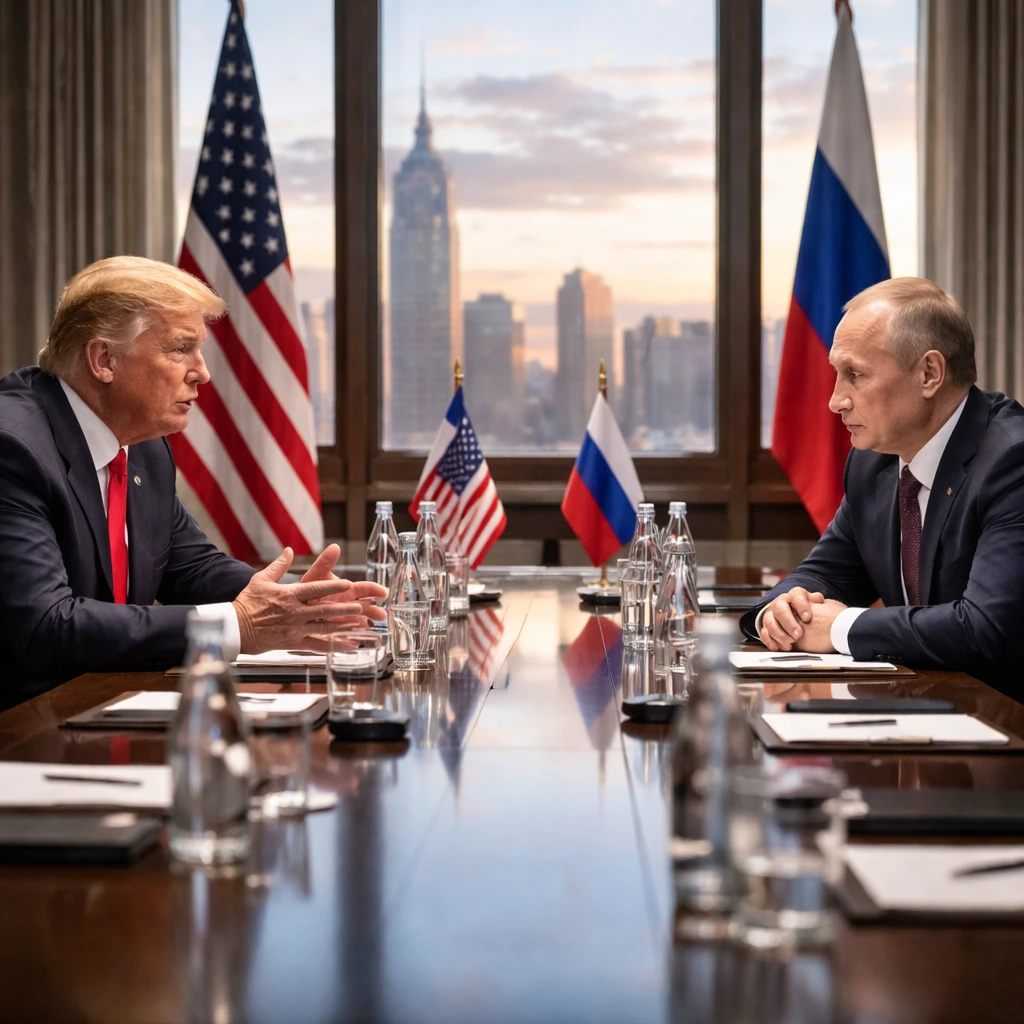
U.S. President Donald Trump and Russian President Vladimir Putin engaged in an extended diplomatic dialogue lasting 85 minutes on Saturday, tackling critical geopolitical flashpoints including the war in Ukraine, the situation involving Iran, and logistical preparations for next week's NATO summit. According to a report by Bloomberg citing the Kremlin, the conversation represented a significant operational check-in between the two leaders ahead of major international engagements.
The interaction began with formalities, as Putin extended congratulations to Trump on the 250th anniversary of U.S. independence before shifting focus to the conflict in Ukraine. Trump reiterated his administration's stance on the necessity of a swift conclusion to the war. Conversely, the Kremlin maintained that Moscow continues to prioritize a political and diplomatic settlement that explicitly incorporates Russia's core national interests.
Discussions also turned toward the upcoming NATO summit scheduled for Ankara on July 7-8. The Kremlin noted that U.S. envoys Steve Witkoff and Jared Kushner would continue their efforts to facilitate negotiations, remaining on standby to travel to Moscow for further substantive talks. This diplomatic outreach occurs against a backdrop of intensified military activity on the ground.
The conversation also encompassed the conflict involving Iran. The two presidents agreed on the critical importance of maintaining ongoing dialogue covering military, political, and economic dimensions. This consensus on communication channels underscores the interconnected nature of current global security challenges.
The timing of this call coincides with a strategic shift in U.S. defense posture. Trump is preparing to meet with NATO leaders while urging European allies to increase their defense spending to shoulder a greater share of the alliance's security burden. The administration has announced plans to reduce the number of U.S. troops stationed in Europe and scale back military assets allocated to the continent during a crisis. This drawdown directly impacts the economic and industrial sectors tied to defense manufacturing and European security architecture.
Geopolitical tensions remain acute as fighting escalates between Russia and Ukraine. Russia claimed on Friday that its forces had captured the strategic city of Kostiantynivka in eastern Ukraine. Ukrainian President Volodymyr Zelensky rejected this claim on Saturday, asserting that the city remains under Kyiv's control. These conflicting reports highlight the volatility of the information environment.
In recent weeks, Russia has intensified missile and drone strikes across Ukraine, including one of the deadliest attacks on Kyiv this year. Ukraine has responded by expanding long-range drone attacks inside Russia, targeting energy infrastructure and military facilities. Both sides continue to exchange strikes ahead of renewed diplomatic efforts, creating a complex landscape where military action and diplomatic signaling proceed in tandem.
Key Economic and Market Impacts:
- Defense Sector Volatility: Reports of territorial changes and intensified strikes directly impact defense stocks and commodity prices related to military supply chains.
- Energy Infrastructure Risk: Targeting of energy facilities by both sides introduces uncertainty to regional energy markets and global supply stability.
- Alliance Security Spending: U.S. pressure on European allies to increase defense spending may shift capital allocation toward European defense contractors and sovereign wealth funds.
Risks and Uncertainties:
- Diplomatic Divergence: Conflicting narratives regarding control of strategic cities like Kostiantynivka complicate the baseline for any potential negotiations.
- Asset Drawdown Implications: The planned reduction of U.S. troops and assets in Europe creates uncertainty regarding the security architecture and associated defense investments.
- Escalation Dynamics: The reciprocal strike strategy involving long-range drones and missile attacks increases the risk of unintended escalation, impacting risk premiums across global markets.