
MANILA - Gunshots shattered the calm at the Philippine Senate on Wednesday as troops and heavy security were deployed around the legislature following a call by a senator sought by the International Criminal Court for supporters to mobilise against his arrest.
President Ferdinand Marcos Jr urged the public to remain calm and said no government personnel were involved in the episode. "We will get to the bottom of this," he said in a video message, adding: "Was this encounter part of destabilisation? We will need to know." There were no immediate reports of casualties.
Senator Ronald dela Rosa, 64, a former national police chief who was central to the drug campaign under former President Rodrigo Duterte, had earlier appealed to the public to turn out to block his arrest and handover to the ICC. Marcos said no instruction had been given to apprehend him.
The Hague-based court on Monday unsealed an arrest warrant for dela Rosa, dated November, charging him with crimes against humanity - the same count facing 81-year-old Duterte, who has been transferred to the ICC and is awaiting trial. Officials at the Senate said dela Rosa was safe. The senator has denied any involvement in unlawful killings during the 2016-2022 anti-drugs campaign.
From his Senate office where he has taken refuge since Monday under legislative protection, dela Rosa recorded a video message posted on Facebook in which he pleaded: "I am appealing to you, I hope you can help me. Do not allow another Filipino to be brought to The Hague." He returned to the Senate on Monday after weeks out of public view following the unsealing of the warrant.
Hours after that appeal, Reuters journalists at the scene heard more than a dozen shots inside the Senate complex as those present scrambled for cover. Senate Secretary Mark Llandro Mendoza told reporters that people he believed to be agents of the justice ministry's National Bureau of Investigation had tried to enter the Senate and fired shots as they withdrew. The NBI director, Melvin Matibag, told GMA News that no NBI agents were present at the Senate.
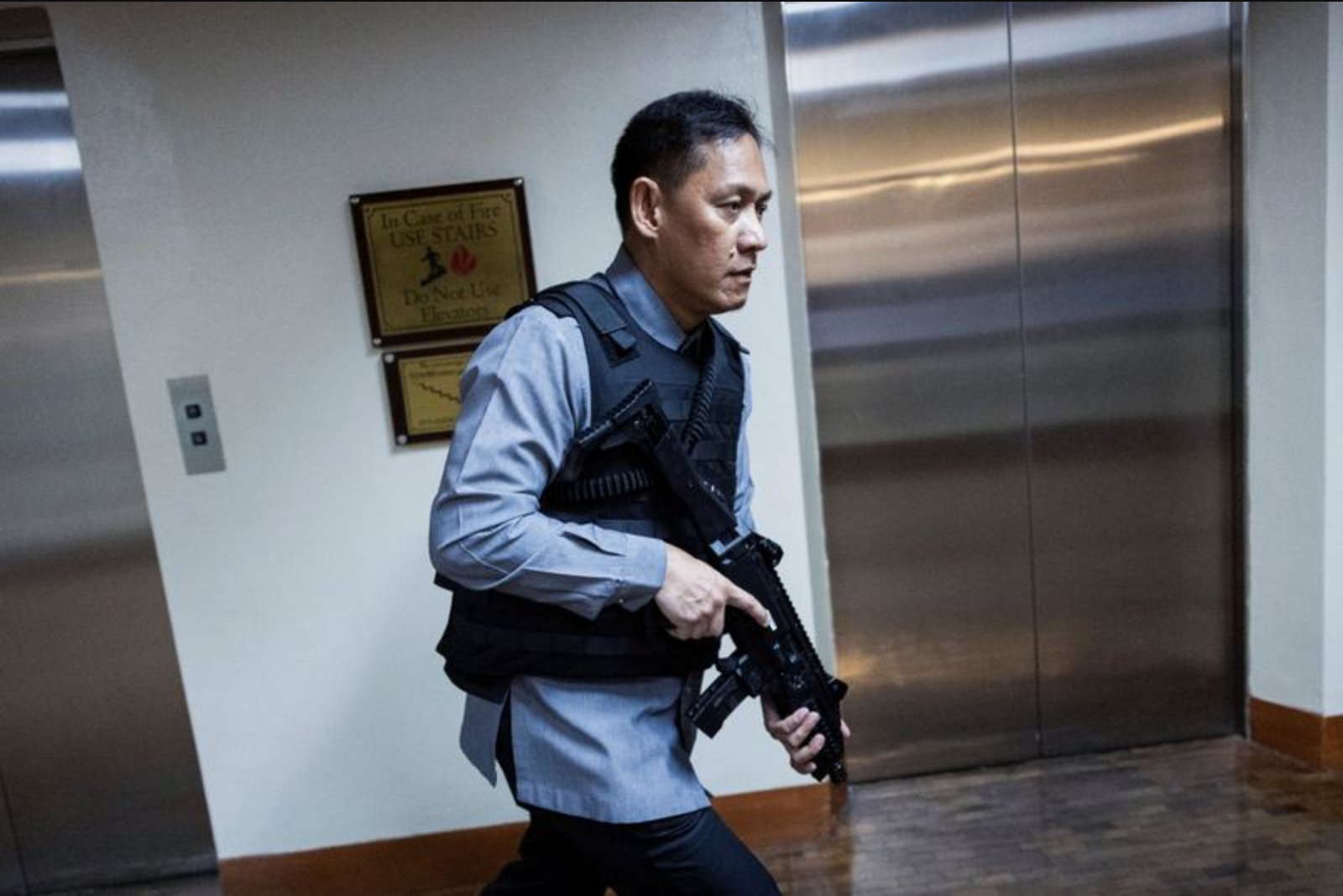
The Senate remained on high alert throughout Wednesday. Security personnel inside the complex wore flak jackets and carried rifles, and police were deployed as protesters gathered outside. Some of those protesters called for dela Rosa's arrest.
Shortly before the gunfire, a group of more than ten marines in camouflage fatigues and carrying assault rifles arrived at the Senate building. The military said that detachment had been requested by the Senate.
Dela Rosa has filed an emergency petition with the Supreme Court asking it to block any attempt to hand him over to The Hague. The court on Wednesday ordered all parties to file responses within 72 hours.
During the Duterte administration, dela Rosa served as a close enforcer of a hard-line anti-drugs policy that rights groups say led to thousands of alleged drug suspects being killed. Those groups have accused police of systematic murders and cover-ups in operations described as seeking the "neutralisation of illegal drug personalities nationwide." Police officials reject those allegations and have said the more than 6,000 recorded deaths in Project Double Barrel involved persons who were armed and resisted arrest.
Activists have said the true death toll may never be known, pointing to daily fatal attacks in slum areas that authorities have attributed to vigilantes and turf battles. Dela Rosa has said he is willing to face trial in a Philippine court and has argued that any transfer to the ICC would be illegal because the Philippines is no longer a party to the Rome Statute.
The country withdrew from the ICC in 2018, a move announced by Duterte after the court opened a preliminary examination into the crackdown. The ICC maintains that crimes committed while a country was a member fall within its jurisdiction.
The court did not immediately respond to a request for comment on Wednesday's standoff at the Senate.
Duterte is due to become the first former Asian head of state to face an ICC trial. Throughout his presidency and afterward, he repeatedly taunted the court in profanity-laced speeches and declared he would be willing to "rot in jail" to protect his people from the drugs scourge. He continues to deny wrongdoing.
The situation remained fluid at the Senate as legal challenges proceed and authorities and institutions assess the events and the claims surrounding the attempted entry and the gunfire. Officials said they would investigate whether the incident formed part of a wider effort to destabilise institutions, while those inside the legislature continued to secure the complex and monitor developments.