
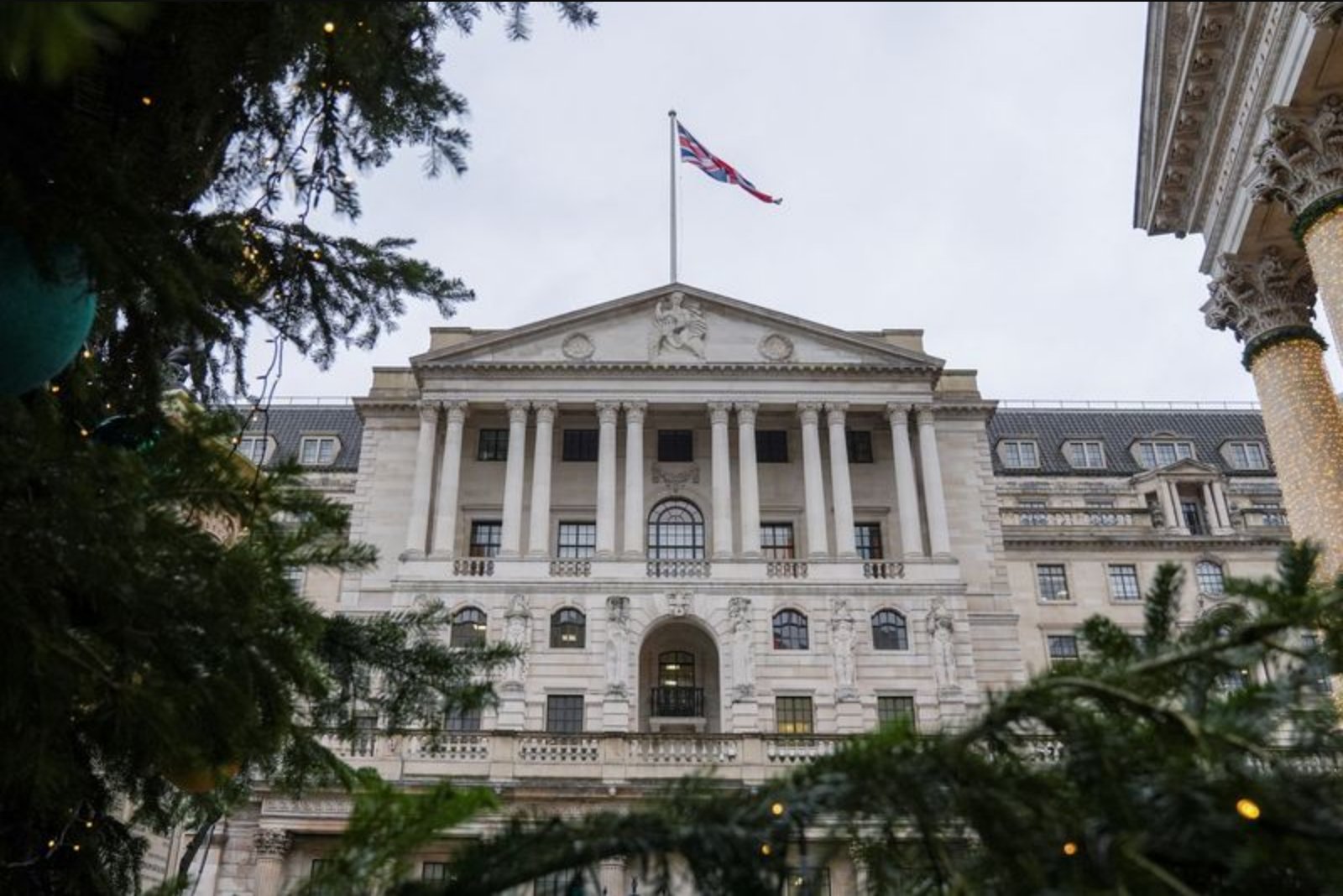
A poll of economists conducted May 11-13 shows the Bank of England is expected to keep its policy rate at 3.75% for the year, even as a growing minority of respondents now foresee at least one rate increase amid renewed energy-price pressure tied to the conflict in Iran.
Financial markets, by contrast, are pricing in two rate rises this year. After its most recent meeting, the Bank warned that the worst-case economic fallout from the Iran war could necessitate "forceful" tightening, while less severe outcomes might not require any additional moves.
Bank of England Governor Andrew Bailey told Reuters last month that investors should not automatically assume further hikes. Nonetheless, division has emerged inside the Monetary Policy Committee - at the April meeting the Bank's chief economist, Huw Pill, diverged from most colleagues and voted in favour of a rate rise.
Analysts at Goldman Sachs said they continue to expect the BoE to remain on hold this year, citing tighter financial conditions and a loosening labour market as reasons the central bank may not need to lift rates. "That said, we see a low hurdle for the BoE to deliver a couple of hikes during the summer if energy price pressures continue to build," Goldman Sachs added.
Political and market dynamics have complicated the outlook. A bruising local election for Prime Minister Keir Starmer - which prompted calls for his resignation - has heightened political risk. At the same time investors are increasingly uneasy about Britain’s fiscal position just as elevated gilt yields and energy-related risks tighten financial conditions.
Some poll respondents noted that higher gilt yields and tighter financial conditions may already be fulfilling part of the Bank's tightening objective, potentially reducing the need for a more aggressive campaign of rate increases despite the rise in inflation risks.
The poll’s steady central outlook comes against a backdrop of rising inflation. Consumer price inflation jumped to 3.3% in March and is forecast by poll respondents to peak at 3.6% in the fourth quarter - nearly double the Bank’s 2.0% target.
Of the 56 economists participating in the poll, nearly 40% now expected at least one rate hike by the end of 2026, up from 23% in the April survey. That marks a sharp shift from earlier in the year when almost all respondents anticipated the next Bank move would be a cut. In the latest poll seven economists predicted at least one rate reduction.
Elizabeth Martins, senior economist at HSBC, said her team is revising its assumptions for how the Middle East conflict will affect the UK economy. Of the three scenarios HSBC outlined in March - "the good, the bad and the ugly" - Martins said they are shifting their base case from the good scenario to the bad. As a result, HSBC now projects two 25 basis point increases this year, compared with no hikes forecast in April.
Policymakers have reflected rising uncertainty in their communications. Last month the Bank abandoned a single central forecast in favour of multiple scenarios, a move meant to signal uncertainty over the likely path of inflation and broader economic growth.
When asked an additional question, most of the economists who responded said renewed cost-of-living pressures have either already begun to materialise or will appear within three months.
Despite these shifts on inflation and policy expectations, growth projections remain subdued. The poll left weak growth forecasts largely unchanged, with GDP expected to expand by 0.8% this year and by 1.2% in the following year.
Key points
- The poll predicts the Bank of England will keep borrowing costs at 3.75% this year, while financial markets price in two hikes.
- Inflation rose to 3.3% in March and is forecast to peak at 3.6% in Q4, nearly double the BoE's 2.0% target.
- Nearly 40% of 56 economists now see at least one rate hike by end-2026; HSBC has moved its base case to a worse scenario and now forecasts two 25 basis point hikes this year.
Risks and uncertainties
- Energy-price shocks from the Iran conflict could force the Bank into "forceful" tightening - this mainly affects energy, utilities, and inflation-sensitive consumer sectors.
- Tighter financial conditions and elevated gilt yields may further strain government borrowing costs and market liquidity, weighing on the gilt market and broader financial sector.
- Political instability following a difficult local election outcome has increased uncertainty about fiscal policy, which could amplify market volatility across bond and currency markets.