
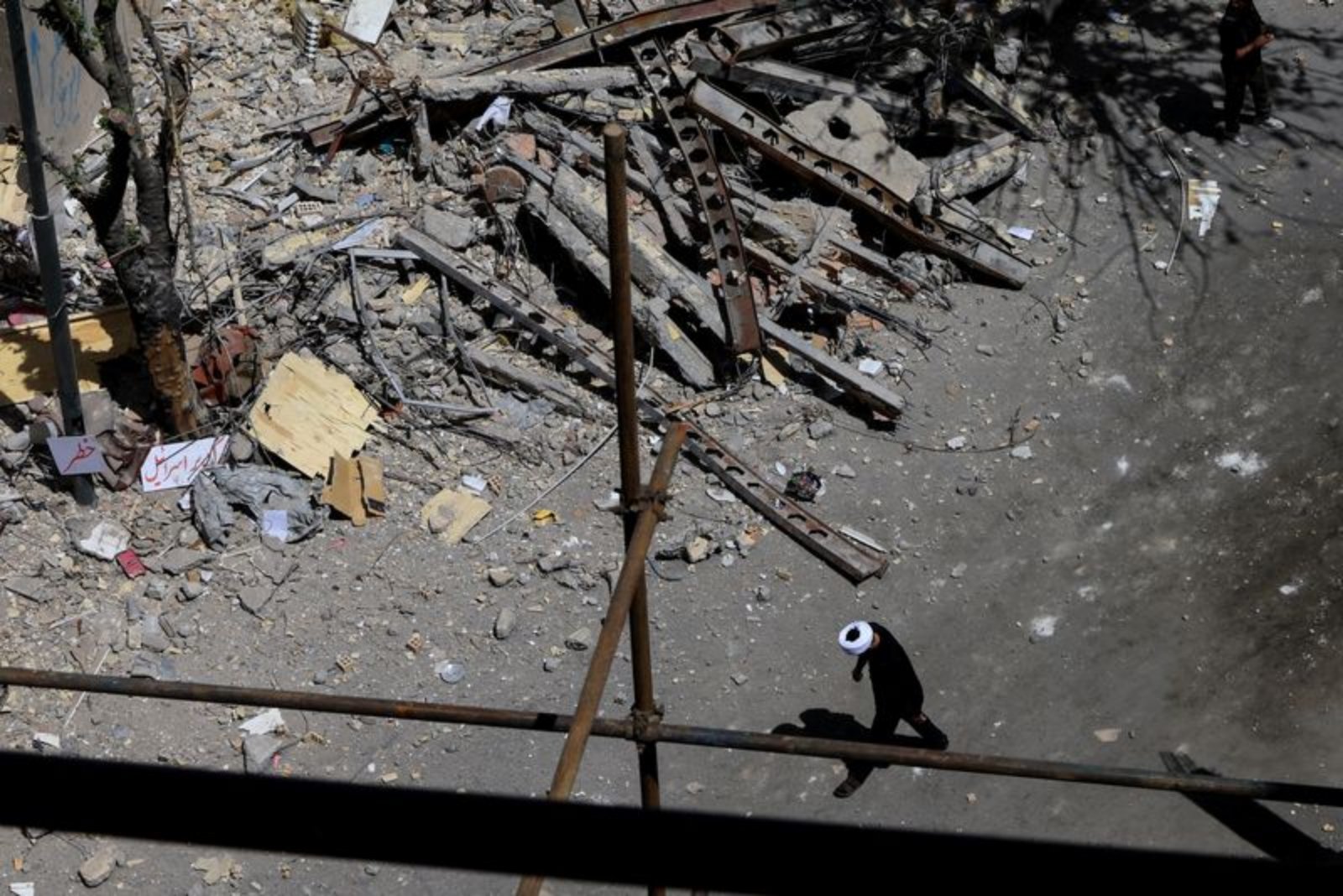
The war that began on February 28 with a massive Israeli-U.S. bombing campaign against Iran has altered assumptions about regional security and produced broad economic and humanitarian consequences across the Middle East. Military strikes, maritime blockades and a second major front in Lebanon have produced widespread damage to infrastructure and disrupted trade flows. Below is a country-by-country account of the impacts described since the conflict began.
Iran
The initial strikes killed Supreme Leader Ayatollah Ali Khamenei and numerous senior officials and generals, yet the governing system appears to have retained its internal cohesion. Khamenei’s son has replaced him in the top position, and the Islamic Revolutionary Guard Corps has emerged more powerful in the post-strike period. Thousands of Iranians were killed during six weeks of sustained U.S.-Israeli airstrikes, including large numbers of children when a school was struck on the first day of the war.
Although the conflict began only weeks after authorities suppressed a widespread domestic uprising with lethal force, there has been little organized domestic opposition reported since the strikes. Tehran’s closure of the Strait of Hormuz has been operational and functions as a deterrent against further attacks, constraining maritime routes for regional exports. Iran is still believed to hold more than 400 kg (900 pounds) of highly enriched uranium - a quantity the United States has demanded be surrendered. At the same time, U.S.-Israeli strikes and a de facto blockade of Iranian ports have inflicted massive damage on the country’s infrastructure, posing a severe threat to Iran’s economy and increasing the risk of future internal unrest.
Iran’s offensive actions targeting Gulf states, combined with Israel’s sustained campaign against Lebanon’s Hezbollah, may also contribute to greater regional isolation for Tehran.
Israel
Israel’s military has claimed repeated operational successes in striking senior Iranian commanders and military facilities, and has intercepted most incoming Iranian missiles. Still, some Iranian projectiles penetrated Israeli defenses. Despite battlefield gains, Israel’s initial objectives remain far from fulfilled: the Islamic Republic endures; Iran’s long-range ballistic missile and drone capabilities continue to pose threats to Israel; and Tehran’s nuclear programme remains salvageable under current conditions.
On the Lebanese front, Israel has inflicted heavy damage on Hezbollah and established a buffer zone inside Lebanese territory. Israeli authorities view this buffer as crucial to border protection, but the strategy risks evolving into a prolonged occupation of Lebanese land with little immediate prospect for a durable peace. Coming after international criticism of Israel’s Gaza campaign, the decision to open a new war that has produced global economic disruption may strain relations with key Western allies.
Lebanon
Lebanon has sustained higher casualties and infrastructure destruction than any other country in this conflict. Israel’s assault initially drove roughly a quarter of the Lebanese population from their homes; although some residents have returned, extensive tracts in the south remain depopulated and under Israeli control. Despite a ceasefire agreed in April, Israel continues to carry out airstrikes across Lebanese territory, and whole villages in the south have been demolished by Israeli forces.
The United States and Israel have intensified pressure on Beirut to disarm Hezbollah, the Iran-backed armed group. Efforts to remove or disarm the organisation risk deepening sectarian divisions in a country still marked by the legacy of the 1975-90 civil war. Hezbollah retains deep roots among Lebanon’s Shi'ite community, while parts of other communities resent the group for pulling the country back into a wider conflict.
United Arab Emirates
Iran’s retaliatory strikes on Gulf states have targeted the United Arab Emirates more than its neighbors, striking civilian infrastructure and energy facilities. In response, the UAE has strengthened its security ties with the United States and with Israel, with which it established normalised relations under the 2020 Abraham Accords. Emirati officials have also advocated for a firm negotiating position in any talks with Iran.
Unlike several Gulf peers, the UAE operates a pipeline that enables some oil exports to be rerouted around the closed Strait of Hormuz, providing a degree of resilience to prolonged maritime disruption. Nevertheless, the conflict threatens to erode the UAE’s role as a global economic hub known for offering security and ease of business.
Saudi Arabia
Saudi Arabia, the region’s largest and wealthiest Gulf monarchy, also has pipeline capacity that allows it to export much of its oil via the Red Sea. This logistical flexibility has allowed Riyadh to benefit from elevated oil prices and to offset losses from shipments blocked in the Strait of Hormuz. However, the longer-term economic impact of the war could further undermine Crown Prince Mohammed bin Salman’s flagship Vision 2030 economic programme, plans that have already been scaled back.
Beyond economic questions, the conflict has prompted scrutiny of Saudi Arabia’s broader foreign and security policies, including the kingdom’s long-standing reliance on the United States as its principal military ally and the 2023 detente with Iran.
Qatar
Qatar has developed diplomatic links with Tehran, but unlike some Gulf producers it does not have an export route that bypasses the Strait of Hormuz. The country has been forced to suspend production of liquefied natural gas, its primary source of export revenues. Following Israeli strikes on Iranian energy targets, Qatar experienced one of the most damaging Iranian retaliatory attacks, with the North Field gas facilities struck and now requiring years of repair.
As the host of the largest U.S. air base in the Middle East, Qatar will face difficult policy choices about regional security once the immediate fighting subsides, particularly if Iran maintains leverage over the Strait of Hormuz.
Yemen
The Houthi movement in Yemen, which is aligned with Iran and controls the capital and most densely populated areas, has largely refrained from joining the wider conflict despite early fears it might intensify control over maritime chokepoints by attacking shipping near the mouth of the Red Sea. The motives behind the Houthis’ relative restraint have not been made clear. Observers note the group is less closely tied to Iran than Lebanon’s Hezbollah and appears primarily focused on securing a ceasefire in Yemen’s protracted civil war with factions backed by Saudi Arabia.
Iraq
Physical destruction inside Iraq has been relatively limited even though there were attacks on Iraqi oil projects. The economic consequences, however, are pronounced: the closure of the Strait of Hormuz has cut off most oil exports, which account for nearly all government revenues, producing a grim fiscal outlook.
Iraq’s Shi’ite-dominated government, installed after the 2003 U.S.-led invasion, has long navigated a delicate balance between ties to Washington and to Tehran. The current war has made maintaining that balance more difficult, with Baghdad increasingly pressured by the United States to rein in powerful Iran-backed militia groups whose assertiveness has grown.
Kuwait
Kuwait, another energy-rich state with no alternative export route other than passage through the Strait of Hormuz, has seen its export revenues fall to near zero. While Kuwait has not traditionally taken as assertive a geopolitical posture as Saudi Arabia, the UAE or Qatar, it faces comparable exposure to prolonged disruptions in Gulf shipping lanes and the resulting economic fallout.
Regional economic and strategic picture
Across the Middle East, the conflict has produced several common threads. Energy infrastructure has been directly targeted, key maritime routes have been disrupted by Tehran’s closure of the Strait of Hormuz, and states with pipeline access around the strait have been able to mitigate some immediate export losses. Yet all are vulnerable to broader damage to investor confidence and the potential long-term erosion of ambitious economic plans. Pressures to confront or disarm armed groups - from Hezbollah in Lebanon to Iran-backed militias in Iraq - have increased, raising political risks that could compound economic strains.
The human toll is substantial in several countries, with Lebanon suffering the greatest losses and Iran and Israel both incurring heavy casualties. The war’s continuation threatens more infrastructure damage, protracted displacement of populations and deeper economic damage across the Gulf and Levant.