
World June 1, 2026 01:52 PM

Sheinbaum Accuses U.S. Far-Right of Coordinating Attacks on Her Government

Mexican president escalates rhetoric over alleged interference as tensions with Washington deepen

By Jordan Park

President Claudia Sheinbaum said elements of the U.S. far right are coordinating with domestic actors to undermine her administration, intensifying criticism of the United States amid recent indictments of Mexican politicians and new legislation on foreign interference in elections. Despite diplomatic strain, her domestic approval remains strong.

Sheinbaum Accuses U.S. Far-Right of Coordinating Attacks on Her Government

Key Points

  • Sheinbaum accused U.S. far-right sectors of coordinating with domestic groups to attack her government, following a weekend rally where she decried alleged interference by U.S. agencies and business interests - impacts diplomatic relations and trade ties.
  • Relations with the United States have been strained since Trump began his second term in January, with disputes over tariffs and immigration policies cited as contributors to the deterioration - relevant to trade and cross-border commerce.
  • Mexico's congress approved a constitutional amendment permitting the annulment of elections due to "foreign interference," while Sheinbaum's approval rating remains high at 69% according to El Financiero - notable for political stability and market perceptions.

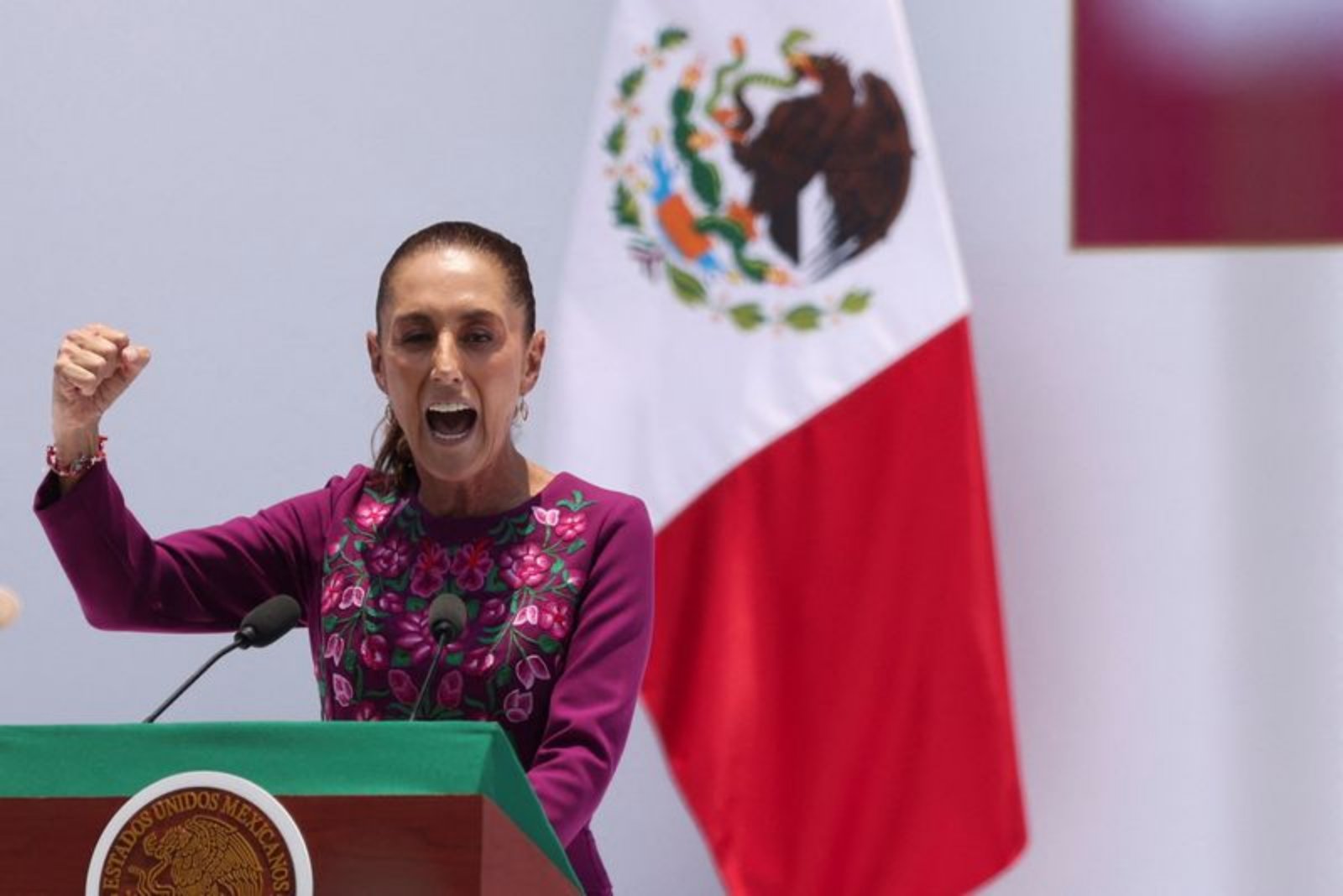
Mexico's President Claudia Sheinbaum escalated public criticism of the United States on Monday, accusing far-right sectors in that country of working with groups inside Mexico to mount attacks on her government.

Sheinbaum made the charge at a press conference following a weekend rally in which she accused U.S. government agencies and business interests of meddling in Mexican affairs. "I believe it is sectors of the far right in the United States who want a bad relationship with Mexico" because of "ideological" differences, she said.

The president was careful to distinguish her criticism of those she characterized as far-right actors from the U.S. president. She said she does not believe the actions she described are being directed by Donald Trump.

Tensions between Mexico and the United States have increased since Trump began his second term in January, the president said, a deterioration driven in part by disputes over tariffs and immigration policies. Relations worsened further in April after the U.S. Department of Justice indicted 10 Mexican officials, including Sinaloa Governor Ruben Rocha of the ruling Morena party, on allegations of links to drug trafficking.

In response to those indictments and the broader diplomatic friction, Sheinbaum has amplified calls to defend Mexico's sovereignty. At a Sunday event marking the second anniversary of her 2024 electoral victory, she posed a rhetorical question to supporters: "Who decides in Mexico, foreign agencies or the people?" and pledged, "We are going to defend Mexico's sovereignty and independence."

Last week, Mexico's congress approved a constitutional amendment that allows for the annulment of elections in cases of what lawmakers define as "foreign interference." Opposition figures have criticized the change, arguing it could be used as a pretext to call new elections if outcomes are unfavorable to the ruling party.

Despite the rising diplomatic strain with the United States, Sheinbaum's standing among Mexican voters appears resilient. A poll published by newspaper El Financiero reported her approval rating at 69 percent, reversing a slight decline that had begun in March.


Contextual note - The president's public remarks followed a weekend rally and come amid a series of legal and political moves that have heightened tensions between the two countries. The developments include U.S. indictments of Mexican officials and recent constitutional changes in Mexico intended to address foreign influence in elections.

Risks

  • Escalating diplomatic friction following U.S. indictments of Mexican officials, including a state governor, could increase political uncertainty - affecting sovereign risk perceptions and investor confidence.
  • The new constitutional amendment allowing election annulments in cases of alleged foreign interference has been criticized by opposition leaders as a potential tool to force new elections if outcomes are unfavorable to the ruling party - creating electoral and political process uncertainty.
  • Accusations of coordinated interference by foreign far-right sectors and domestic actors could further strain bilateral relations and complicate cooperation on tariffs and immigration - with potential consequences for trade and cross-border policy coordination.

More from World

Peru Runoff Poised on a Knife-Edge as Sanchez Narrows Gap With Fujimori, Ipsos Poll Finds Jun 4, 2026 Kennedy Center Directed to Revert Name After Federal Ruling Jun 4, 2026 Colorado Appeals Court Orders New Trial for Paramedics in Elijah McClain Death Jun 4, 2026 U.S. Treasury Adds Cuban President Miguel Diaz-Canel to Sanctions List Jun 4, 2026 Zelenskiy Invites Putin to Direct Talks in Open Letter, Proposes Ceasefire During Negotiations Jun 4, 2026