
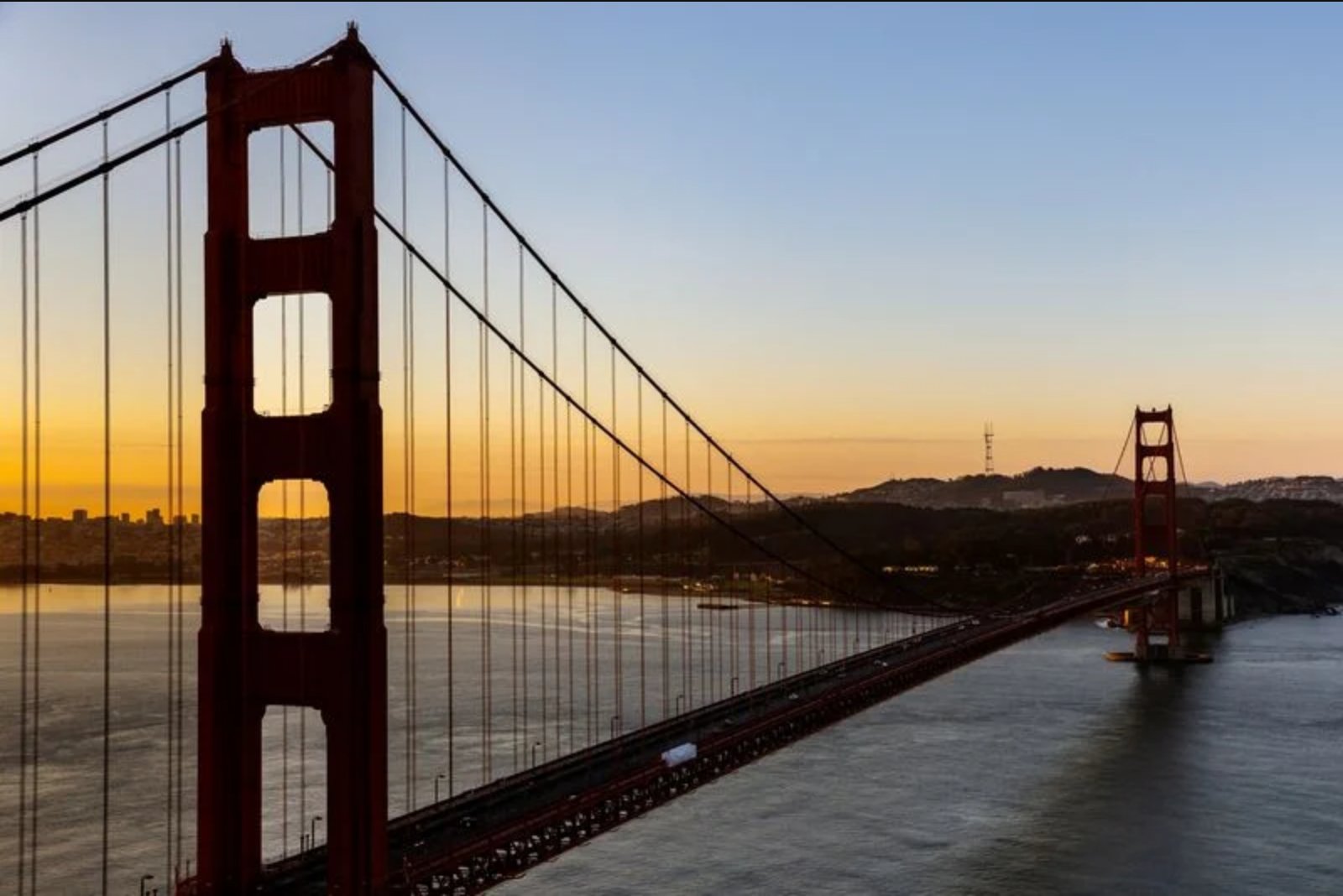
A jury in San Francisco has convicted seven individuals who participated in a 2024 protest that obstructed traffic on the Golden Gate Bridge, finding each guilty on a series of misdemeanor counts while remaining deadlocked on a felony conspiracy charge.
San Francisco District Attorney Brooke Jenkins said in a statement that the seven defendants were convicted on six misdemeanor counts apiece, including false imprisonment, obstruction of thoroughfare and unlawful assembly. Jenkins added that one defendant was also found guilty of refusing to disperse. The seven people named in local media reports are Bhavika Anandpura, River Allen, Rocky Chau, Sara Cantor, Conrad de Jesus, Sarah Ferrell, and Em Tillotson.
The jury was unable to reach agreement on the more serious count of felony conspiracy - defined as an agreement between two or more people to commit a crime together with an overt act - a charge that could have carried a prison term of up to 15 years if a conviction had been secured. "At this time we will evaluate our options and consider next steps," Jenkins said regarding the unresolved charge.
Defense lawyers argued that their clients acted out of conscience in response to the destruction they attributed to Israel's military campaign in Gaza and to U.S. political support for Israel. Counsel for the defendants said that demonstrators turned to obstructing the bridge after other tactics, such as writing letters and appealing to congressional representatives, failed to produce change.
The prosecutor's office emphasized the public disruption caused by the demonstration, saying the protest halted traffic for four hours and posed a safety risk to those caught in the resulting congestion.
One attorney representing a defendant, Nuha Abusamra, stated that the convictions on the lesser counts represented a kind of success for the movement, according to local media outlet KQED. She was quoted as saying, "Taking a bridge and blocking traffic for a few hours years ago is the bare minimum that we should be doing as American citizens while our tax dollars continue to fund the mass genocide of Palestinians."
The protesters will be sentenced in August. Under the convictions for misdemeanor offenses they face up to five years in county jail.
The demonstration on the Golden Gate Bridge was part of a wave of large-scale protests across the United States in 2024 that demanded an end to Israel's war in Gaza and sought to pressure U.S. policy toward Israel. The demonstrations also included calls for universities to divest funds from companies perceived to be supporting Israel.
The context cited by some participants and advocates includes the broader conflict in Gaza. The report provided to the court referenced that Israel's assault on Gaza - which has killed tens of thousands, triggered a hunger crisis and internally displaced nearly all of Gaza's population - has been called a genocide by rights experts, scholars and United Nations inquiries. The statement added that Israel describes its actions as self-defense following an October 2023 Hamas-led attack that killed 1,200 people and in which over 250 were taken hostage.
The unresolved felony charge leaves open legal uncertainty about whether prosecutors will pursue additional proceedings. For now, sentencing on the misdemeanor convictions is the next scheduled milestone in the case.