
World July 13, 2026 08:25 AM

Russian Security Service Says It Intercepted Western-Made AI FPV Drones Bound for Deep Strikes

FSB reports drones dropped by larger craft and transported across Russia to hit air bases in the Urals and Far East

By Marcus Reed
Share
Twitter Reddit Facebook LinkedIn

Russia's Federal Security Service said it intercepted Western-made, AI-enabled first-person-view (FPV) drones that were dropped onto Russian soil by larger Ukrainian fixed-wing aircraft and balloons, and then moved in concealed trailers across the country for planned attacks on military air bases in the Ural and Far East regions. Authorities said the operation was linked to a previous strike pattern and that suspects were detained.

Russian Security Service Says It Intercepted Western-Made AI FPV Drones Bound for Deep Strikes
Summarize with
ChatGPT Perplexity Claude Grok Gemini

Key Points

  • FSB reported seizure of Western-made AI-enabled FPV drones dropped by larger Ukrainian fixed-wing craft and balloons, initially landing in Bryansk region.
  • Drones were allegedly transported across Russia in trailers with false bottoms to Chelyabinsk (Urals) and Amur (Far East) and were planned to be used against Shagol and Ukrainka air bases; perpetrators were detained.
  • The FSB said the drones were manufactured in the United States, Britain, Canada and Sweden, carried more than 1 kg of explosives each, and used AI navigation to avoid Russian jamming; operation was compared to a 2025 campaign dubbed "Spider’s Web".

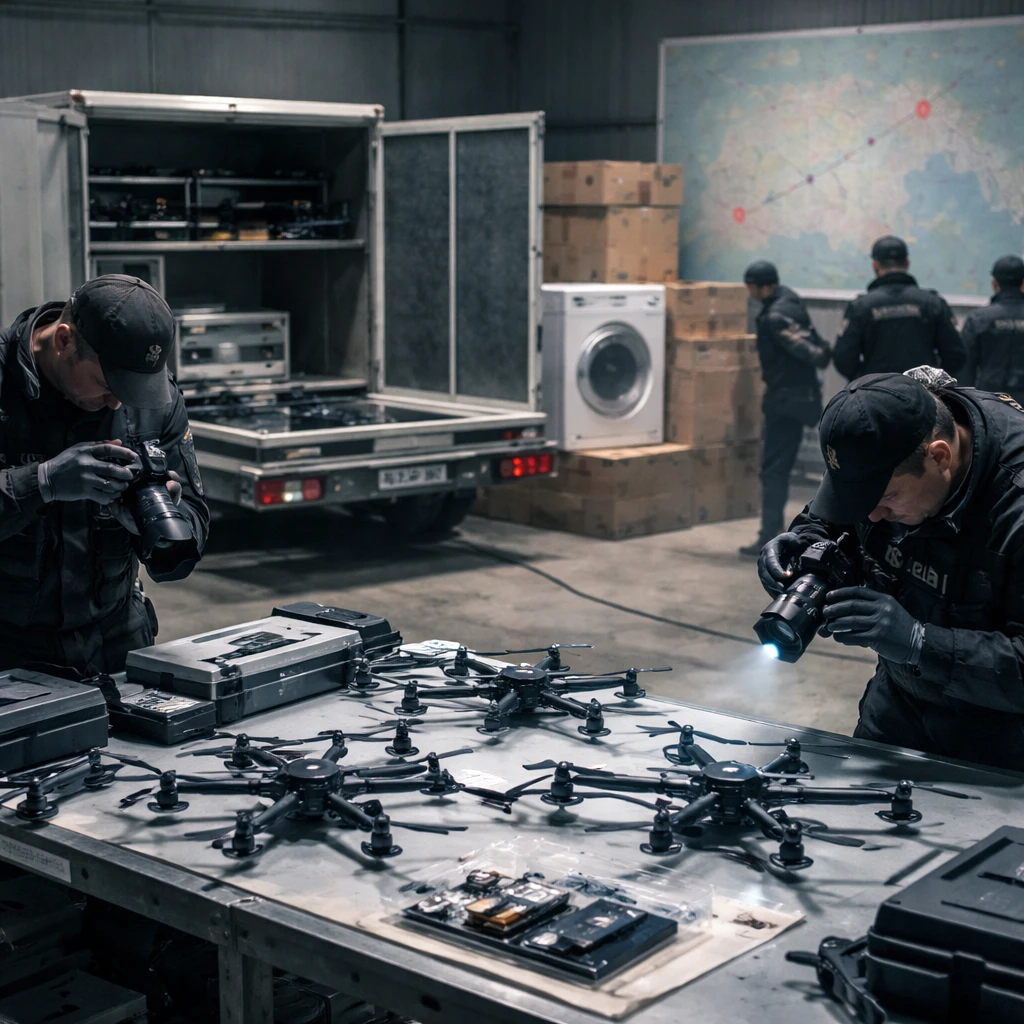
The Federal Security Service (FSB) of Russia reported on Monday that it had seized Western-manufactured, AI-powered FPV drones that were allegedly released over Russian territory by larger Ukrainian fixed-wing drones and balloons. According to the FSB, the smaller drones initially landed in the Bryansk region near the Ukrainian border and were subsequently moved inside trailers with false bottoms and loaded with household appliances across Russia to the Chelyabinsk region in the Ural Mountains and to the Amur region in the Far East.

Authorities said the devices were intended for strikes against the Shagol and Ukrainka air bases in those regions and that the individuals involved in the operation had been detained. The FSB stated the drones were produced in the United States, Britain, Canada and Sweden, each carrying more than 1 kg of explosives and equipped with AI navigation systems designed to evade Russian jamming.

Russian officials drew a parallel between the foiled plot and an earlier 2025 operation that targeted military air bases under a campaign referred to as "Spider’s Web", in which about 20 aircraft were damaged. The 2025 incident reportedly included attacks on the Ukrainka base and made use of trucks transporting wooden sheds with retractable roofs to move drones closer to their targets.

The FSB account situates the discovery amid a period of intensified long-range actions that Russia attributes to Ukraine, saying recent strikes have hit refineries and defence-linked enterprises located thousands of kilometres from Ukraine’s border. Russian authorities have linked those attacks to disruptions in domestic fuel supplies, saying major refineries have gone out of operation and contributed to fuel shortages across the country.

In recent weeks Russian rhetoric toward Western countries has hardened, with officials accusing Western states of direct involvement in Ukraine’s long-range strikes on Russian territory. Kremlin spokesman Dmitry Peskov said last week that the "special military operation" in Ukraine had evolved into a war because of Western backing for Ukraine.


Contextual note: The details above reflect the FSB's public statements about the seizure, movement and intended use of these drones, and the Russian government's framing of recent cross-border attacks and their consequences.

Risks

  • Continued long-range strikes and interdiction efforts create operational risk for defence and aviation sectors, particularly military airbases cited as targets.
  • Sustained attacks on refineries and defence-linked enterprises pose supply chain and energy market risks, reflected in reported refinery outages and nationwide fuel shortages.
  • Escalating anti-Western rhetoric and accusations of Western involvement increase geopolitical and political risk that may affect cross-border trade and investor sentiment in relevant markets.

More from World

U.S. Launches Campaign to Curb International Criminal Court's Reach, State Department Says Jul 13, 2026 EU Expands Sanctions to Target VKontakte, Surveillance Firms and GRU Personnel Jul 13, 2026 European Commission and partners launch €883.6 million Team Gaza Initiative for reconstruction Jul 13, 2026 Bukele Secures Ruling Party Nomination to Seek Third Term Jul 13, 2026 Survivors Recall Panic and Loss After Deadly Blaze at Bangkok Bar Jul 13, 2026