
World July 13, 2026 08:59 AM

European Commission and partners launch €883.6 million Team Gaza Initiative for reconstruction

Donor group unveils one-billion-dollar program focused on utilities, debris clearance and health facilities amid large-scale rebuilding needs

By Jordan Park
Share
Twitter Reddit Facebook LinkedIn

The European Commission, together with more than a dozen countries and international financial institutions, announced the Team Gaza Initiative in Brussels to provide €883.6 million ($1 billion) in projects to support Gaza's recovery. The program targets water and sanitation restoration, debris removal and the reconstruction of health infrastructure as the territory remains heavily damaged more than two and a half years after the conflict began in October 2023. The United Nations estimates reconstruction could cost about $70 billion.

European Commission and partners launch €883.6 million Team Gaza Initiative for reconstruction
Summarize with
ChatGPT Perplexity Claude Grok Gemini

Key Points

  • The European Commission and more than a dozen countries launched the Team Gaza Initiative in Brussels to deliver €883.6 million ($1 billion) for reconstruction projects in Gaza.
  • Funding is designated to restore water and sanitation systems, clear debris and rebuild health infrastructure, affecting utilities, construction and healthcare sectors.
  • Participants include 13 named countries alongside the World Bank and the European Investment Bank; Australia and Canada are expected to join. The Commission did not disclose individual country contributions.

The European Commission, joined by over a dozen countries and major financial institutions, unveiled a coordinated aid package on Monday aimed at helping Gaza recover from wartime damage. Branded the "Team Gaza Initiative," the program will mobilize €883.6 million, the Commission said, to finance a range of reconstruction projects across the coastal territory.

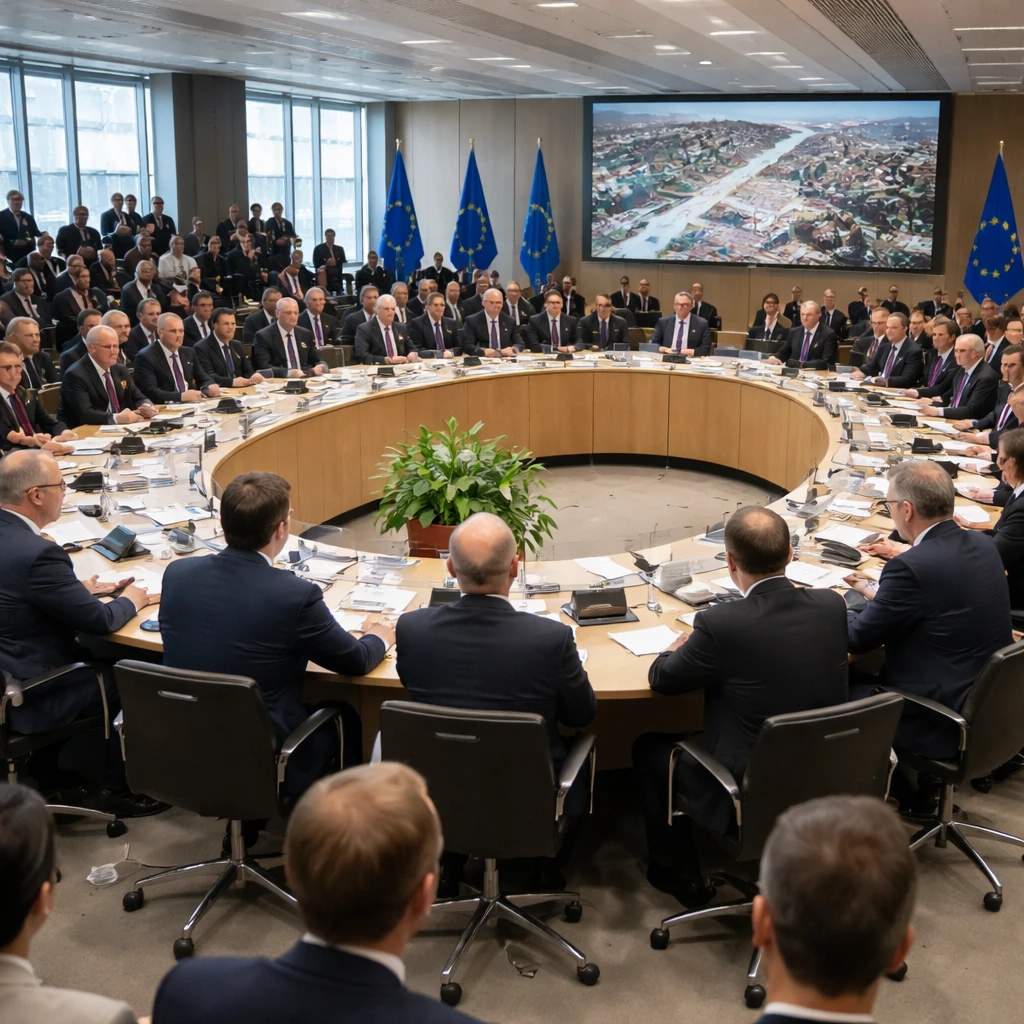
Announced at a donor meeting in Brussels, the initiative is directed at rebuilding critical services and infrastructure. According to a statement from the Commission, funding under the program will be used to restore water and sanitation systems, remove debris from affected areas and rebuild health infrastructure.

Gaza remains extensively damaged more than two and a half years after the conflict began with the October 2023 attack on Israel by Hamas. A ceasefire has been in effect since last October. The United Nations places the bill for rebuilding the territory at roughly $70 billion, a figure far larger than the amount committed through this initiative.

Participants named by the Commission include Spain, Denmark, Britain, Germany, Norway, Finland, Italy, the Netherlands, France, Japan, Switzerland, Sweden and Belgium. The World Bank and the European Investment Bank are also involved alongside the Commission. Australia and Canada were reported as expected to join the effort.

The Commission did not provide a breakdown of how much each partner is contributing to the €883.6 million package. Details on individual country contributions were not released.

For sectors involved in reconstruction, the announced funding specifically targets utilities and sanitation, debris removal and health system rebuilding. The inclusion of multilateral lenders indicates a role for international development finance in channeling the funds, while national contributions reflect a coalition-based approach to project financing and implementation.

While the declared €883.6 million provides immediate project financing, the Commission and partner governments have not disclosed further specifics on allocation by project or timelines for disbursement. The scope and scale of Gaza's overall reconstruction needs, as estimated by the United Nations, remain substantially larger than the resources announced under the Team Gaza Initiative.

Risks

  • Scale mismatch between pledged funds and estimated reconstruction needs - the United Nations estimates rebuilding Gaza will cost around $70 billion, far exceeding the €883.6 million announced; this impacts long-term infrastructure, construction and financing plans.
  • Uncertainty over partner commitments and timing - Australia and Canada are expected to join but their participation is not yet confirmed, and the Commission withheld details on country-level contributions; this creates uncertainty for project cash flows and implementation timelines.
  • Limited disclosure on allocation and disbursement - the Commission did not release a breakdown of individual contributions or specific project timelines, which may affect planning for sectors receiving aid such as health systems, water utilities and waste removal contractors.

More from World

U.S. Launches Campaign to Curb International Criminal Court's Reach, State Department Says Jul 13, 2026 EU Expands Sanctions to Target VKontakte, Surveillance Firms and GRU Personnel Jul 13, 2026 Russian Security Service Says It Intercepted Western-Made AI FPV Drones Bound for Deep Strikes Jul 13, 2026 Bukele Secures Ruling Party Nomination to Seek Third Term Jul 13, 2026 Survivors Recall Panic and Loss After Deadly Blaze at Bangkok Bar Jul 13, 2026