
World August 18, 2026 03:11 AM

Philippine Officials Say U.S. Move to Middle East Won't Slow Joint Military Activity

Manila says alliance remains firm despite redeployment of some U.S. defence assets, including an aircraft carrier, to the Middle East

By Caleb Monroe
Share
Twitter Reddit Facebook LinkedIn

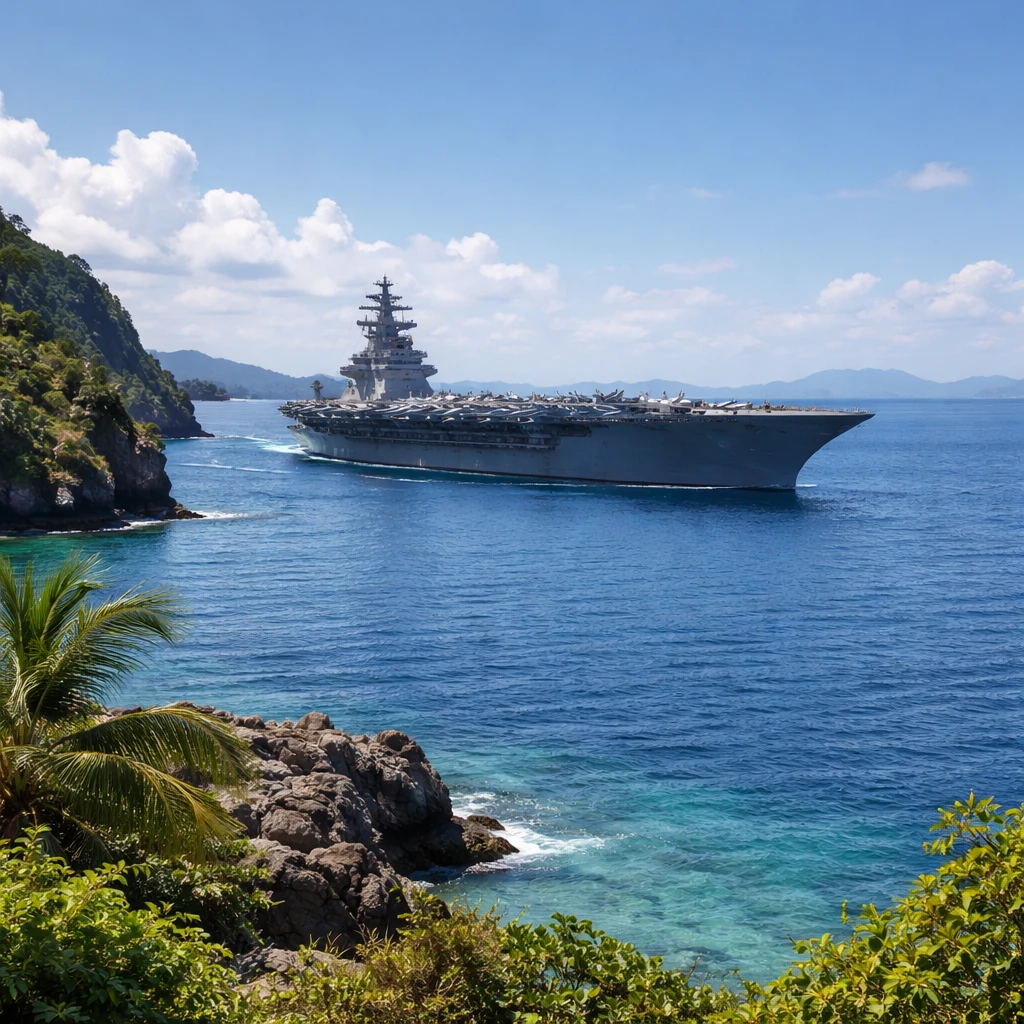
The Philippine government says it does not expect a decrease in military cooperation with the United States after Washington redeployed certain defence assets, including the USS George Washington, from the Pacific to the Middle East. Manila's military spokesperson stressed the enduring nature of the defence commitment, while U.S. officials visiting the Philippines echoed continued engagement in the Indo-Pacific.

Philippine Officials Say U.S. Move to Middle East Won't Slow Joint Military Activity
Summarize with
ChatGPT Perplexity Claude Grok Gemini

Key Points

  • Philippine military officials say they expect no reduction in joint activities with the U.S. despite the redeployment of assets, including the USS George Washington - sectors affected: defence and military logistics.
  • The Philippines and the U.S. maintain longstanding defence arrangements, such as a mutual defence treaty and agreements on visiting forces and base access - sectors affected: defence partnerships and regional security.
  • Manila hosts numerous large-scale joint exercises and exchanges with U.S. forces annually, and a new program of drills and expert exchanges has been approved for the coming year - sectors affected: defence operations and training providers.

MANILA, Aug 18 - The Philippine government does not anticipate any reduction in its military activities with the United States despite the redeployment of some American defence assets to the Middle East, a military spokesperson said on Monday.

Roy Vincent Trinidad, speaking at a press briefing, addressed concerns raised by the transfer of assets - notably the USS George Washington aircraft carrier - from the Pacific to the Middle East. The move had prompted questions about U.S. defence arrangements in the Indo-Pacific, but Trinidad said the Philippines saw no weakening of Washington's commitment.

"We do not foresee any dip or any slowing down in our activities," Trinidad told reporters. He added, "The defence commitment between the U.S. and the Philippines is ironclad."

The comments came after President Donald Trump instructed the Pentagon to reduce the scale of joint military exercises with South Korea. The president cited the cost of the drills and Seoul's refusal to take part in actions against Iran as the reasons for the instruction.

Manila is one of Washington's closest defence partners in Asia. The two countries maintain a long-standing mutual defence treaty, as well as agreements governing visiting forces and U.S. access to various defence sites and bases across the Philippine archipelago.

Each year the Philippines hosts numerous events and war games with U.S. forces involving thousands of military personnel. In recent years the bilateral relationship has included some of the allies' largest joint exercises, and Manila has approved a new slate of activities for the coming year that includes large-scale drills and exchanges among subject-matter experts.

During a visit to Manila last week, Pentagon policy chief Elbridge Colby reaffirmed Washington's stance on regional engagement, repeating that the United States is not disengaging from Asia and is focused on sustaining a favourable balance of power in the Indo-Pacific.

Philippine officials framed the ongoing volume of planned exercises and exchanges, along with recent high-level U.S. visits, as evidence that redeployments to other regions will not translate into a reduced tempo of joint activities in the Philippines.

Risks

  • Redeployment of U.S. assets to the Middle East has prompted questions about U.S. defence arrangements in the Indo-Pacific - risk for regional security and defence planning.
  • U.S. instructions to scale back joint drills with South Korea create uncertainty about the future scope of multinational exercises in the region - risk for defence cooperation and routine interoperability training.
  • The shifting allocation of U.S. military assets could create short-term logistical and readiness challenges for planned exercises, affecting defence operations and training schedules.

More from World

Alliance Under Pressure: How Trump’s Deal-Driven Approach Reshaped U.S.-South Korea Relations Aug 18, 2026 Judge Orders Release of Woman Accused in World War Two Memorial Vandalism Aug 17, 2026 DOJ Opens Compliance Probe of College of William & Mary Over Alleged Preferential Treatment for Minority Students Aug 17, 2026 Netanyahu Faces Test as Likud Members Pick Candidates in Contentious Primaries Aug 17, 2026 Iran Demands Access to Qatar After Dispute Over Alleged Captured Pilots Aug 16, 2026