
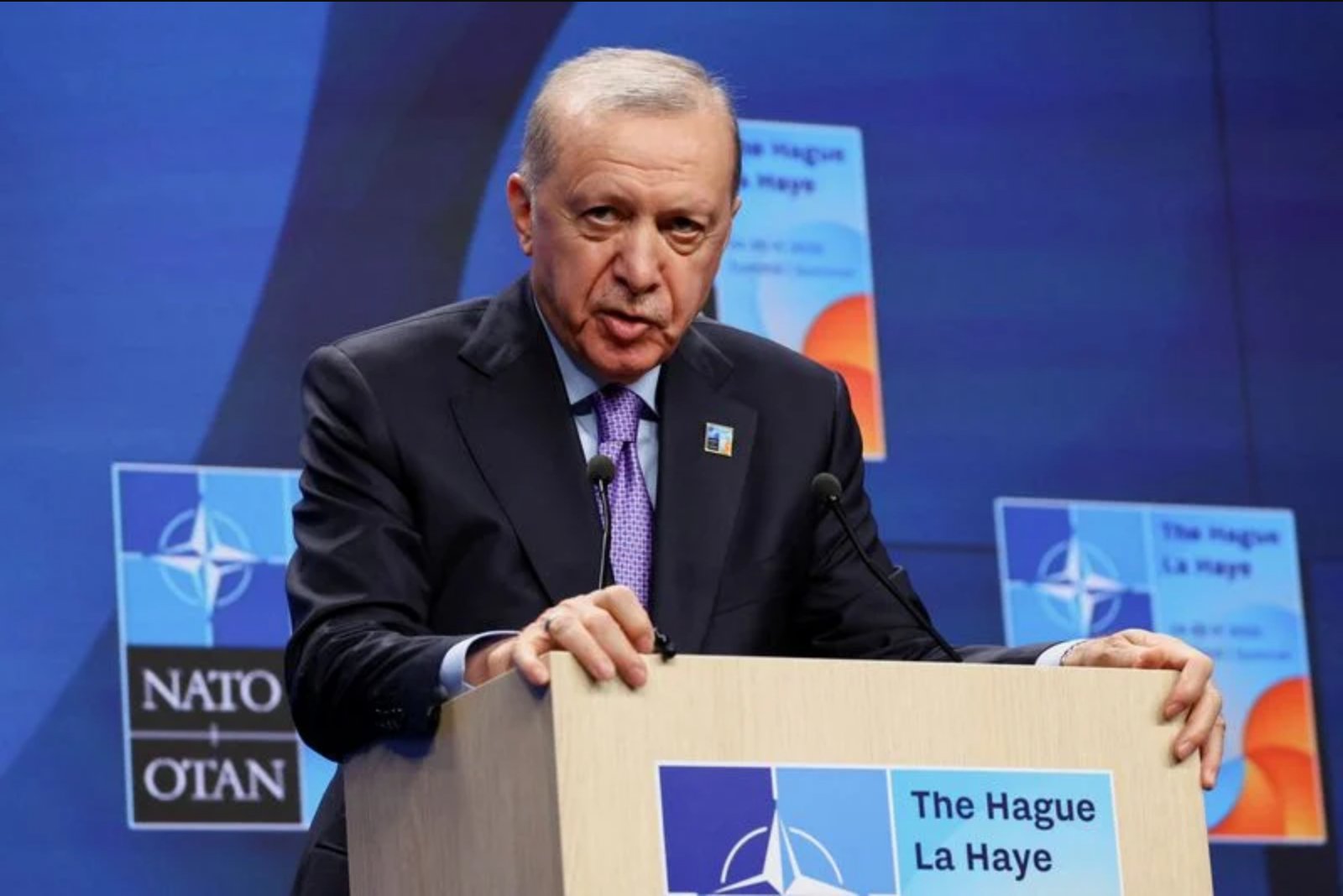
Five years after a near-diplomatic rupture between Ankara and Western envoys, governments allied with Turkey have substantially reduced public criticism of the country’s record on civil liberties and political rights. That shift will be visible when leaders from NATO’s 32 member states convene in Ankara for a summit on July 7-8, where officials say public rebukes over an unprecedented legal crackdown on the main opposition Republican People’s Party (CHP) are not expected.
In 2021, tensions flared when 10 Western ambassadors jointly called for the release of a man they described as a political prisoner, prompting President Tayyip Erdogan to order their expulsion. After two days of intensive diplomacy, the U.S., French, German, Canadian and other envoys issued conciliatory statements and Erdogan warned they should be more cautious going forward. Since that episode - and particularly after Russia’s invasion of Ukraine in 2022 heightened Europe’s sense of exposure - Western capitals have largely refrained from airing public concerns about Ankara’s democratic backsliding.
Diplomats involved in summit planning say the alliance’s agenda in Ankara will emphasize unity and defence-industrial cooperation rather than rights-focused criticism. They do not expect leaders to call out the jailing of Istanbul’s mayor, Ekrem Imamoglu - a leading presidential contender and Erdogan’s principal political rival - or to openly confront Ankara over mass detentions and other measures targeting opposition figures.
Washington and European capitals favour private diplomacy
Several Western diplomats argue that candid public condemnations have limited practical effect and prefer to raise delicate concerns in private. That approach reflects a wider calculation in which Turkey’s strategic and military significance - including its large armed forces and role as a major exporter of drones - outweighs the perceived benefits of naming and shaming.
Critics of Erdogan’s administration contend that the reticence of Western governments effectively permits an authoritarian trajectory, marginalises the opposition domestically and contradicts NATO’s founding ideals of democracy and the rule of law. David Satterfield, a former U.S. ambassador to Ankara and now director of the Baker Institute for Public Policy, told Reuters that it remains important for outside governments to speak out about the erosion of democratic institutions in Turkey so that Turks hear those concerns voiced by others. He rejected the notion that his past human rights advocacy harmed bilateral relations and argued that earlier periods of silence had not served to improve ties.
In 2021 Erdogan briefly sought to have Satterfield and nine other ambassadors declared persona non grata after they appealed for the release of jailed philanthropist Osman Kavala. Kavala has been detained for nearly nine years and faces a potential life sentence on charges he denies. The European Court of Human Rights has concluded that Kavala and others in the case should be released due to insufficient evidence and that his detention was intended to silence him. Ankara’s ruling Justice and Development Party (AK Party), in power for 23 years, rejects claims that the courts are politicised and maintains that the judiciary operates independently.
Restrictions and detentions ahead of the summit
Human rights organisations have raised alarms about preparations for the NATO meeting. Dozens of Turkish journalists from independent outlets have been denied accreditation to cover the summit, and authorities have detained more than 200 people, citing security concerns. NATO said it relies on the host nation for guidance on accreditation matters, while Erdogan’s office did not respond to requests for comment on the media denials.
When asked whether the alliance planned to raise rights issues at the summit, a NATO official referred to an earlier statement about the accreditation situation and emphasised the importance of reporters being able to attend in person. The U.S. embassy in Ankara did not immediately address questions about any change in policy toward Turkey.
Few foreign capitals have publicly weighed in on recent actions against the CHP. Some Western diplomats believe that public denunciations do little to halt democratic backsliding and prefer private channels of engagement with Turkish authorities.
Strategic and economic drivers temper criticism
Ankara’s strategic weight within NATO has increased in recent years, partly because the alliance views Turkey as a critical bulwark against potential Russian aggression along its southeastern flank. Turkey fields NATO’s second-largest military and is a prominent exporter of armed drones, factors that have elevated its value to alliance partners despite prior disagreements - including Ankara’s delay of Sweden and Finland’s membership bids in 2022-2023 and its relatively cordial ties with Moscow.
NATO’s secretary-general and other officials have signalled that the summit will underline alliance solidarity and expand defence-industry partnerships. Mark Rutte, NATO chief, has said that agreements worth tens of billions of dollars will be announced during the summit, underscoring how economic and defence considerations figure prominently in the calculus of partner states.
Analysts such as Karol Wasilewski of the Center for Eastern Studies say that Western allies have largely pivoted toward a transactional relationship with Ankara. "They have given up on values to an extent and prefer a transactional relationship - knowing that Turkey is indispensable for the defence of Europe," he said, adding that Turkish officials understand that criticism of policies, including the crackdown on the CHP, will likely be muted and unlikely to produce concrete consequences.
What remains uncertain
How the alliance will balance short-term security needs with long-standing commitments to democratic norms remains a central question for the summit. With leaders gathered in Ankara, the visible absence of hard public criticism of Ankara’s actions underscores a pragmatic, security-first approach among many NATO partners that prioritises defence ties and industrial cooperation over open confrontation on rights issues.
Summary
Western governments have increasingly refrained from publicly confronting Turkey over human rights concerns, focusing instead on security and defence cooperation with Ankara ahead of the NATO leaders’ summit in Ankara on July 7-8. This posture follows a diplomatic confrontation in 2021 and has been reinforced by Europe’s security concerns after Russia’s 2022 invasion of Ukraine. The summit is expected to highlight alliance unity and defence deals rather than criticism of Turkey’s crackdown on opposition figures and restrictions on independent media.
Key points
- Western allies have toned down public criticism of Turkey’s rights record, favouring private diplomacy and a strategic focus on defence ties.
- Authorities in Turkey have denied accreditation to dozens of independent journalists for the summit and detained more than 200 people, citing security reasons.
- The summit will emphasise NATO unity and defence-industry partnerships, with tens of billions of dollars in deals expected to be announced according to NATO leadership.
Risks and uncertainties
- Muted public criticism by Western capitals could embolden further restrictions on opposition parties and the press - a political risk with potential implications for domestic governance and investor confidence in Turkish institutions.
- Pre-summit detentions and media access denials create reputational and operational risks for the summit, complicating perceptions of transparency and press freedom.
- The prioritisation of strategic and defence ties over open rights advocacy risks undermining NATO’s founding principles of democracy and rule of law, raising longer-term alliance cohesion questions.
Disclosure
No disclosure.