
Markets in Asia opened the new quarter tentatively as investors weigh last quarter's outsized returns against fresh geopolitical friction and firmer bond yields.
Diplomatic efforts between the U.S. and Iran appear to have made little progress. Senior U.S. figures - including President Trump’s son-in-law Jared Kushner and envoy Steve Witkoff - reportedly traveled to Doha for high-level discussions but were left without a meeting in Tehran. A central, unresolved issue is whether Iran will impose charges for passage through the Strait of Hormuz - an outcome with no clear resolution in sight.
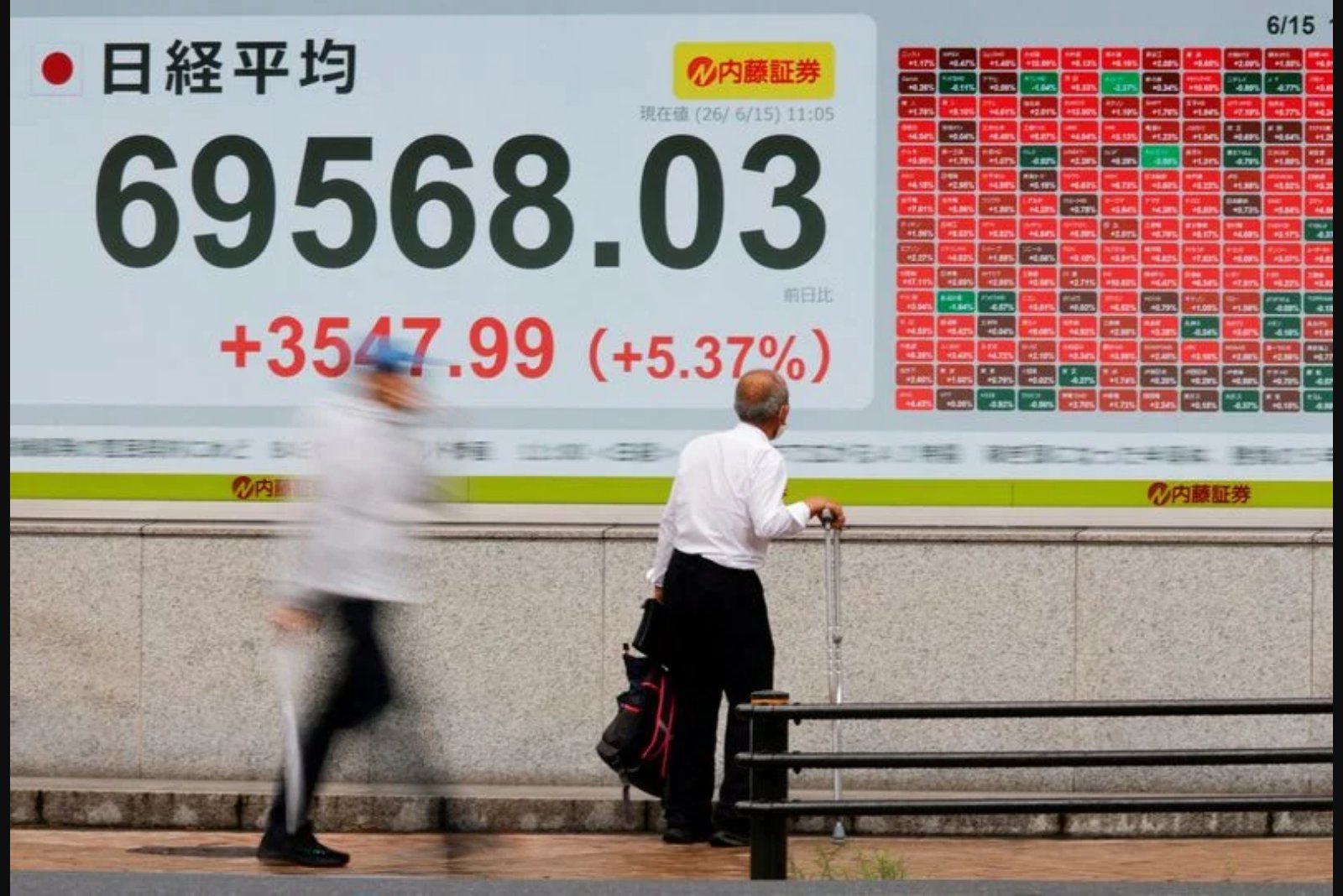
Equity performance in the prior quarter was striking. The Nikkei climbed 37%, the Kospi surged 68% and Taiwan's Taiex rose 45%. Those rallies have leaned heavily on success in the AI sector, yet macroeconomic indicators have also provided tangible support: Japan's large manufacturers reported sentiment not seen since 2018, manufacturing activity recorded its strongest quarter since 2014 driven by a surge in new orders, and South Korea posted exceptionally strong trade figures.
South Korea's June export numbers were particularly notable, with export growth at its fastest pace in nearly 50 years and semiconductor shipments jumping almost 200%. These flows pushed South Korea to join Germany, China and the United States as the fourth country to record a monthly export value of $100 billion.
Against that backdrop, Asian equity indices showed mixed moves in early trading. U.S. stock futures were slightly lower after a strong session in the previous overnight trade, led by the usual technology leaders. Those same companies are widely expected to deliver substantial earnings upside in the upcoming reporting season, which begins the week of July 13.
Analysts at Goldman Sachs point to consensus expectations for S&P 500 earnings per share to rise 22% year-on-year. Much of that anticipated growth is concentrated in AI-related infrastructure names - nearly 60% of the S&P's EPS growth is projected to come from that group, and Micron and Nvidia together are expected to contribute more than 40% of the total.
Those prospective profits will face competition from higher bond yields and the prospect of a higher cash rate. Ten-year Treasury yields jumped nearly 9 basis points on Tuesday in a late selloff that lacked an obvious single catalyst. Market participants may be bracing for a stronger-than-expected payrolls report that could narrow odds of a Federal Reserve rate increase.
Market-implied probabilities currently put the chance of a Fed rate move this month at about one-in-three, while the probability of a move by September ranges from 67% to 88% depending on how Fed funds futures are calculated.
Meanwhile, currency markets have shown marked moves. The dollar reached a fresh 40-year high against the yen at 162.82, and there has been no clear sign of intervention from Tokyo. Notably, the yen has not weakened uniformly across crosses, which some market participants interpret as a signal that Japanese authorities might be prepared to refrain from acting for the moment. There are no major technical chart levels cited until the dollar approaches Plaza Accord-era values near 240.00 yen - a level that represents a very wide gap from current rates.
Central bank voices and economic releases will be in focus for markets on Wednesday. Fed Chair Kevin Warsh, European Central Bank President Christine Lagarde, Bank of England Governor Andrew Bailey and Bank of Canada Governor Tiff Macklem are scheduled to speak at the ECB Forum on Central Banking in Sintra, Portugal - remarks closely watched for any shifts in tone or guidance.
Data releases that could influence market direction include EU consumer price inflation for June, June manufacturing PMIs for both the EU and the U.S., the U.S. ISM manufacturing survey for June and U.S. auto sales for June.
Summary
Asian markets opened the quarter cautiously after substantial prior-quarter gains driven largely by AI-related stocks. Diplomatic efforts between the U.S. and Iran showed little progress, with the Strait of Hormuz transit charges a key unresolved dispute. Robust manufacturing and trade data from Japan and South Korea underpin risk assets, but rising U.S. Treasury yields and dollar strength - including a 40-year high against the yen - add pressure ahead of central bank speeches and major economic releases.
Key points
- Major Asian equity indices posted outsized quarterly gains - Nikkei +37%, Kospi +68%, Taiex +45% - largely supported by AI-related advances and strong macro data.
- Consensus expects S&P 500 EPS to rise 22% year-on-year, with nearly 60% of that growth attributed to AI infrastructure names; Micron and Nvidia together are forecast to account for over 40% of EPS growth.
- Geopolitical friction from stalled U.S.-Iran talks and higher U.S. Treasury yields - including a near 9 basis point jump in 10-year yields - pose risks to market sentiment and policy expectations.
Risks and uncertainties
- Ongoing U.S.-Iran negotiations remain unresolved, notably over passage fees in the Strait of Hormuz - a development that could affect energy and shipping-related sectors if the dispute escalates.
- Higher-than-expected U.S. payrolls or further increases in Treasury yields could raise the appeal of fixed income versus equities, weighing on technology and growth stocks that have driven recent gains.
- Currency volatility, exemplified by the dollar/yen reaching 162.82, introduces uncertainty for exporters and firms with material yen exposure; the potential for intervention is unclear.
Tags: economy, markets, stocks, centralbank, trade