
BEIRUT, June 29 - Lebanon's Parliament Speaker Nabih Berri, a prominent ally of Hezbollah, on Monday denounced a U.S.-brokered agreement between Lebanon and Israel, warning that the pact could trigger attempts to split Lebanese society and asserting it will not be carried out.
In comments published by al-Akhbar newspaper, Berri framed ongoing Iran-United States negotiations as the sole realistic mechanism to secure Israeli withdrawal from Lebanese territory, and cautioned that any effort to detach Lebanon from that Iran-U.S. track would prolong Israel's occupation of parts of southern Lebanon.
The accord, signed by the Lebanese and Israeli ambassadors in Washington on Friday, has divided political opinion in Beirut. Israel has publicly praised the arrangement, with Prime Minister Benjamin Netanyahu saying the deal permits Israeli forces to remain in southern Lebanon if Hezbollah does not disarm. Hezbollah, which has demanded that Lebanon abandon the face-to-face talks with Israel, has denounced the pact as capitulation to Israel.
The agreement outlines a path in which the Lebanese military would take control of territory after verified disarmament of non-state armed groups - a reference to Hezbollah - and indicates this process would allow the Israeli military "to progressively redeploy out of" Lebanon. It also envisages the Lebanese army gradually assuming responsibility in so-called "pilot zones."
Berri, who leads the Shi'ite Amal Movement, dismissed the agreement as a set of "dictates." Al-Akhbar quoted him saying the most dangerous element of the accord is not limited to its political provisions but includes "the potential for it to incite internal divisions and draw the Lebanese into a confrontation among themselves." He is reported to have said the agreement "won't be implemented."
The Lebanese administration, led by President Joseph Aoun, a Maronite Christian, and Prime Minister Nawaf Salam, a Sunni Muslim, moved early in the war to pursue face-to-face negotiations with Israel despite strong objections from Hezbollah. Those choices underscore deep domestic divisions over Beirut's decision to enter the conflict in support of Iran.
Since last year the Beirut government has pursued policies aimed at securing Hezbollah's disarmament. Officials say this push followed a period in which the group was significantly weakened during a previous war with Israel in 2024.
In a separate development, President Aoun spoke by phone with U.S. President Donald Trump on Saturday, expressing the hope that Washington would press Israel to withdraw from southern Lebanon.
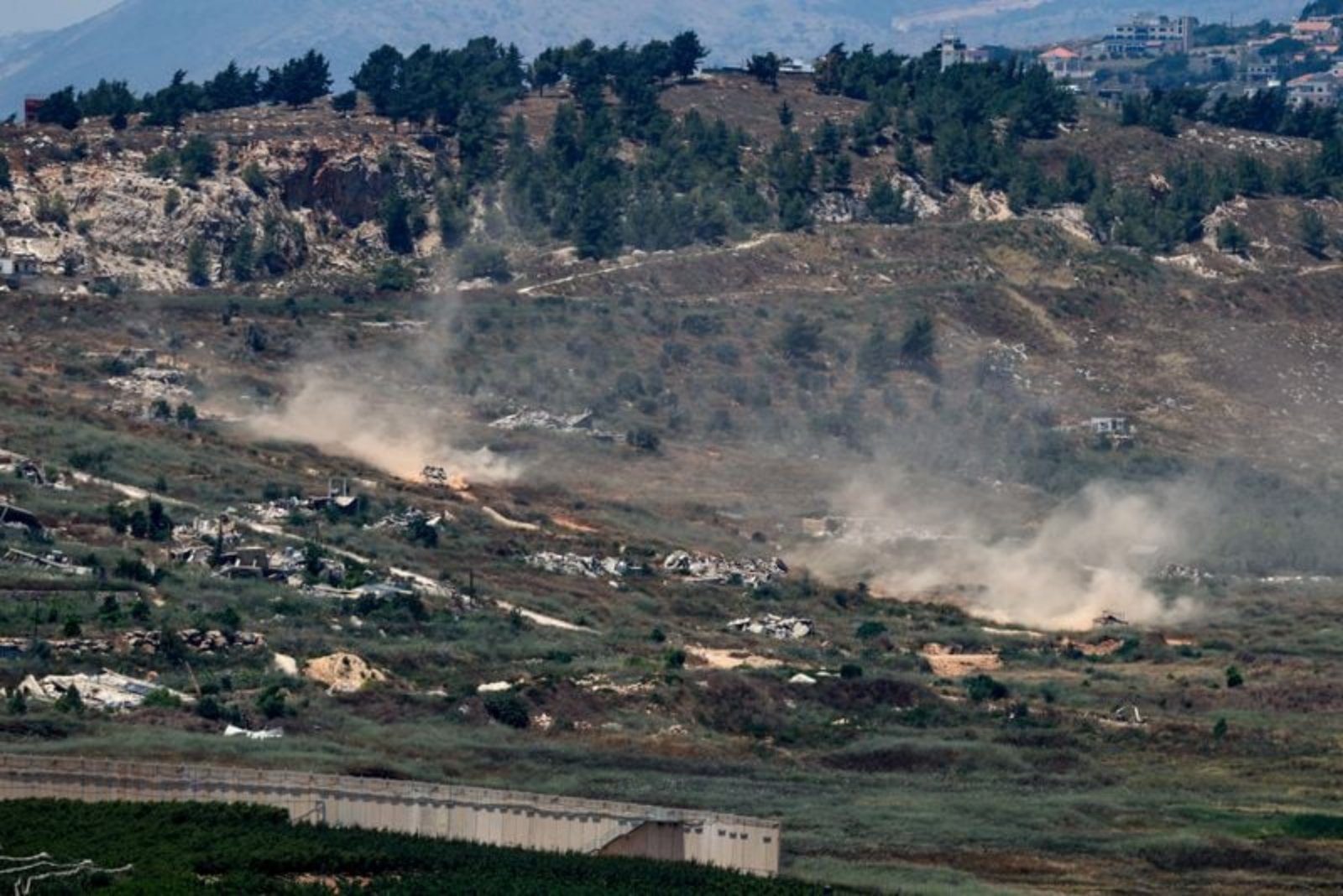
During the current conflict, Israeli forces took control of a self-declared security zone extending into southern Lebanon, citing the need to protect northern Israel from Hezbollah attacks. The Israeli military reported that it destroyed a 200-meter (656-ft)-long Hezbollah tunnel in the south overnight. It also said it struck three Hezbollah command centres in southern Lebanon on Sunday in response to ceasefire violations by Hezbollah.
Hezbollah issued a statement on Monday saying it has adhered to the ceasefire "until now" and reserving the right "to defend its homeland and its people."
Analysis - Political and security implications
Berri's rejection of the U.S.-brokered agreement highlights a fault line within Lebanon's political landscape that aligns broadly with sectarian and strategic divisions. The deal's operational provisions - the transfer of control to the Lebanese army in pilot zones and conditional Israeli redeployment - are intended to provide a mechanism for de-escalation, yet they also place the Lebanese armed forces at the center of a sensitive transition tied to verified disarmament of non-state groups.
For policymakers in Beirut, the tension is between engaging in direct talks with Israel under U.S. auspices and maintaining the cohesion of Lebanon's fragile political order amid pressure from Hezbollah and its allies. Berri's public stance signals that significant elements within Lebanon's ruling class view the agreement as externally imposed and potentially destabilizing.
The conflict dynamics described by both sides - Israeli operations against tunnels and command posts and Hezbollah's conditional compliance with the ceasefire - underline the continued risk of military escalation even as diplomatic channels remain active on multiple tracks.
What remains unclear from public statements is how the implementation of pilot zones would be verified in practice, how the Lebanese army would assume operational control under the terms set out, and what timeline, if any, would govern Israeli redeployment. Those implementation details will be central to whether the agreement moves beyond declaration to execution.
Given the positions expressed by key Lebanese actors, the agreement faces substantial domestic political obstacles that will shape its prospects going forward.