
FuelCell Energy (NASDAQ:FCEL) has become the focus of rapid analyst re-ratings after a commercial agreement that positions the company as a potential supplier of on-site, clean baseload power for data centers. On Monday, B. Riley analyst Ryan Pfingst raised his recommendation from Neutral to Buy and set a $32 price target - the highest on Wall Street - following similar moves earlier in the week.
The stock closed Friday at $24.00, up 22.14% on the session, and pre-market indications on Monday pointed to roughly $24.86. The advance extends a strong run that has taken the share price up about 328% over the past year. B. Riley's $32 objective stands roughly 33% above Friday's close and sits well above the prior consensus average of $18.83 compiled by TipRanks; that consensus does not yet reflect the new Street-high target.
This upgrade was the second to arrive in four days. On June 26, Jefferies analyst Julien Dumoulin-Smith moved his rating from Hold to Buy and lifted his price target from $16 to $24, describing the change in the company's investment profile as shifting "from speculative to actionable." UBS, also on June 26, preserved a Neutral stance but sharply increased its target from $7.25 to $22.00, reflecting a material reassessment of FuelCell's data center optionality without adopting a fully bullish view. Canaccord Genuity had earlier reiterated a Buy on June 25 with a $30 price target. The sole dissenting Street view in this batch came from Wells Fargo, which on June 24 maintained a Sell rating with an $8 target.
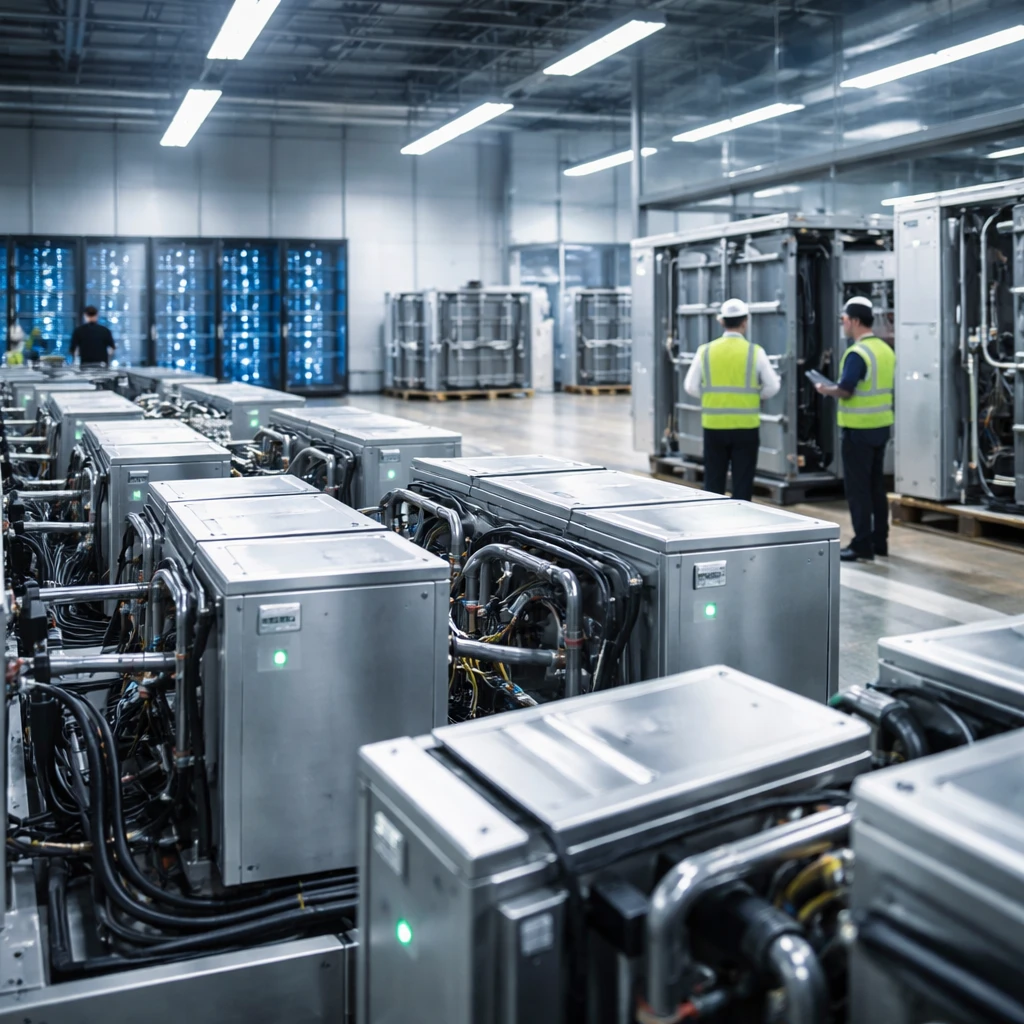
The clear catalyst for the market's reassessment is a strategic agreement announced June 24 between FuelCell and Fit Energy USA LP to provide up to 380 MW of clean, baseload on-site power for data centers. The framework begins with an immediate 30 MW deployment slated for delivery later this year. That initial tranche is accompanied by milestone-based warrants that could unlock the wider 380 MW arrangement. Jefferies has estimated that the initial 30 MW slice alone could generate roughly $90 million in near-term revenue.
FuelCell's chief executive characterized the deal as validation for the company's manufacturing and commercial expansion. "This agreement further validates our decision to scale our operations to 500 MW, preserving our ability to serve a broad and growing pipeline of customers," CEO Jason Few said when the agreement was announced.
Analysts and investors are evaluating this development against a backdrop of accelerating demand for reliable on-site power for AI and data center infrastructure. Goldman Sachs projects U.S. data center power demand rising to 66 GW in 2027 from 31 GW in 2025, a dynamic that has heightened interest in dependable, clean, on-site generation options. FuelCell currently reports a 4 GW commercial pipeline, with roughly 90% of that pipeline tied to data centers, and has announced a planned $275 million factory expansion aimed at scaling manufacturing capacity to 500 MW.
Pfingst's move is notable for its speed. Earlier in June, on the 9th, he had raised FuelCell's price target from $8 to $13 while keeping a Hold rating. The jump to a $32 Buy target on June 29 represents about a $19 increase in his price objective in under three weeks, reflecting how quickly the market and analysts are re-evaluating the company's commercial prospects.
Yet the emerging commercial momentum coexists with continued financial headwinds. FuelCell reported Q2 FY2026 results on June 8 that showed an EPS loss of $1.45, a -3,525% miss versus the consensus estimate of -$0.04. Revenue for the quarter was $35.59 million, missing estimates of $55.12 million by about 35.4%. Independent metrics cited in the market score FuelCell's profitability at 2 out of 10 while its growth earns a 7 out of 10, encapsulating the tension between promising sales opportunities and ongoing operating losses.
Trading activity around the June 26 rally underlined the scale of repositioning. Volume that day reached 27.1 million shares, roughly three times the three-month daily average of 9.4 million shares, a pattern consistent with institutional reallocation rather than purely retail-driven momentum. In a telling divergence, rival Bloom Energy (NYSE:BE) fell about 13% on the same session, which suggests the market was specifically rewarding FuelCell's data center contract rather than broadly lifting the fuel cell sector.
The next major milestone for investors will be FuelCell's Q3 FY2026 report on September 8, 2026. Current analyst forecasts call for a loss of $0.43 per share on revenue near $39 million. However, given the market's focus on the Fit Energy agreement, updates on the milestone schedule and the timing of the 30 MW deployment may be more influential than headline earnings figures for investors increasingly viewing the company as a data center infrastructure play rather than a legacy clean energy equipment supplier.
Takeaway - FuelCell's recent re-rating reflects a rapid shift in perception driven by a material data center contract and significant analyst upgrades. The commercial opportunity appears meaningful, but investors will be watching deployment milestones and future financial reports closely as evidence that revenue and scale can outpace ongoing operating losses.