
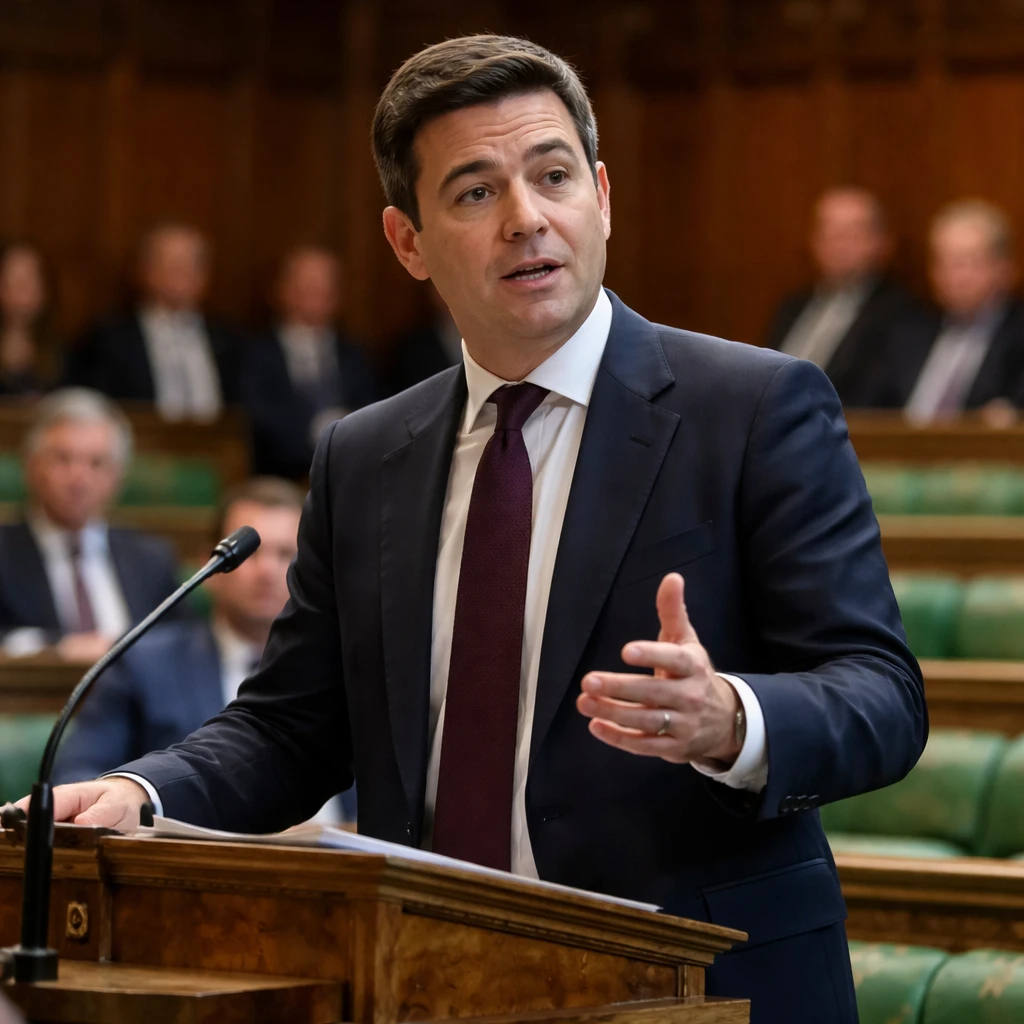
Andy Burnham, the Labour parliamentarian widely expected to take over from Keir Starmer as prime minister, told colleagues on Monday that his plans for government are aligned with the party’s 2024 manifesto and that he will adhere to the current fiscal framework.
The fiscal rules in place require that routine government spending be matched by tax receipts and that public debt falls as a proportion of national output. These commitments are closely watched by financial markets.
Speaking in his first address since returning to Westminster earlier in June - an event that strengthened his position as Starmer’s likely successor - Burnham said his programme for change "whilst not taking risks with the public finances, will seek to give Britain some breathing space." He added that the reforms he was planning to implement were "consistent with the 2024 manifesto."
Before winning a landslide election in July 2024, the Labour Party under Keir Starmer pledged in its manifesto that it would not raise taxes on working people, specifically pledging not to increase income tax, social security contributions, or value-added tax.
Burnham emphasised that his proposals would be "backed by the stability that comes from sound public finances ... and the discipline of our current fiscal rules."
Investors raised concerns last year about Burnham’s stance on fiscal rules after he said the UK had to get "beyond this thing of being in hock to the bond markets." That pushback from market participants remains a point of attention as political leadership discussions continue.
On the subject of welfare spending, Burnham stated the party would seek to reduce the welfare bill "in a way that is fair and lasting and helps people move forward." He suggested one method to achieve savings would be to repair the public housing stock, framing housing improvements as a means to both cut costs and assist tenants.
Burnham is currently the only declared candidate to succeed Starmer and could be appointed prime minister as soon as next month. The timeline for any transition and the details of policy implementation remain matters for the party and government to determine.
Market observers and stakeholders will be watching how pledged adherence to fiscal rules and the proposed welfare measures reconcile as plans move from statement to policy. The balance between maintaining financial-market confidence and delivering the party’s stated social and economic objectives will shape reactions in the coming weeks.
Clear summary: Andy Burnham, expected to replace Keir Starmer, said his plans align with Labour’s 2024 manifesto and that he will respect existing fiscal rules. He promised fair and lasting cuts to the welfare bill and proposed repairing public housing as one way to achieve savings, while investors remain attentive to his comments about bond markets.