
Stock Markets June 29, 2026 06:39 AM

Kongsberg Considers Acquisitions as Missile Orders Surge

Norwegian defense group eyes bolt-on deals while expanding missile production and exploring space and underwater capabilities

By Hana Yamamoto
Share
Twitter Reddit Facebook LinkedIn

Kongsberg Gruppen is weighing mergers and acquisitions to support growth as demand for its missiles intensifies, CEO Eirik Lie said. The company is scaling production of naval strike and joint strike missiles, may target firms in areas such as anti-drone systems and remote weapon stations, and is monitoring opportunities in space and underwater warfare. While European defense spending has risen over the past year, Lie said it still falls short of the level needed to meet NATO commitments.

Kongsberg Considers Acquisitions as Missile Orders Surge
Summarize with
ChatGPT Perplexity Claude Grok Gemini

Key Points

  • Kongsberg is considering mergers and acquisitions to support growth while expanding production of naval strike and joint strike missiles.
  • CEO Eirik Lie identified anti-drone systems, remote weapon stations, space and underwater warfare as areas of strategic interest.
  • The company's market value on Oslo's exchange has grown five-fold since early 2022; higher European defense spending is seen as supportive but remains below NATO commitment levels. - Sectors impacted: defense, aerospace, maritime.

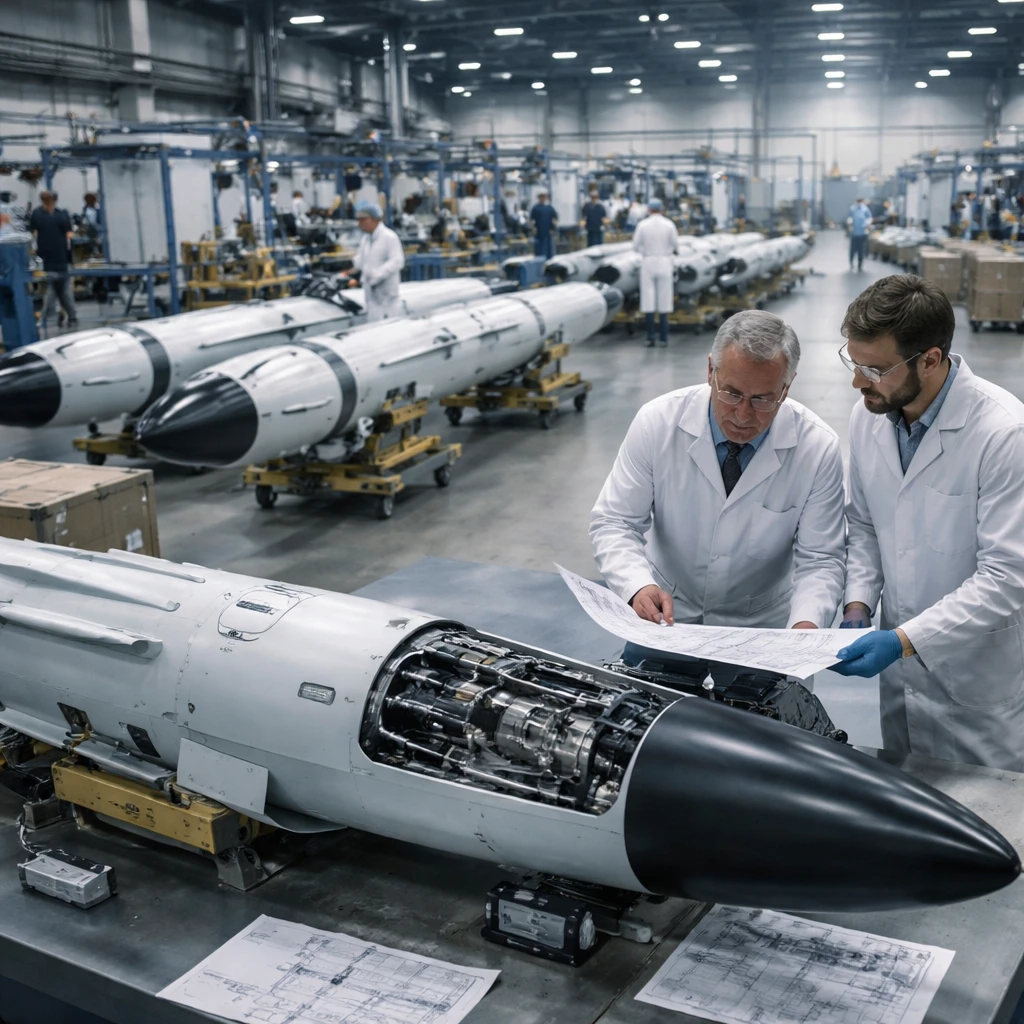
Kongsberg Gruppen is exploring acquisitions to bolster expansion at a time when orders for its weapons are climbing sharply, Chief Executive Officer Eirik Lie told Bloomberg Television in a recent interview. The company has increased production capacity for both naval strike missiles and joint strike missiles to respond to what Lie described as strong demand.

"We have a really steep demand for our missiles," Lie said, highlighting the company's stepped-up manufacturing efforts. He also indicated that potential transaction targets would focus on areas aligned with Kongsberg's existing product set, naming anti-drone systems and remote weapon stations as examples.

The CEO noted that acquisitions remain a possibility rather than a certainty. He said the company may pursue purchases of firms operating in core product areas such as anti-drone systems and remote weapon stations, indicating a selective approach to M&A as a complement to organic growth.

Lie pointed to other technology domains under consideration, identifying space and underwater warfare as additional areas of interest. "Two frontiers that are definitely also on our agenda," he said, without providing further detail on specific programs or timelines.

The recent remarks reflect a broader sense of optimism within parts of the European defense industry that increased military budgets will support investment and expansion over coming years. Kongsberg's profile in the market has risen notably; its market value on Oslo's exchange has increased five-fold since early 2022, after Russia's invasion of Ukraine, making it one of the stronger performers in Europe's defense sector during that interval.

On the subject of defense funding, Lie observed that European spending has grown over the past year but still falls short of the levels required to meet the commitments made by NATO leaders. "We see a positive movement forward to achieve some of the targets," he said, underscoring that while progress exists, a gap remains between current outlays and pledged targets.

As Kongsberg balances higher production rates and the prospect of strategic deals, observers will be watching whether the company converts interest in bolt-on technology acquisitions into completed transactions and how defense budget trajectories evolve across Europe.

Risks

  • European defense spending, although increased over the past year, remains below the level required to meet NATO commitments, which could affect long-term procurement plans - impacts defense and government expenditure.
  • Kongsberg said it may pursue acquisitions but did not confirm any deals, leaving uncertainty around whether M&A will materialize or deliver expected strategic benefits - impacts corporate strategy and defense supply chains.
  • Rising demand for missiles has required scaled-up capacity; sustaining such elevated production without confirmed long-term procurement commitments could pose operational and financial planning challenges - impacts manufacturing and supplier networks.

More from Stock Markets

Tadawul Ends Lower as Cement, Petrochemicals and Energy & Utilities Weigh on Market Jun 29, 2026 NeoVolta Shares Jump as Law Firm Finds Georgia Plant Structurally FEOC-Compliant Jun 29, 2026 Shares Drop After Larimar Posts Long-Term Data and Files Partial BLA for Nomlabofusp Jun 29, 2026 Surf Air Mobility Rallies After Broader Palantir Collaboration Jun 29, 2026 Cosan Initiates Review of Options for Rail Unit Rumo Jun 29, 2026