
World May 10, 2026 12:39 PM

Latvian defence minister resigns after drone explosions at oil storage site

Prime minister says air-defence systems were not deployed quickly enough; replacement named amid calls for NATO support

By Ajmal Hussain

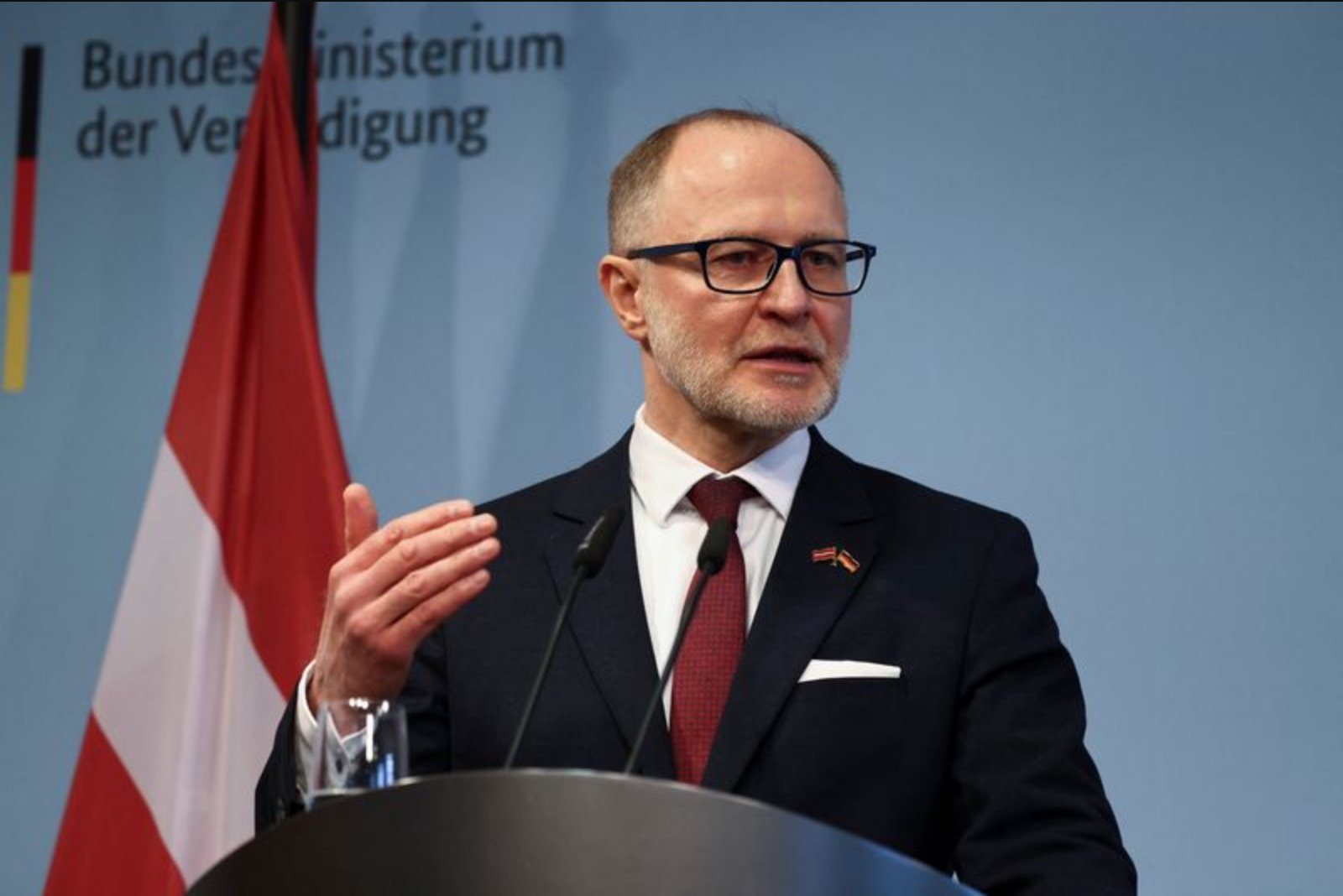
Latvia's defence minister stepped down after two drones flew in from Russia and detonated at an oil storage facility. The move followed a demand from the prime minister citing delays in anti-drone defenses. Latvia and Lithuania have urged NATO to reinforce air defences in the region as Ukraine says the unmanned aerial vehicles were Ukrainian craft diverted by Russian electronic warfare.

Latvian defence minister resigns after drone explosions at oil storage site

Key Points

  • Latvian Defence Minister Andris Spruds resigned after two drones flew in from Russia on Thursday and exploded at oil storage facilities - sectors impacted: energy infrastructure, national security.
  • Prime Minister Evika Silina said anti-drone systems were not deployed rapidly enough and appointed Colonel Raivis Melnis as the new defence minister - sectors impacted: defence procurement and military leadership.
  • Latvia and Lithuania have called on NATO to strengthen air defences; Ukraine says the drones were Ukrainian and were diverted by Russian electronic warfare, and is considering sending experts to help bolster Baltic air security - sectors impacted: regional defence cooperation and NATO-related military spending.

RIGA, May 10 - Latvia's defence minister Andris Spruds resigned on Sunday after two drones breached the border on Thursday, flying in from Russia and striking oil storage facilities, government officials said.

Earlier on Sunday, Prime Minister Evika Silina publicly called for Spruds to step down, asserting that anti-drone systems had not been deployed quickly enough to prevent the incident. In the wake of the resignation, Silina appointed Latvian army colonel Raivis Melnis as the country's new defence minister.

On the same day, Latvia and neighbouring Lithuania urged NATO to bolster air-defence capabilities in their region. The call for increased protection came after two drones crossed the Russian border and exploded at an oil storage facility in Latvia on Thursday.

Ukraine's defence minister Andrii Sybiha posted on X on Sunday that the drones were Ukrainian. He said they entered Latvian territory after "Russian electronic warfare deliberately diverting Ukrainian drones from their targets in Russia." Sybiha also said that, following the incidents, Ukraine is considering sending experts to assist in strengthening air security over the Baltic states, a step he noted on Friday.


Context and immediate outcomes

The chain of events began with two drones flying from the direction of Russia on Thursday and detonating at Latvian oil storage facilities. The diplomatic and defence responses unfolded over the following days, culminating in the defence minister's resignation on Sunday and the appointment of a new minister. Latvia and Lithuania have both appealed to NATO for enhanced air-defence measures. Ukraine's defence ministry has attributed the diversion of the drones to Russian electronic warfare and has indicated a willingness to provide expertise to improve Baltic air security.

What remains limited or unconfirmed

The publicly stated sequence of events and the attributions made by officials are those reported by the relevant national authorities. Specific operational details about the failures in air-defence deployment, the extent of damage at the oil storage facilities, and any subsequent technical assessments have not been detailed in the statements cited.

Risks

  • Potential vulnerabilities in regional air-defence systems highlighted by delayed deployment - implications for defence spending and procurement decisions in the Baltic states and NATO.
  • Damage to energy infrastructure following the explosions at oil storage facilities - implications for the energy sector, including storage operators and local fuel supply chains.
  • Uncertainties around attribution and electronic warfare effects on drone operations - implications for military operations, cross-border security coordination, and demand for counter-electronic warfare capabilities.

More from World

Gazan Repair Shops Convert Door Frames and Rubble Into Lifelines for Fishermen Jun 5, 2026 Somalia officials say calm restored in two Mogadishu districts after clashes Jun 5, 2026 Ukraine and Russia Complete Second 185-for-185 Prisoner Exchange Jun 5, 2026 Thailand Agrees to U.N. Maritime Conciliation Chosen by Cambodia, Puts Bilateral Talks on Hold Jun 5, 2026 Sanchez Rejects Knowledge of Alleged Scheme to Obstruct Corruption Probes Jun 5, 2026