
North Korea's leader replied to a message from Russian President Vladimir Putin as the country observed the 81st anniversary of Japan's surrender in World War Two, state media reported.
According to KCNA, Moscow's congratulatory note to mark the liberation anniversary said the bond between the two countries was forged when Soviet soldiers fought against Japan, and that cooperation would continue "in all the sectors". Kim Jong Un, in his reply, expressed hope for the future of ties that had "carried forward the history of common struggle for justice and precious traditions of friendship," KCNA reported.
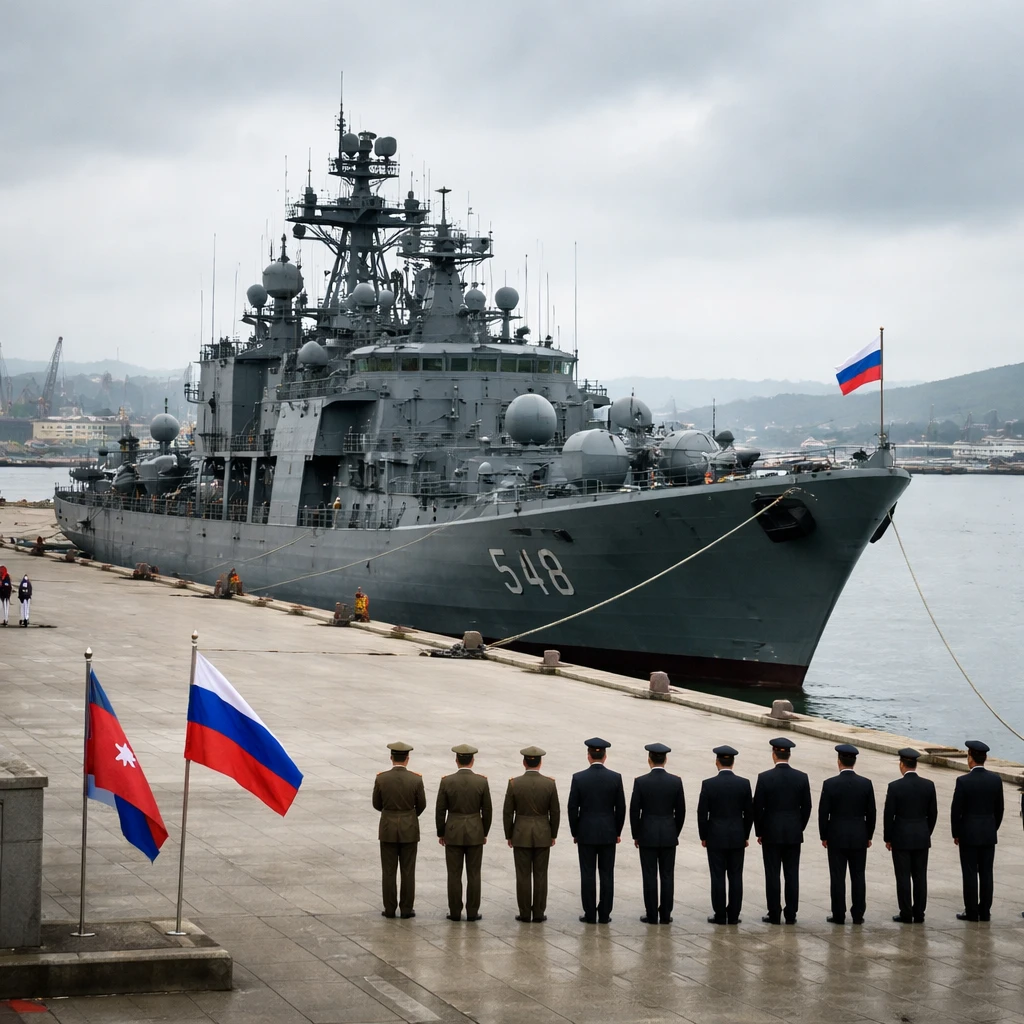
The exchange comes amid an apparent warming of relations between Pyongyang and Moscow. KCNA said the Russian ship Pallada arrived at Wonsan port on Saturday for a goodwill visit connected to the liberation anniversary. The vessel was greeted by North Korean provincial officials and staff from the Russian embassy, the state news agency added.
Observers note that Pyongyang and Moscow have grown closer since North Korea began deploying troops and weapons to support Russia's campaign in Ukraine, a development the state described as Pyongyang's most significant involvement in a war since the 1950s.
At the same time, on Saturday South Korean President Lee Jae Myung used Seoul's Liberation Day ceremony to press for talks with the North aimed at peaceful coexistence. Lee called for safeguards to prevent conflict and urged that the armistice ending active hostilities in 1953 be replaced by a "peace regime." He said such dialogue could also explore ways to curb Pyongyang's nuclear programme.
Pyongyang rejected President Lee's overtures and criticised U.S.-South Korean military exercises as provocations, KCNA reported. Those tensions coexist with separate developments involving Russia and Japan: on Thursday, President Putin visited an island off Hokkaido claimed by Japan, which Moscow seized in the days after Japan's 1945 surrender, a trip that drew Tokyo's condemnation.
The confluence of diplomatic messages, naval visits and calls for renewed negotiations illustrates a complex regional picture in which ties between Pyongyang and Moscow are deepening even as Seoul seeks dialogue aimed at formally ending the 1950-1953 Korean War.
Related facts highlighted in this report:
- The exchange of messages marked the 81st anniversary of Japan's surrender in World War Two.
- The Russian ship Pallada made a goodwill call to Wonsan and was met by provincial officials and embassy staff.
- Seoul has publicly sought talks to replace the armistice with a "peace regime," while Pyongyang has rejected South Korea's overtures and criticised allied military exercises.