
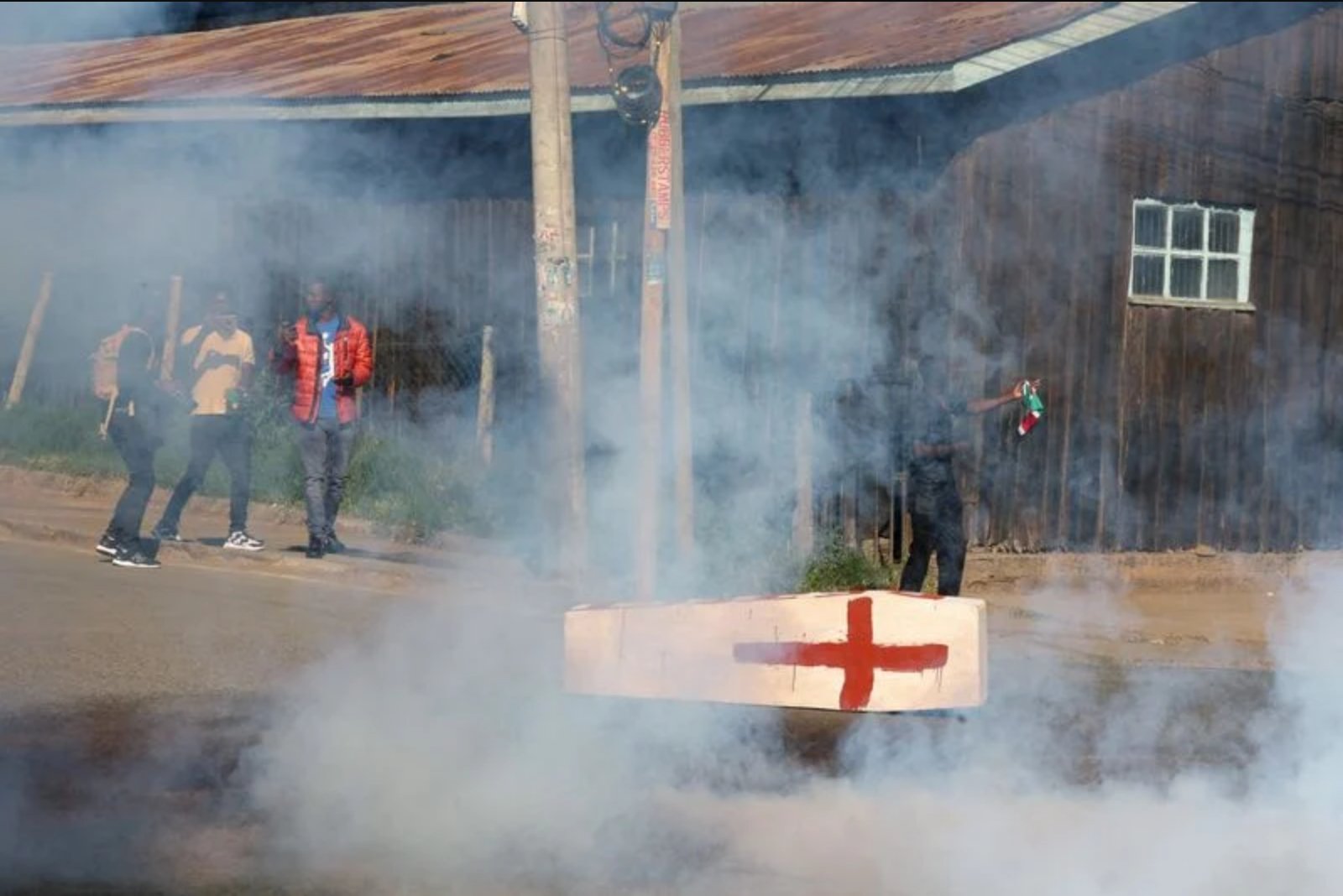
Security forces in the central Kenyan town of Nanyuki used tear gas on Tuesday to scatter small groups of demonstrators opposing a planned quarantine centre for Americans exposed to Ebola. The move came amid rising local anger over the 50-bed unit the United States is building on an air force base, and despite Kenyan court rulings that have ordered construction halted.
Protesters gathered in the town early on Tuesday, according to local accounts, and police intervened by firing tear gas canisters to disperse the crowds. Among those demonstrating was an individual carrying a white cross marked with the red-ink phrase "Respect Ebola." The protests follow deadly unrest last week in Nanyuki in which two people were killed, reflecting growing frustration among residents as officials from Kenya and the United States publicly restate their commitment to the plan even as court orders remain in place.
The quarantine site is intended to house Americans who have been exposed to the Ebola virus but remain asymptomatic, U.S. officials say. The plan, as described by U.S. authorities, is to transfer any individual who develops symptoms to medical facilities in other countries for treatment. The U.S. government has argued it "cannot and will not allow" Ebola cases to enter the United States, a position cited by the administration in contrast to the 2014-2016 West African outbreak when several infected U.S. nationals were treated on U.S. soil.
Construction activity and logistics movements near the Laikipia Air Base have continued even after judicial interventions. U.S. military aircraft have been reported to transport staff and equipment to the site despite court orders blocking further work. U.S. and diplomatic sources, together with flight tracking data, indicate ongoing flights and suggest several aircraft were expected to land this week.
Satellite imagery reviewed for the area shows an increasing number of white tents within a cleared parcel totalling about 0.046 sq km (11 acres) at the Laikipia Air Base. The clearing of that land and the appearance of temporary structures have been observed since May 27.
U.S. officials say they are aware of the legal challenges and are "working with the Kenyan government to resolve any objections." Kenyan government representatives have stated that the facility would be available to Kenyans and foreign nationals as well as American citizens, a claim that U.S. officials have not confirmed publicly.
Context and local reaction remain tense. Demonstrations in Nanyuki reflect both public concern about potential health risks and opposition to the perceived imposition of a foreign-managed quarantine facility on Kenyan soil. The deaths recorded in last week’s unrest have heightened scrutiny of how authorities on both sides are managing the situation.
As the legal process continues and logistical movements toward the site persist, the standoff presents a complex mix of public health policy, diplomatic negotiation and on-the-ground security challenges in Nanyuki and surrounding areas.