
Overview
Italy's national government announced on Thursday a plan to tighten procedures for responding to security alerts, including mass emails that carry bomb threats. Under the measures described by the prime minister's office, schools and other buildings will generally not be emptied unless authorities have concrete elements suggesting a genuine risk beyond merely receiving a bulk emailed threat.
What prompted the change
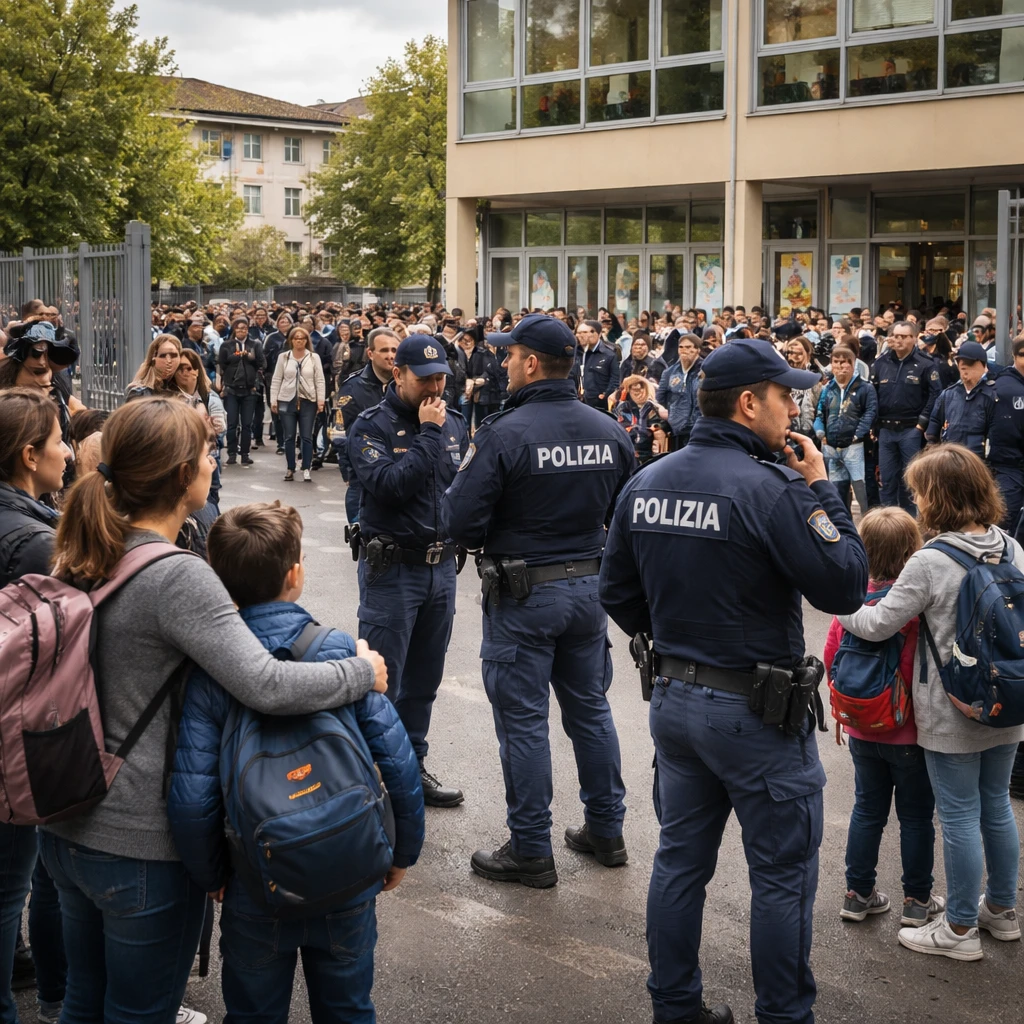
The move came after a wave of threatening emails prompted authorities to evacuate schools across the country. On one day roughly 6,300 schools received threatening messages and many were cleared by officials. That incident formed part of a broader pattern of hoaxes and cyber intrusions affecting a range of public and private targets across Europe, including supermarkets, blood banks, air traffic systems and broadcasters, according to reports from officials.
Thousands of parents were forced to rush to collect children from schools that closed immediately after receiving the warnings, creating disruption and a flurry of concern on social media. Additional alarms were reported the next day and some schools again suspended classes while police investigated.
Police and government response
Authorities in Rome said they had received reports of threatening emails from a number of schools, though on a reduced scale compared with the prior day, and stated that "there was nothing to substantiate them." In response to the incidents, Prime Minister Giorgia Meloni convened opposition leaders at her office to discuss how such incidents should be handled going forward.
The prime minister's office underscored a new guiding principle: buildings should not be evacuated solely on the basis of receiving a mass email unless there are additional concrete elements indicating real danger. That guidance aims to limit the immediate disruption caused by hoax threats while preserving authorities' ability to act when there are verifiable signs of risk.
International context and attributions
Some European officials have suggested that the campaign of disruptive messages may be linked to actors seeking to foment disorder in countries supporting Ukraine, though Italian officials have said they have not found evidence to support that claim. Russian authorities deny involvement and say allegations of responsibility constitute a smear campaign by Western governments.
Political reaction and cybersecurity debate
After a two-hour meeting with the prime minister, opposition leaders from the centre and left urged the government to present concrete proposals to address such threats. They also criticised what they described as insufficient investment in cybersecurity. Former prime minister Matteo Renzi, leader of the centrist Italia Viva party, questioned previous spending choices and said the incident "could have been dealt with using a good antivirus programme."
Opposition figures pointed out differences in how other countries handled similar email campaigns. Authorities in Scotland, Northern Ireland and the Republic of Ireland reported that many schools there had received similar threat emails originating abroad, but those governments classified the messages as hoaxes and advised schools to remain open.
Nicola Fratoianni of the Green-Left Alliance asked why Irish authorities had warned schools in advance and instructed them to stay open, according to his comments at the meeting. Leaders of the main opposition Democratic Party, including Elly Schlein, called for stronger coordination among agencies responsible for cybersecurity and proposed redirecting part of existing resources toward cyber defences. Opposition parties have also accused the government of focusing more on spending for conventional military equipment than on cyber resilience.
Implications
The government's new approach aims to reduce the immediate social and economic disruption caused by mass hoax communications while delegating discretion to security services to act where evidence warrants. The debate at the political level highlights tensions over resource allocation between conventional defence spending and investments in cyber protection and coordination.
Note: Where the reporting referenced international comparisons and attribution theories, Italian officials indicated no confirmed evidence linking the wave of hoaxes to any foreign actor.