
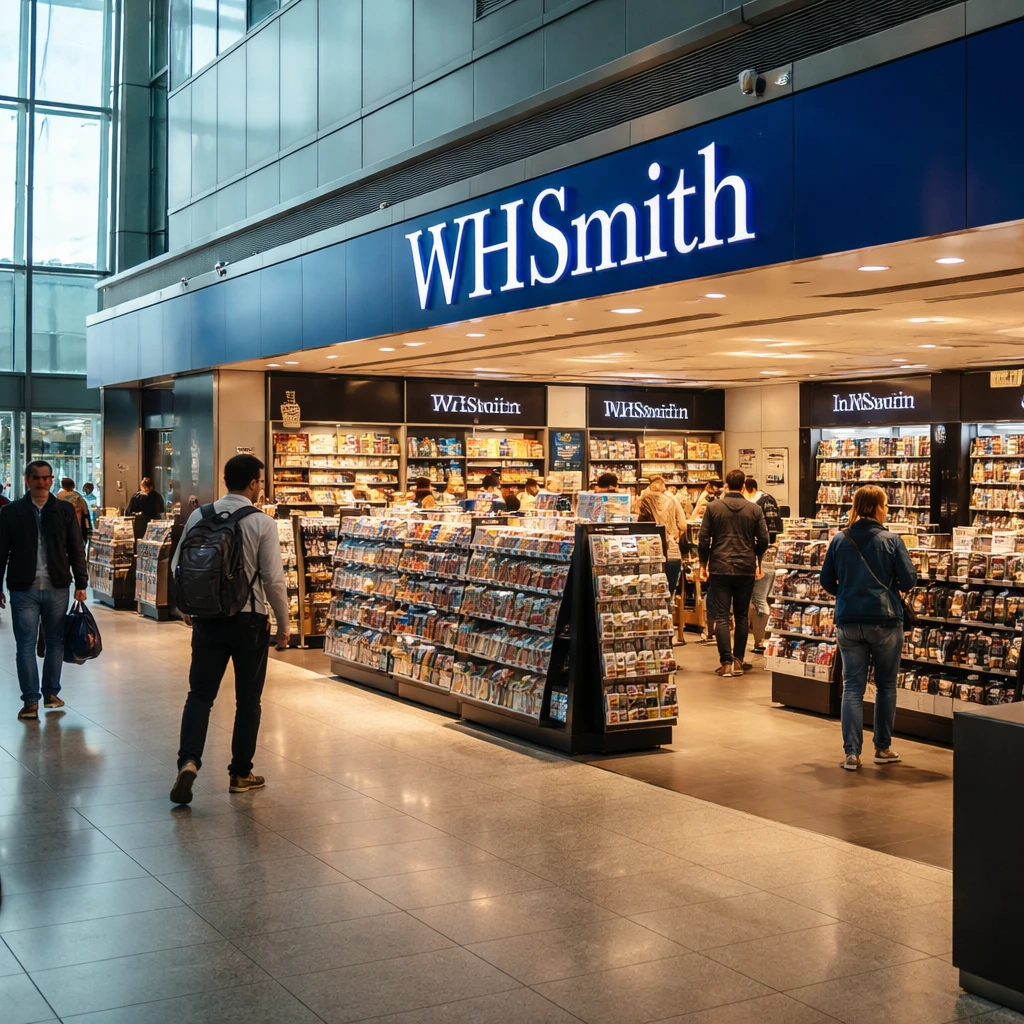
WH Smith shares dropped 6.7% to trade at 398.8p following the company's preliminary full-year results, which revealed a steep fall in headline profit before tax despite modest top-line growth.
Results overview
The retailer said headline profit before tax fell nearly 30% to £76 million from £108 million in the prior year. That deterioration occurred even as group revenue rose 5% to £1.625 billion, with like-for-like sales increasing by 2%.
Management attributed the squeeze on performance to several pressures that together reduced the group trading margin from 10% to 8% - notably tougher UK airport contract renewals, persistent inflation and a challenging consumer environment.
Profitability and per-share metrics
Headline diluted earnings per share decreased to 30.3 pence from 43.4 pence. The per-share decline was exacerbated by share count dilution following a £103 million equity placing that the company completed in June.
On a statutory basis, WH Smith recorded a pre-tax loss of £107 million. This swing into statutory loss reflected £164 million of non-underlying charges, which the company said were largely related to North American store impairments.
Cash flow, dividends and store actions
Free cash flow fell to £52 million from £63 million year-on-year. The company also confirmed that no dividend would be paid for the financial year. As part of its restructuring in North America, WH Smith flagged plans to close around 50 loss-making InMotion stores over the medium term, indicating that the adjustment there is ongoing.
Guidance and early trading in the new year
Looking ahead, management set a headline profit before tax range of £75 million to £85 million for the year ending August 2027, a forecast described as broadly in line with market expectations. That guidance may have helped limit further immediate downside in the shares.
Nevertheless, trading since the start of the new financial year has not been encouraging. The company reported group like-for-like sales as flat over the first ten weeks, while North America posted a 5% like-for-like decline during the same period.
Market reaction and context
Against a mildly risk-off backdrop in global equities, with U.S. markets mixed and no significant UK macro data to move sentiment on the day, selling pressure focused on the company-specific disappointments. Investors digested a statutory loss, a cancelled dividend, compressed margins across divisions and a cautious start to FY2027, sending the shares toward the lower end of their 52-week range of 345.6p to 710p.
The results underline the scale of the turnaround challenge facing WH Smith as it works through North American restructuring and contends with tougher airport contract renewals and persistent cost pressures in its core markets.
Summary
WH Smith reported a near-30% fall in headline profit before tax to £76 million on revenue of £1.625 billion, while statutory results showed a £107 million pre-tax loss after £164 million of non-underlying charges. Diluted EPS dropped to 30.3p and free cash flow fell to £52 million. The company will pay no dividend and plans to close around 50 loss-making North American InMotion stores. Management guided for headline PBT of £75 million to £85 million for the year ending August 2027, while early trading showed group like-for-like sales flat and a 5% like-for-like decline in North America over the first ten weeks.
Key points
- Headline profit before tax fell nearly 30% to £76 million from £108 million despite 5% revenue growth to £1.625 billion and 2% like-for-like growth - impacts sectors: retail, travel.
- Statutory pre-tax loss of £107 million following £164 million of non-underlying charges tied mainly to North American store impairments - impacts sectors: retail, travel, corporate restructuring.
- Early FY2027 trading weak: group like-for-like sales flat and North America down 5% in the first ten weeks; guidance of £75m-£85m for headline PBT broadly meets expectations - impacts markets and investor sentiment.
Risks and uncertainties
- Ongoing North American restructuring and store closures - uncertainty over the pace and cost of returning InMotion operations to profitability affects the travel retail sector.
- Pressure on margins from airport contract renewals and persistent inflation could continue to weigh on the group trading margin, with implications for retail profitability.
- A cautious start to the new financial year, including a 5% like-for-like decline in North America, raises uncertainty around the company meeting guidance if adverse trading persists; this impacts investor sentiment in equities and travel-related retail stocks.