
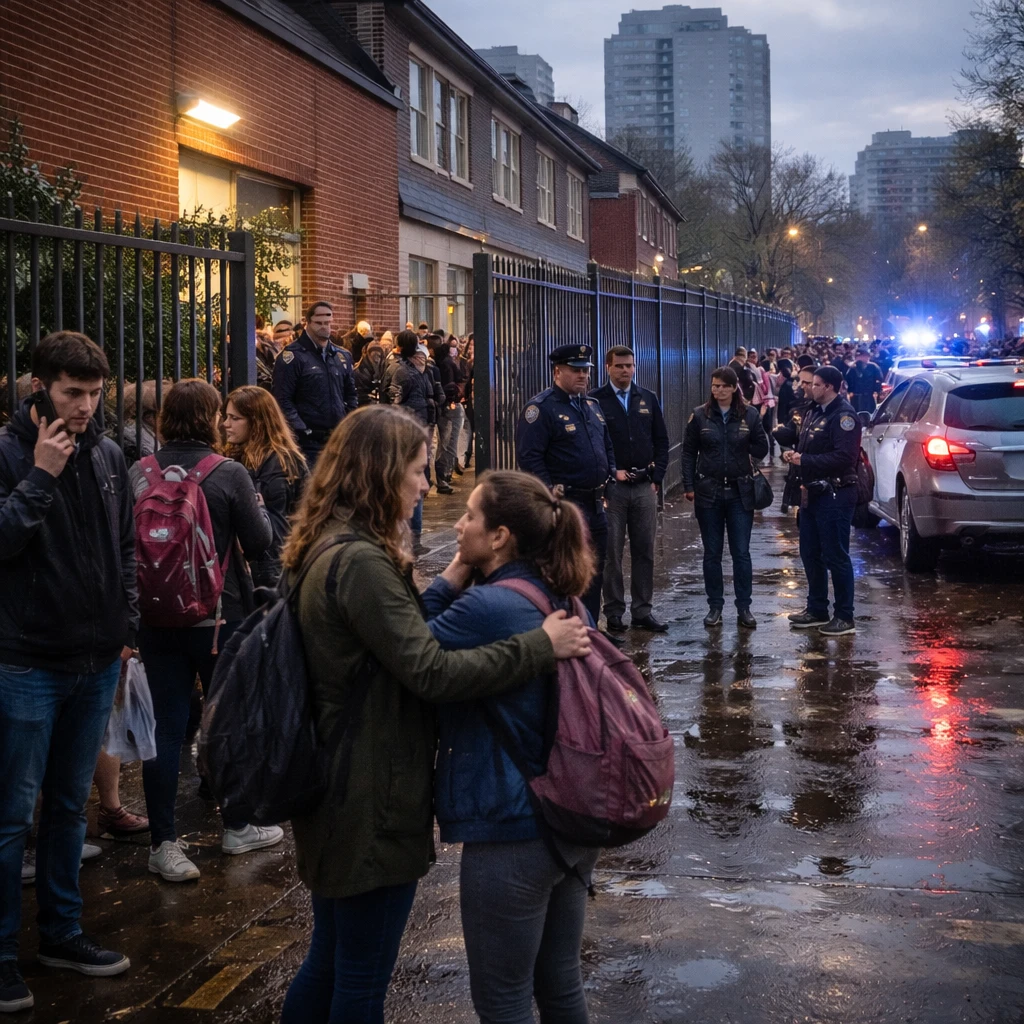
More than 300 schools across Italy were emptied on Wednesday after a wave of emailed bomb threats that also affected schools in Scotland, Northern Ireland and the Republic of Ireland, officials said. In the latter three jurisdictions, the messages were quickly deemed hoaxes and did not force class cancellations.
The alerts formed the latest episode in a string of incidents that have targeted everyday services across Europe - a sequence that has included apparent cyberattacks and threats affecting supermarkets, blood banks, air traffic and television broadcasters.
In Italy, the forced evacuations upheaved parents and pupils. Many parents abandoned errands and work to rush to school gates to collect children. One mother, Nensi Bego, described her daughter Dafne’s distress after the alarm at the Mazzini middle school in Rome. "My daughter Dafne started crying because the kids did not understand what was happening, and she was still shaken when I picked her up," Bego said. "This is so annoying. It’s obvious it’s just a hoax that disrupts lessons and disrupts everyone’s day."
School officials sought to reassure families about pupil safety. One school in Rome wrote to parents via a messaging application: "All students have been taken to a safe area and remain under the supervision of teaching staff." Prime Minister Giorgia Meloni likewise said the alerts did not present a danger and that police and other public bodies were monitoring developments.
A copy of the email that circulated in Italy carried the signature, "Mikhail Andropov, leader of the Vilayat of Misoginistan," according to a message seen by reporters. The same purported author has been connected to email bomb threats sent earlier to newsrooms in Ireland and Bulgaria.
Some European officials have suggested that the broader pattern of disruptive incidents may be intended to unsettle everyday life in nations that support Ukraine since the Russian invasion. Russia has denied involvement and described such claims as a smear campaign by Western states. Iran has also been cited as a potential suspect in related incidents; Paris summoned Iran’s ambassador after alleging Tehran was responsible for a cyberattack that disabled refrigerators in hundreds of supermarkets the prior week. Iran rejected those accusations as "baseless and hostile."
Italian Defence Minister Guido Crosetto said the wave of threats appeared to form "part of a strategy that is quite clear by now: to spread fear and create anxiety," according to a national news agency. At the same time, Crosetto cautioned that not all such incidents are necessarily the work of hostile foreign actors, adding that some may stem from attention-seekers or unstable individuals who seek to provoke alarm in cities or regions.
Antonello Giannelli, head of the Italian School Principals Association, warned of the emotional and operational toll on school communities. "Even though today’s threats are clearly hoaxes, we cannot underestimate the consequences of incidents that alarm entire school communities and disrupt the normal conduct of educational activities," he said.
The episode raises broader questions noted in public discourse: What types of evidence would be necessary to show these hoax alerts are materially disrupting school operations? And how might alerts of this kind affect education-sector stocks? The available reporting does not provide detailed answers to those questions, leaving those impacts and metrics to be assessed by market participants and analysts using additional data.
For now, authorities continue to monitor the situation while school administrators work to manage student safety and parental concern. The attribution of responsibility for the messages remains contested and under investigation, with categorical denials issued by states accused by some European officials.