
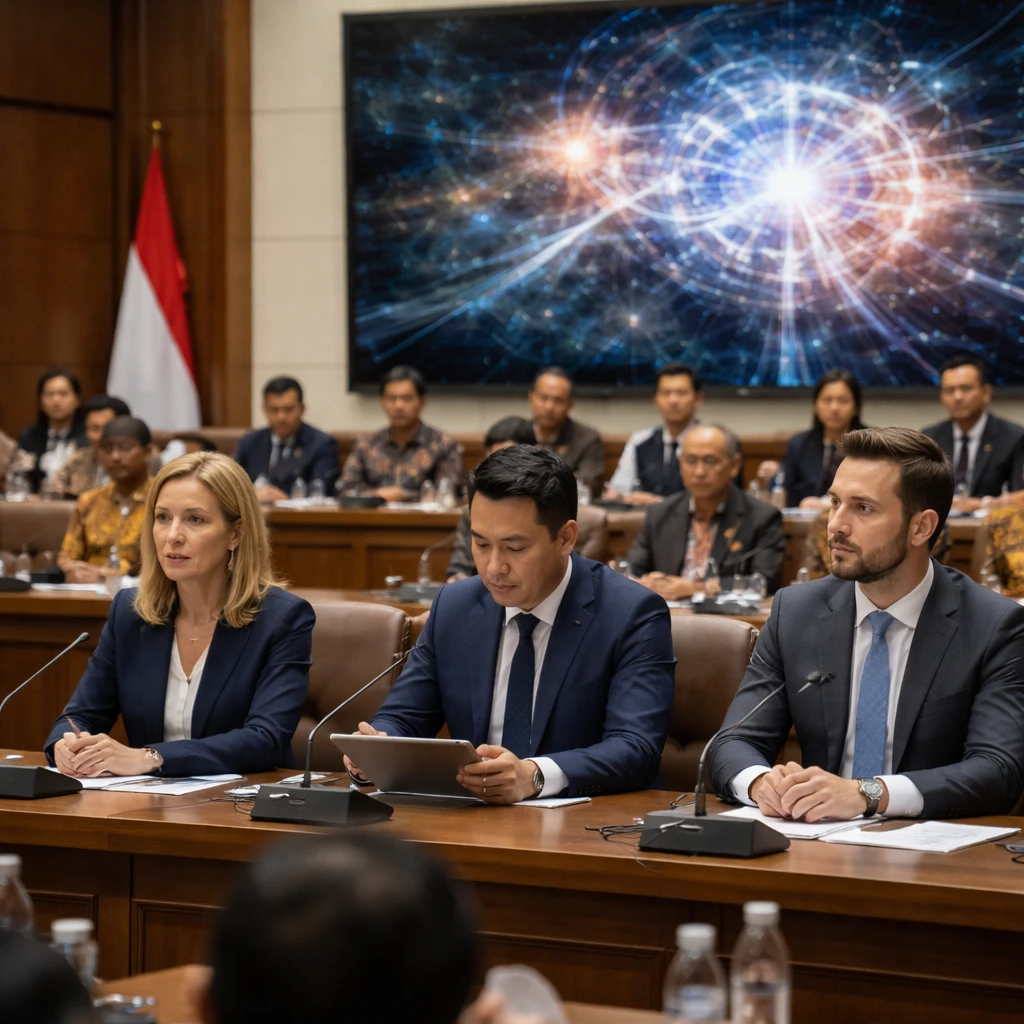
JAKARTA, Nov 11 - Senior policy officials from Google, Meta and TikTok appeared before lawmakers on Wednesday to voice concerns about draft amendments to Indonesia's copyright law that would obligate online platforms to compensate publishers for displaying news content and establish rules for the use of artificial intelligence.
If enacted, the revisions would make Indonesia the first country in Southeast Asia to explicitly include AI provisions within its copyright framework, a move that comes as governments around the world weigh how the technology affects intellectual property and the use of human-created work to train AI systems.
At a parliamentary hearing, Agung Pamungkas, Google's Indonesia government affairs and public policy manager, argued that a requirement for platforms to pay compensation for showing links to publishers' news material would restrict Indonesians' ability to access news. He told lawmakers that linking to news content has a different public effect from reproducing full articles, and cautioned that mandatory payments for links could reduce how readily people find reporting online.
Berni Moestafa, Meta's head of public policy in Indonesia, told the committee that obliging platforms to make payments could harm publishers by reducing site traffic and the revenues that flow from advertising and subscriptions. Quoting her testimony: "publishers could lose readership traffic as well as potential advertising and subscription revenue." Berni also emphasized that directing readers to an article is different from reproducing or republishing the article itself.
Representatives of TikTok raised related concerns. Noudhy Valdryno, TikTok's head of public policy in Indonesia, recommended that disclosure obligations should not be imposed where AI functions only in an assistive role rather than generating content autonomously. He also urged the preservation of safe-harbour protections for platforms, stressing that platforms cannot reliably determine copyright ownership or licences on their own.
The submissions to lawmakers from the three platforms highlighted two central themes: the potential impact on public access to news if linking or referrals are treated like republishing, and the practical difficulties of enforcing copyright and disclosure rules where AI tools are involved in content production or assistance.
Context and implications
Tech platforms warned that measures to mandate payments for displaying or linking to news could shift traffic away from publishers and reduce advertising and subscription income. They also asked legislators to draw a clear line between republishing and directing readers to original reporting, and to limit disclosure requirements for AI to cases where the technology fully creates content rather than assists human authors. Lawmakers must weigh these industry concerns as they consider the draft revisions.