
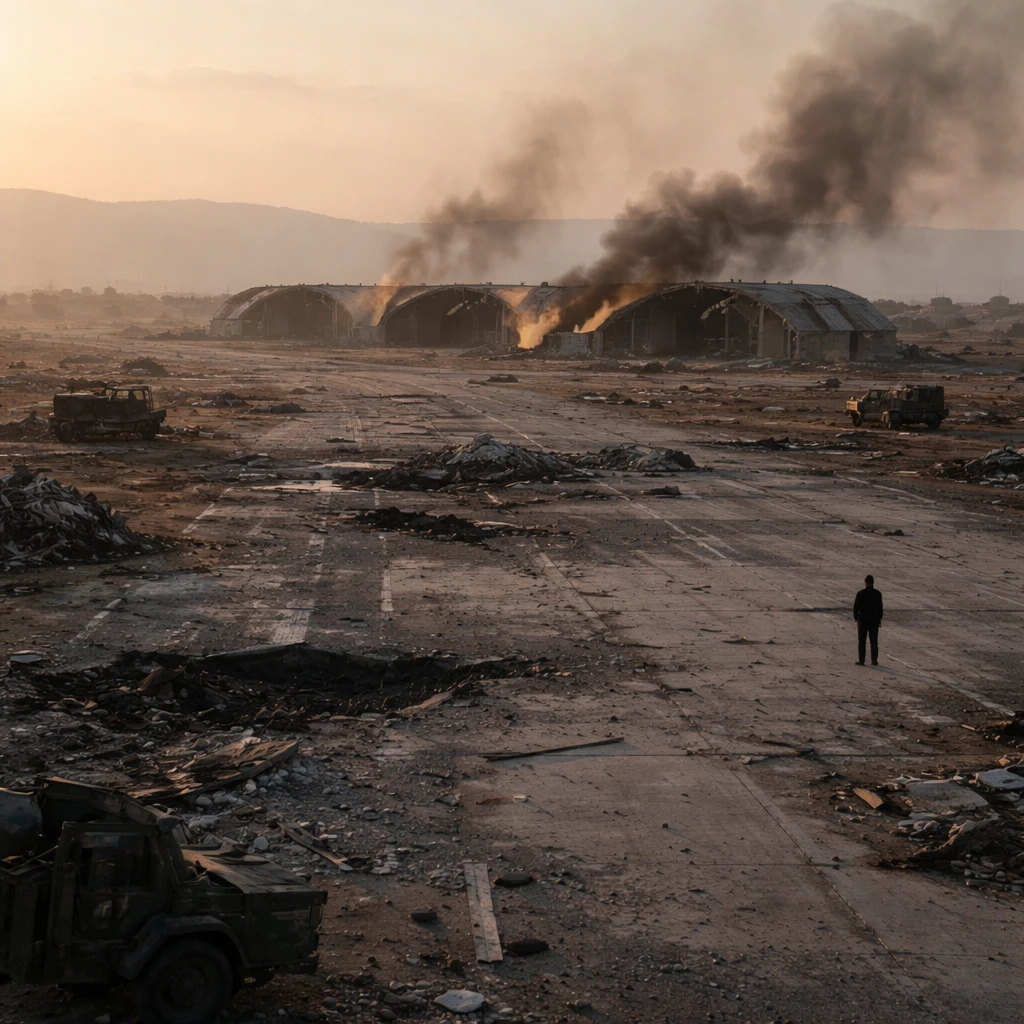
On Aug 18, eight Israeli airstrikes hit the Abu al-Duhur airbase in northwestern Syria, according to Syrian state media. Authorities cited by the state-run Ekhbariya network said the strikes struck the base's runway and storage facilities. A separate military source and a civilian resident near the facility reported that there were no casualties.
The Israeli military did not offer a comment on the reported strikes, and the Syrian defence ministry had not responded to requests for confirmation at the time of the reports.
Reacting to the incident on X, Tom Barrack, the U.S. special presidential envoy for Syria and Iraq, described the attacks as "an unnecessary escalation that does not advance regional stability." He added that the United States believes restraint and engagement are more constructive and urged parties to prioritise reasoned dialogue over further military incidents.
Base history and current use
The Abu al-Duhur base sits roughly 70 km (43.5 miles) from the Turkish border. Syrian sources say it has not functioned as a dedicated military airfield since 2013 and has changed hands several times during Syria's 14-year civil war, contested by forces loyal to former President Bashar al-Assad and various opposition factions.
According to a military source cited by Syrian state media, since Assad was ousted in late 2024 the facility has been repurposed as a training centre for Syria's new army. The account in state media links the site to broader shifts in the country's security architecture since the change in leadership.
Context of Israeli operations and prior activity
The strikes come against a backdrop of prior Israeli operations in Syria. Syrian state commentary and reporting noted that in the months after Assad was toppled, Israel seized ground in southwest Syria and struck considerable portions of Syrian military heavy weapons and equipment. Israeli officials, as reported, expressed alarm at the militant Islamist background of Syria's new rulers.
The reporting also recalls that Israel regularly carried out strikes in Syria during the previous Assad government, citing Israeli objectives to curb Iranian influence in the country. The recent airstrikes on Abu al-Duhur fit within that pattern of cross-border strikes aimed at degrading military capabilities perceived as threatening.
Regional tensions and allies
Security tensions in the region have increased, with relations between Israel and Turkey becoming notably strained and bilateral rhetoric sharpening over developments in Syria. Turkish officials have accused Israel of seeking to destabilise Syria and undermine the newly established administration in Damascus. On Aug 6, Turkish Foreign Minister Hakan Fidan said Israel's repeated attacks continued to threaten Syria's security and called for international pressure on Israel to respect Syria's territorial integrity.
Turkey has emerged as a key ally of Syrian President Ahmed al-Sharaa, according to reporting. Ankara has reportedly trained Syria's new army, aided in rebuilding state institutions and infrastructure, and provided military and diplomatic support. It was not immediately clear whether Turkey was directly involved in any renovation at Abu al-Duhur, though Ankara has stated it is assisting Damascus across the country.
Israeli Defence Minister Israel Katz has issued blunt warnings to Turkish President Tayyip Erdogan, saying Israel will not permit steps that bolster Syria's military capabilities in ways that could threaten Israel.
Military developments and monitoring
Syria conducted air exercises in the north of the country in early August using Russian-made MiG-21 fighter jets, the first such exercises since Assad's ouster, according to reporting. On Aug 11, Israel's Kan public broadcaster reported that Israeli security officials observed indications Syria was accelerating efforts to rebuild an air force, including recruiting new pilots, carrying out flight training and holding an initial exercise involving fighter aircraft. Kan said Israeli officials were closely monitoring those developments and had shared their concerns with the United States.
Implications for infrastructure and regional stability remain uncertain. Syrian state media reported damage to runway and storage areas, and U.S. diplomatic comment underscores concerns about an escalation that could further destabilise an already fragile regional security environment.