
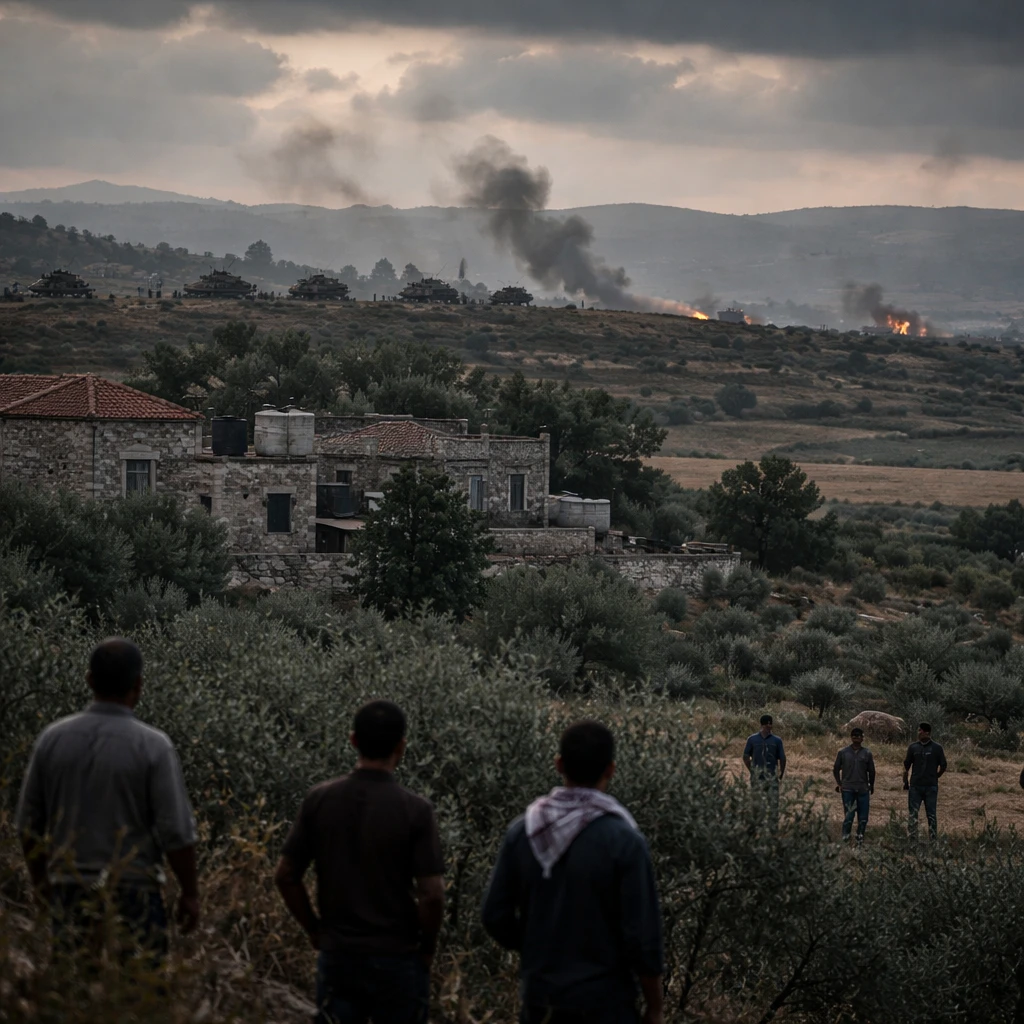
Aug 5 - The Israeli military announced it had initiated targeted strikes in southern Lebanon on Wednesday, stating the action was a response to what it described as a "Hezbollah violation." The strikes occurred a day after the most recent U.S.-facilitated talks between Israel and Lebanon in Rome.
Earlier the military issued an evacuation warning to the southern Lebanese village of Mansouri, saying it would take action against the Iran-backed group in that area. The warning marked the first online evacuation notice by the military for locations in Lebanon in more than a month.
In late June, Israeli forces had distributed flyers in Mansouri asking residents to leave, after adding the village to a self-declared buffer zone in southern Lebanon, a senior Lebanese military official said at the time. Despite Israeli operations nearby, some Lebanese farmers had continued to access their fields and homes in towns close to the border.
These developments follow a June 26 agreement between Lebanon and Israel on a U.S.-brokered security arrangement aimed at easing hostilities along the border. Even so, Israel has stated it will keep a security zone in southern Lebanon to remove what it identifies as the threat posed by Hezbollah.
Context and immediate implications
The military's declaration that the strikes were in response to a "Hezbollah violation" frames the action as retaliatory and linked directly to perceived breaches by the Iran-backed group. The evacuation warning to Mansouri, following previous leaflet drops and the village's addition to a buffer zone, underscores continuing tensions over movement and access in border areas.
At the same time, the recent diplomatic engagements in Rome demonstrate parallel efforts to manage the situation through U.S.-facilitated talks, while on-the-ground measures - including targeted military steps and evacuation advisories - remain in effect.
Key points
- The Israeli military reported targeted strikes in southern Lebanon in response to a reported Hezbollah violation.
- An evacuation warning was issued to the village of Mansouri, which had been added to a self-declared buffer zone and was the subject of leaflet drops in late June.
- Despite operations nearby, some local farmers continued to access fields and homes; a U.S.-brokered security arrangement between Lebanon and Israel was agreed on June 26, though Israel said it would maintain a security zone to address Hezbollah.
Risks and uncertainties
- Risk of further border incidents linked to clashes or violations attributed to Hezbollah - this primarily affects security and defense considerations.
- Potential displacement or restricted access for local residents and farmers in border towns, impacting agriculture and local livelihoods.
- Uncertainty over how continued military measures interact with the U.S.-brokered agreement of June 26, which may influence the durability of the ceasefire-like arrangements along the border.