
When tens of thousands of migrants crossed from Morocco into the Spanish enclave of Ceuta last week, Italy’s government reacted swiftly on a diplomatic and political level. Prime Minister Giorgia Meloni said she would suspend a free-movement agreement with Spain - a move that drew attention even though Ceuta itself is excluded from that pact. At the same time, a separate incident in Bologna involving a Moroccan-born small-business owner has focused public attention on the personal toll that migration policy and enforcement can entail.
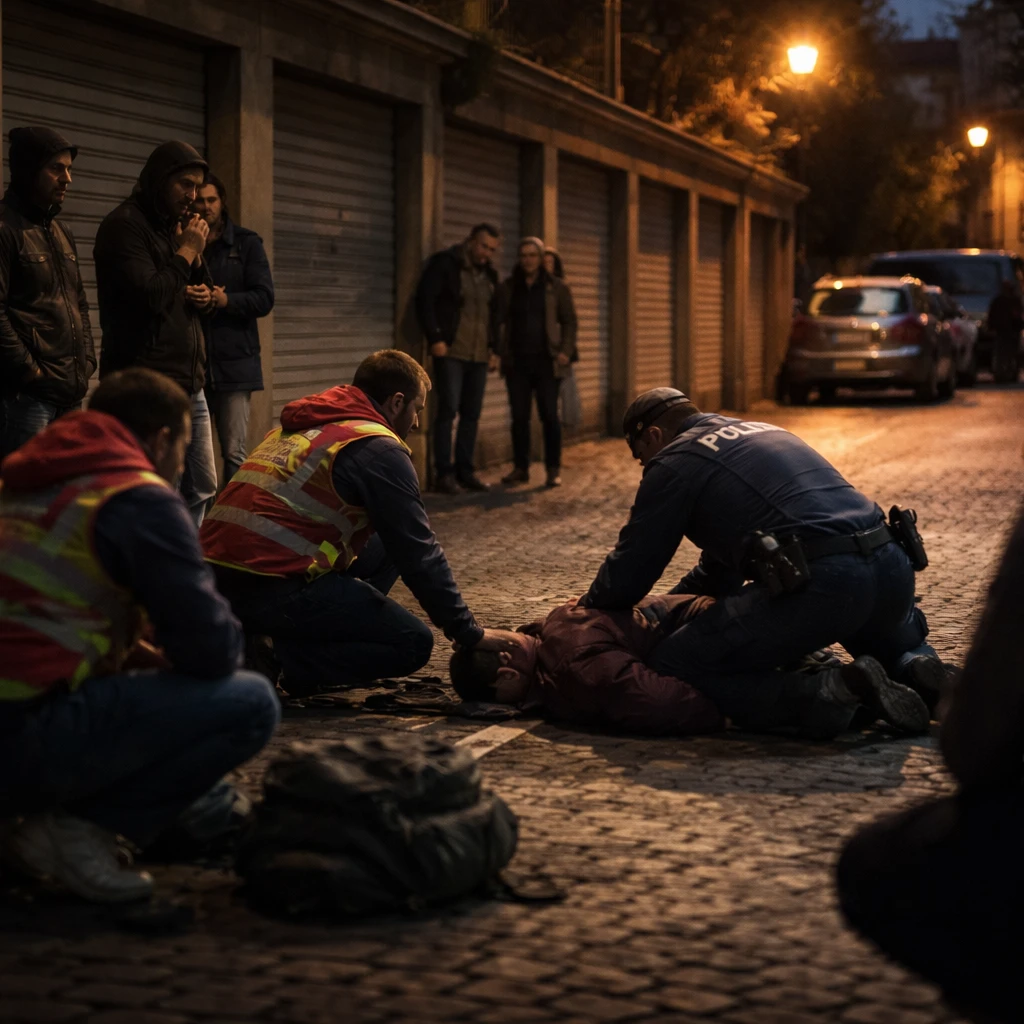
On July 19, 42-year-old owner of a small metalworking business, Abderrahim Fakir, died after police stopped him in Bologna. Viral video footage shows two officers sitting on him to restrain him as he lay face-down and cried for help. The officers had responded to reports of a man wandering the area, yelling incoherently, kicking garage doors and striking a parked car with a driver inside.
In the immediate aftermath, reactions fell along familiar political lines. Government supporters and right-leaning media portrayed Fakir as a disorderly migrant and highlighted the two drug convictions from his teenage years that appear on record. Opposition politicians accused the government of fostering racism and tacitly endorsing excessive force by law enforcement.
What has been less present in much of the public conversation is a fuller view of who Fakir was and the pressures he faced in the months before his death. Interviews with relatives, friends and his legal team depict a person who had been rooted in Bologna for decades, who ran a small firm now struggling under financial strain, and who was increasingly fearful of losing his ability to stay in Italy.
Human details behind the headlines
Born in Morocco, Fakir arrived in Italy at the age of six and had been a Bologna resident since 1995. Colleagues and former classmates describe him as sociable and well-integrated into the local community. "He was lively, always present in class, and was a great football player," said a former schoolmate, Riccardo.
After youthful mistakes that led to two convictions for drug offences as a teenager, Fakir went on to work a variety of jobs and eventually founded his own businesses. His most recent venture was a metalworking company that, according to his lawyer Barbara Spinelli, had fallen into difficulty. He had laid off eight of the 12 employees he had previously employed - a development that distressed him deeply, his lawyers and relatives say.
Family members recall a man who often masked his worry with good humor. "He wanted to protect us," said his older sister Khadija, describing routine calls in which Fakir would ask after children and relatives and insist "everything was fine." His 23-year-old niece Yossra remembered him joking with younger family members and treating nieces and nephews as if they were his children.
Legal limbo and mounting anxiety
At the center of Fakir’s recent anxiety was his immigration status. He had relinquished an Italian residence permit following an extended stay in Morocco after his mother’s death in 2021. Spinelli had been assisting him to regain a permit and said they were close to a resolution until the judge assigned to the case was transferred in June. "He panicked, even though I reassured him it would soon be resolved," she said.
Compounding that stress, immigration authorities summoned Fakir for verification of his status despite a court order provisionally allowing him to remain in Italy. "He was terrified of being sent back to Morocco," Spinelli said.
There were warning signs in the weeks before his death. On June 12, police encountered a disoriented Fakir wandering in Castello d’Argile, outside Bologna; the episode concluded without incident, Mayor Alessandro Erriquez told state media. A few days after that, Fakir presented at a Bologna hospital with a self-inflicted injury and requested psychiatric support. Family lawyer Fabio Anselmo said hospital records described him as depressed but calm.
Public reaction and unrest
Footage of Fakir’s final minutes, widely shared online, prompted Bologna’s centre-left mayor Matteo Lepore to call a public rally demanding accountability and expressing support for the family. The demonstration attracted thousands of peaceful participants but at one point turned violent when a small faction moved toward police headquarters, throwing objects and injuring dozens of officers. The clash intensified political pressure: government supporters demanded the mayor’s resignation, while opposition figures faulted the national government’s hardline law-and-order stance.
Meanwhile, a formal inquiry is under way. Investigations and an autopsy are pending into the circumstances of Fakir’s death, including scrutiny of the officers who subdued him and four Red Cross volunteers who initially watched before attempting to revive him. The outcome of those inquiries has yet to be determined.
Broader consequences for debate and policy
Observers in academia and refugee organizations say the way the incident was handled in public discourse - rapidly reduced to partisan talking points and character attacks - reflects a broader pattern in migration debates. Maurizio Ambrosini, a scholar of migration at Milan’s Statale University, said the political imperative for many leaders favors the dehumanisation of migrants. "If we don’t see them as people in flesh and blood but as an abstract phenomenon, it becomes easier to tackle the issue without too much fuss or human considerations," he said.
Whether the pending autopsy and internal investigations alter public perceptions or policy is unclear. For Fakir’s family, the immediate focus remains on truth and accountability. "My family trusts the Italian justice system and the police," Khadija said, adding that the family expects the truth to emerge.
As Italy and other European governments grapple with cross-border movements and domestic enforcement, the case of Abderrahim Fakir underscores how individual lives and small businesses can become entangled in broader political disputes. It also highlights fault lines between public-security rhetoric and the lived realities of migrants who have long-standing ties to their communities.
Key points
- The death of 42-year-old metalworker Abderrahim Fakir after being restrained by police in Bologna has intensified political debate over migration and law enforcement, following large-scale crossings into Ceuta.
- Interviews with family and lawyers portray Fakir as a long-term Italian resident and small-business owner facing company distress, legal uncertainty about his residency and signs of mental health crisis.
- Sectors likely affected include small-scale manufacturing (through impacts on firm stability and employment), local healthcare services (mental health and emergency care), and public-sector institutions involved in immigration enforcement and policing.
Risks and uncertainties
- Pending autopsy and investigations create legal and reputational risk for the police and for institutions involved in the incident, with outcomes still uncertain.
- Political polarisation over migration policy may lead to further public unrest and confrontations between demonstrators and law enforcement, posing short-term public-safety risks in urban centres.
- Small businesses in similar legal or financial limbo may face operational and workforce instability, which can have local economic repercussions in manufacturing and services tied to those firms.