
World August 19, 2026 05:37 AM

China’s Wang Yi Visits Seoul as Washington and Seoul Scale Back Military Drills

Meeting schedule includes talks with top South Korean officials amid renewed U.S.-North Korea diplomacy efforts

By Jordan Park
Share
Twitter Reddit Facebook LinkedIn

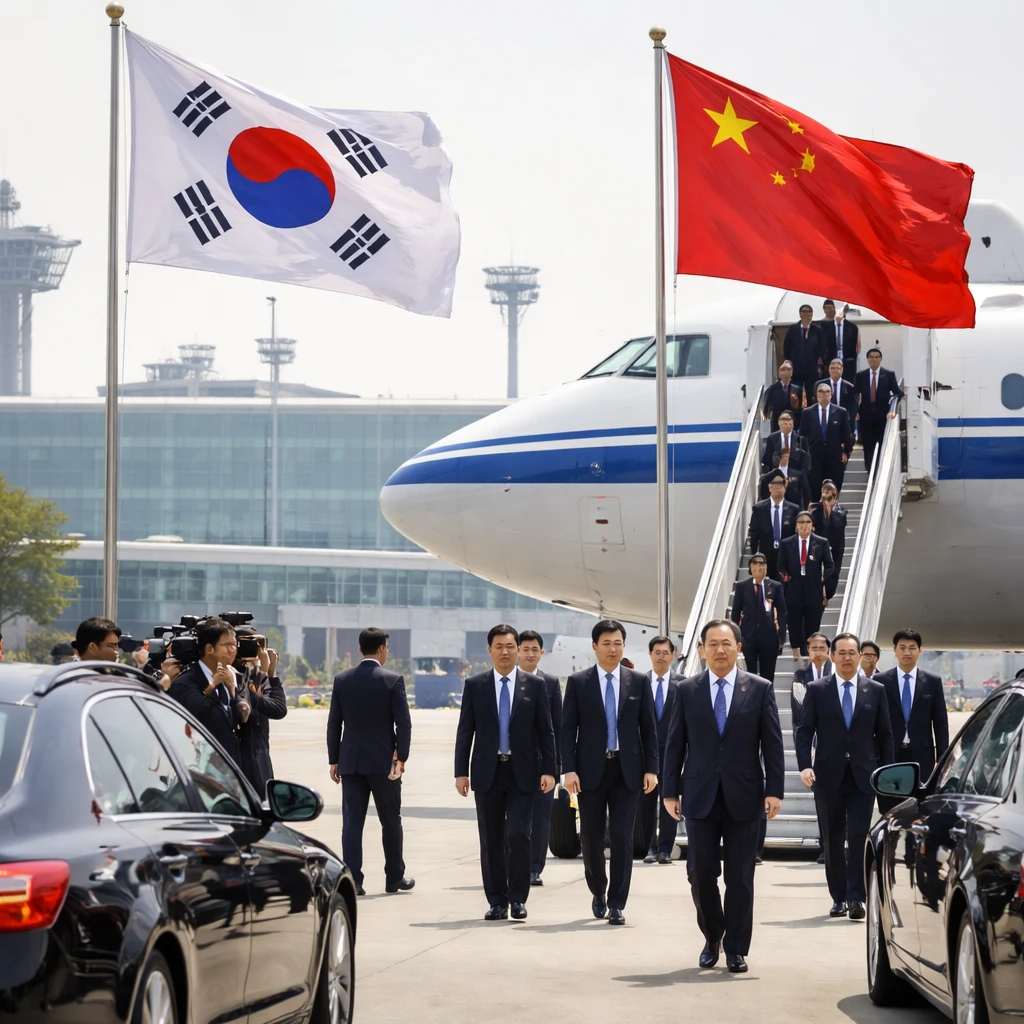
Chinese Foreign Minister Wang Yi arrived in Seoul on Aug 19 for a short visit that will include meetings with South Korea's foreign minister, national security adviser and president. The visit follows a decision by Seoul and Washington to scale back joint military exercises as U.S. President Donald Trump signals renewed engagement with North Korean leader Kim Jong Un. Chinese officials reiterated a call for peace and political settlement on the Korean Peninsula.

China’s Wang Yi Visits Seoul as Washington and Seoul Scale Back Military Drills
Summarize with
ChatGPT Perplexity Claude Grok Gemini

Key Points

  • Chinese Foreign Minister Wang Yi arrived in Seoul on Aug 19 for talks with South Korean officials, including a meeting with Foreign Minister Cho Hyun and President Lee Jae Myung.
  • The visit follows a decision by South Korea and the United States to scale back joint military exercises, a move President Trump attributed to his relationship with North Korean leader Kim Jong Un and his willingness to meet Kim again.
  • China reiterated its longstanding position that maintaining peace and stability and promoting a political settlement on the Korean Peninsula serves the common interests of all parties; planned diplomacy could affect defense and regional political dynamics.

SEOUL, Aug 19 - Chinese Foreign Minister Wang Yi landed in Seoul on Wednesday to begin a series of meetings with senior South Korean officials, according to South Korean government statements.

Wang is scheduled to meet South Korea's Foreign Minister Cho Hyun later on Wednesday, with talks followed by a dinner, Seoul's Foreign Ministry said. The agenda for that meeting is expected to cover bilateral relations, issues related to the Korean Peninsula and broader regional affairs.

On Thursday Wang will hold talks with President Lee Jae Myung, the presidential office said. The schedule also includes a meeting and luncheon with National Security Adviser Wi Sung-lac, according to the presidential office.

The visit comes in the wake of Seoul and Washington reducing the scale of their joint military exercises. U.S. President Donald Trump has said he ordered the change because of his relationship with North Korean leader Kim Jong Un and has indicated he is willing to meet Kim again.

China, which is the only country with a formal treaty relationship with North Korea, has not made a direct comment on President Trump's remarks about the military exercises. At a regular news briefing, Chinese Foreign Ministry spokesperson Lin Jian reiterated Beijing's longstanding position on the peninsula, saying:

"Maintaining peace and stability on the Korean Peninsula and promoting the political settlement of the Korean Peninsula issue is in the common interests of all parties."

When speaking in parliament on Wednesday, Foreign Minister Cho said he expected to raise Korean Peninsula issues with Wang, specifically pointing to recent developments around the military exercises.

Cho also said the South Korean Foreign Ministry is pursuing a summit between President Lee and Chinese President Xi Jinping on the sidelines of the Asia-Pacific Economic Cooperation summit in Shenzhen later this year. President Lee has put forward a proposal for multilateral talks that would bring together parties to the 1950-53 Korean War to discuss ways to establish a lasting peace on the peninsula. Lee is expected to attend the APEC summit in Shenzhen in November.

Wang's Seoul visit, with its concentrated schedule of diplomacy, comes amid shifting military and diplomatic signals in the region and planned high-level meetings later this year that could shape regional dialogue on security and peace arrangements.

Risks

  • Diplomatic uncertainty over the future scope and frequency of US-South Korea military exercises could affect defense planning and regional security perceptions - impacting defense sector contractors and regional investor sentiment.
  • China has not made a direct response to recent US statements, creating uncertainty about Beijing's near-term policy moves toward North Korea and the peninsula - a factor for geopolitical risk assessments in markets and government relations.
  • The pursuit of high-level summits and proposed multilateral talks does not guarantee concrete outcomes, leaving the timing and effectiveness of any lasting peace initiatives uncertain - relevant to political risk in the region.

More from World

Parti Québécois Shelves Referendum While Trump Is U.S. President Aug 18, 2026 Carney and Trump Hold Phone Talks as Canada Seeks Last-Minute Deal to Avert 50% U.S. Tariffs Aug 18, 2026 Madonna Leads VMA Nominations, Edging Out Taylor Swift Ahead of September Ceremony Aug 18, 2026 China's Data Strategy Could Strengthen Its Edge in AI, U.S. Advisory Panel Says Aug 18, 2026 Israeli Strikes Damage Runway, Storage at Abu al-Duhur Airbase; U.S. Envoy Warns of Escalation Aug 18, 2026