
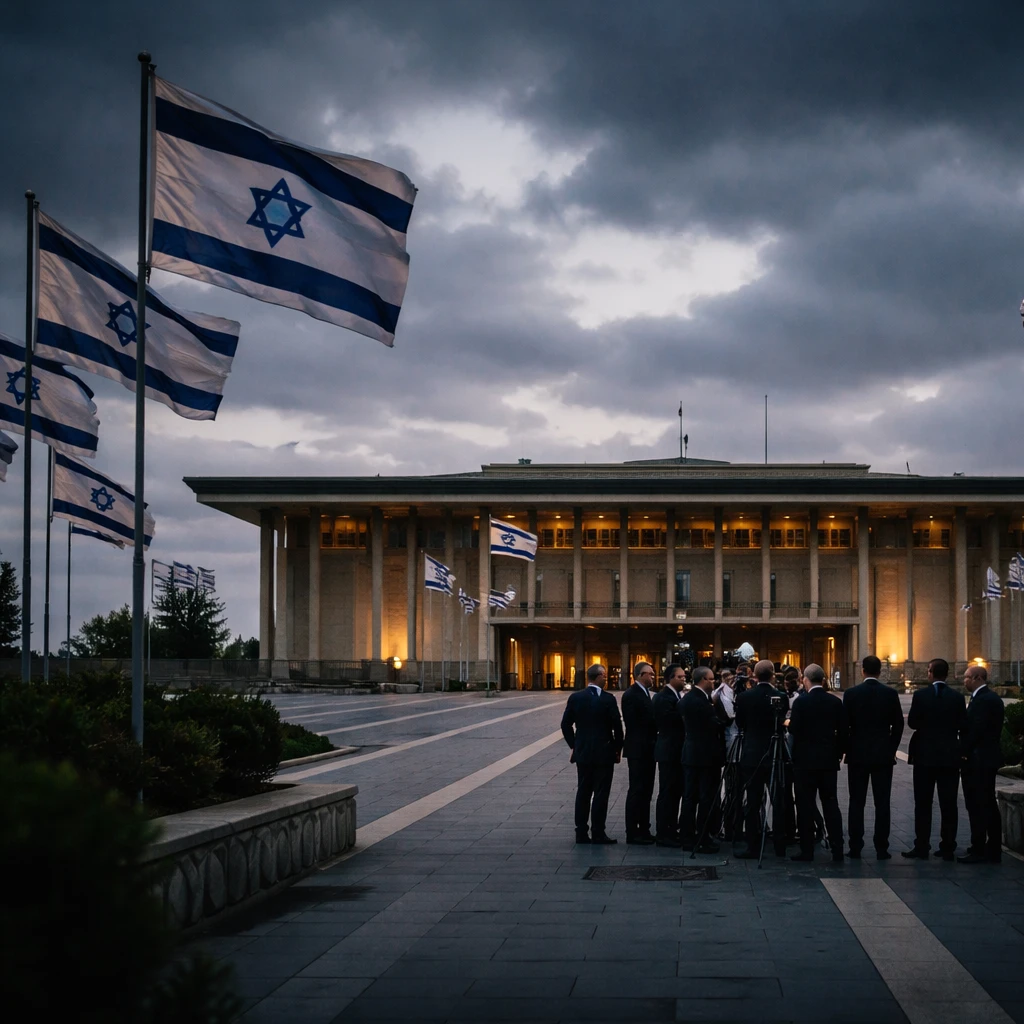
JERUSALEM, Oct 28 - Benjamin Netanyahu is expected to continue in office as Israel’s caretaker prime minister after Tuesday’s election, but experts say the caretaker status will come with increased constraints on his authority. Still, analysts note the legal framework preserves broad powers in areas deemed matters of national security - a category that could encompass moves against Iran.
Israeli media projections indicate that neither the right-wing bloc aligned with Netanyahu nor an opposition grouping led by former military chief Gadi Eisenkot is likely to secure a majority in the 120-seat Knesset. Eisenkot has publicly acknowledged that Netanyahu remains in office as a caretaker, while warning that the prime minister might leverage security issues for political benefit. Netanyahu’s office has previously denied allegations that he is exploiting the Iran issue for political gain. The office did not immediately reply to a request for comment on Wednesday.
Legal scholars emphasize that, on paper, a caretaker cabinet retains the formal powers of a regular government. "If you look at the letter of the law, a caretaker government has the same authority, has the same powers as a regular government," said Guy Lurie, a research fellow at the Israel Democracy Institute. He added, however, that a caretaker administration "has a duty of restraint" and faces narrower discretion in certain policy areas.
Practically, that duty of restraint tends to limit the caretaker government's scope for long-term appointments and broad policy shifts, analysts say. At the same time, they highlight clear exceptions in which a caretaker administration may act when immediate public interests or pressing needs are at stake.
"In general, security issues are the clearest exception to this duty of restraint," said Or Asher, a researcher at the Tel Aviv-based Tachlith Institute. Asher noted that Israel’s Supreme Court has previously ruled a caretaker government should avoid sweeping decisions unless they are justified by urgent necessity.
"The Supreme Court has historically avoided intervening in decisions to go to war, and parliamentary oversight is at its thinnest in the weeks after the new Knesset convenes and before its committees are formed," Asher said, adding that "a caretaker prime minister can legally take Israel to war, including against Iran."
After the final election counts are certified, Israel’s president is expected to consult party leaders and designate the candidate deemed most likely to form a governing coalition. That nominee would then have up to 42 days to assemble a government. During that interregnum, parliamentary oversight typically remains limited while the new Knesset organizes its committees.
Legal experts and analysts interviewed underline the tension inherent in a caretaker arrangement: formal powers are largely intact, but political norms and judicial guidance emphasize restraint except where immediate national security considerations are invoked.