
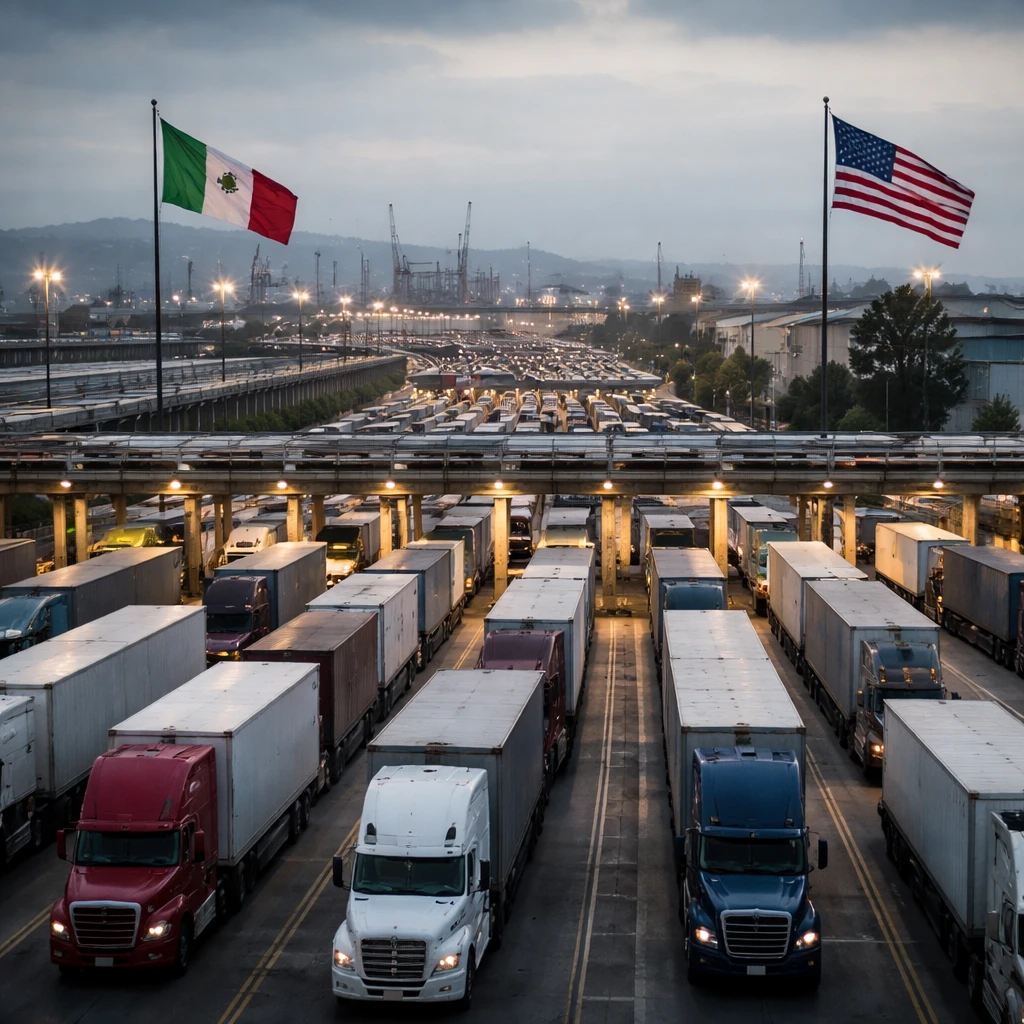
Mexican President Claudia Sheinbaum confirmed on Wednesday that negotiations with the United States remain active and that both governments are evaluating whether it is feasible to finalize an agreement prior to the U.S. midterm elections in early November.
The discussions are centered on a temporary, bilateral arrangement between Mexico and the United States even as efforts to renew the trilateral US-Mexico-Canada Agreement (USMCA) have stalled with Canada. Officials are considering a shorter-term pact to address immediate trade frictions while the broader trilateral talks remain fraught.
"In areas where we can reach an agreement and strengthen both countries, we are making progress," Sheinbaum said during her daily morning press conference, signaling that negotiators have found limited common ground on some issues.
Mexico has emphasized that any short-term deal should include "a significant reduction" in tariffs affecting the nation’s automotive, steel and aluminum sectors, according to Sheinbaum. Those industries are central to Mexico’s trade agenda in the negotiations and are explicitly named as priorities for tariff relief.
The push by Mexico follows the collapse of talks between the United States and Canada last month. That breakdown precipitated a sharp tariff dispute that has seen the United States impose new import bans on Canadian alcohol, motorcycles and dairy products. Canada has responded by pledging dollar-for-dollar retaliation.
The escalation with Canada has influenced Mexico’s approach. Mexican officials have sought cooperation with the United States rather than confrontation, a strategy they hope will improve prospects for tariff relief on sensitive domestic industries.
While there is no formal deadline for concluding an agreement, officials in both Mexico and the United States are expressing hope that a deal could be reached before the November 3 elections in the United States. Observers within the governments view a pre-election agreement as politically valuable, offering leaders a tangible achievement amid domestic pressures, particularly as Republican control of Congress is viewed as at risk.
Summary
Mexico and the United States are negotiating a temporary bilateral trade deal as trilateral USMCA talks with Canada have faltered. Mexico is seeking large tariff reductions for its automotive, steel and aluminum sectors, while U.S. bans on selected Canadian imports and Canada’s retaliatory stance have shaped Mexico’s cooperative strategy with Washington. Officials hope a deal might materialize before the November 3 U.S. midterm elections.