
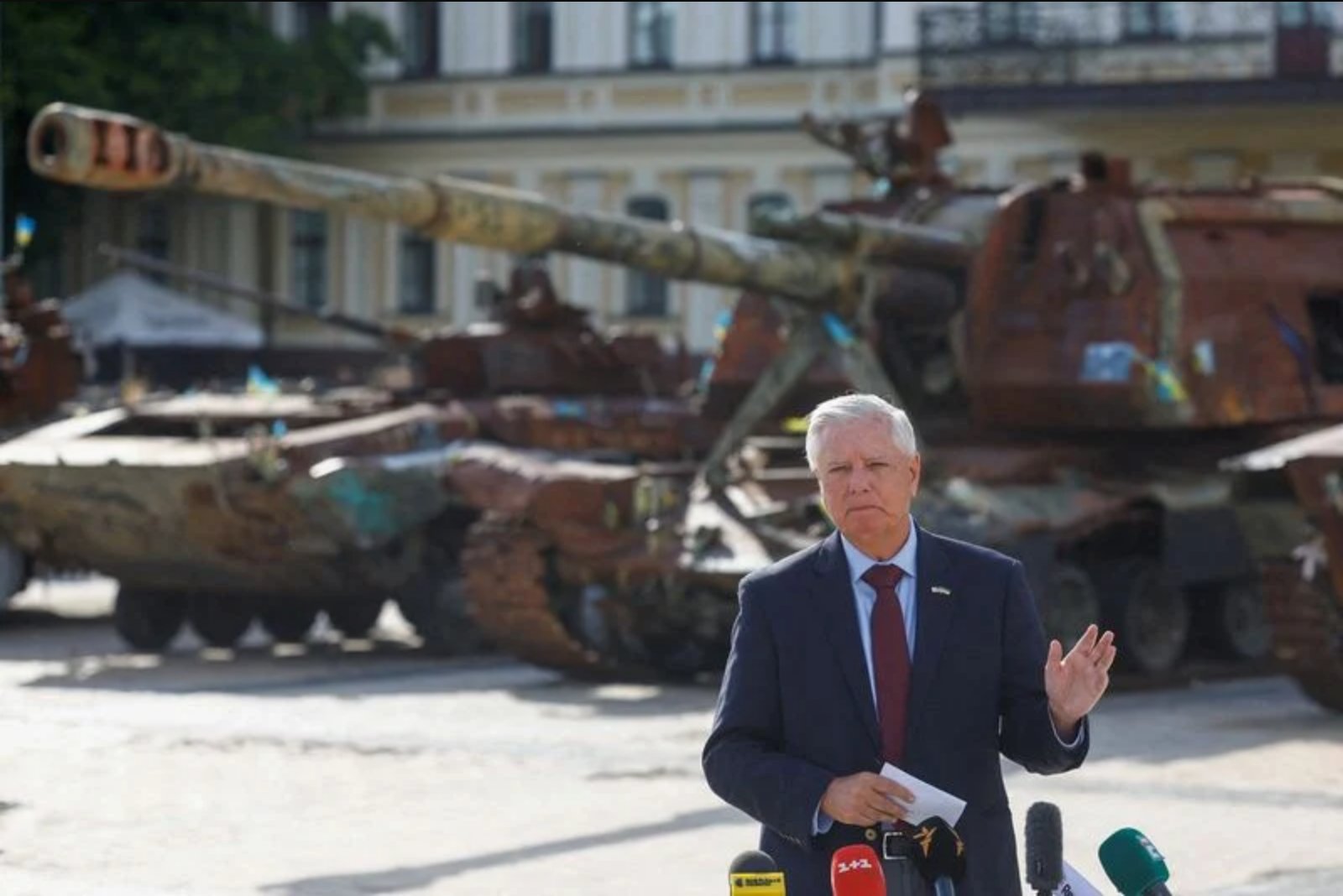
The abrupt death of Senator Lindsey Graham has prompted concern in Kyiv and among Washington policymakers about the durability of recent U.S. moves in favor of Ukraine. Graham had played a visible role as a bridge between President Donald Trump and Ukraine’s leadership, and his passing leaves open whether the momentum behind two core items - a sanctions bill aimed at countries buying Russian energy and continued U.S. military assistance for Kyiv - will persist without his direct advocacy.
In the days before his death, Graham and other senators backing the legislation said they had reached an agreement with the White House to advance the "Sanctioning Russia Act," legislation that had previously stalled amid presidential resistance despite having 85 co-sponsors in the Senate. Separately, Trump indicated last week that he would authorize Kyiv to produce interceptors for the Patriot air-defense system, a concession that follows calls from Ukraine for more immediate defensive munitions.
Graham, 71, died late on Saturday, a day after traveling to Ukraine for what was his 10th trip since Russia launched a full-scale invasion in February 2022. During that trip he announced the purported agreement with the White House to finally move forward on the Russia sanctions bill.
Graham’s role as a conduit
For years Graham had lobbied for increased military support for Ukraine and acted as a go-between for Kyiv and the U.S. executive branch, frequently working alongside Democratic colleagues. He was involved in securing a critical minerals agreement between the United States and Ukraine, persuading President Trump to accept a plan that granted U.S. preferential access to new Ukrainian minerals projects in return for U.S. investment.
"He was successful in leading President Trump to pivot in his position toward Ukraine," said Matthew Murray, a former Commerce Department official now teaching at Georgetown and Columbia universities. "The senator’s good work here will be self-sustaining and self-executing," Murray added, reflecting the view that some of Graham’s initiatives could continue without him.
Ukrainian President Volodymyr Zelenskiy said he was "deeply saddened" by Graham’s death, noting that they had remained in regular contact and had met twice in the week before Graham’s passing.
Policy progress and limits
Despite Graham’s influence, his efforts did not always yield immediate victories. He had been unable to persuade President Trump to allow a floor vote on the sanctions legislation until the announcement he and allies made while in Kyiv. The last major U.S. package of aid for Ukraine that passed both chambers of Congress was a $61 billion measure in April 2024.
Analysts characterize Graham’s broader record on Ukraine as mixed, shaped in part by the complications of Trump’s sometimes tense interactions with President Zelenskiy, a White House foreign policy stance favoring "America First," and competing priorities such as the costly war with Iran, which strains U.S. resources and factors into energy-security calculations, including pressure to permit Russian oil shipments as a means to relieve energy prices.
"It’s a big loss for Ukraine. I don’t think anyone should have any illusions about it," said Scott Anderson of the Brookings Institution, observing that Graham was an important behind-the-scenes influence representing the more internationalist wing of the Republican Party.
What could change without Graham
Graham’s role as a former Trump critic who became a close ally and frequent golf partner had given him a particular ability to press the president on Ukraine policy. With him gone, supporters of sanctions and additional security assistance say the path forward may be more difficult without a similar figure to sway the president.
Several other pro-Ukraine lawmakers, including former Senate Republican leader Mitch McConnell, are also scheduled to leave Congress in January, which proponents say could further reduce institutional backing in the next session.
"Ukraine has lost an advocate that had the president’s ear," said Charles Lichfield, deputy director of the Atlantic Council’s GeoEconomics Center.
At times President Trump has publicly urged Kyiv to accept a peace deal that might include painful concessions, and earlier last year he sharply criticized Zelenskiy in the Oval Office for what he portrayed as insufficient gratitude for U.S. aid. Still, Trump’s rhetoric toward Kyiv has recently softened. Zelenskiy said after a NATO summit that the U.S. and Ukraine had reached a political agreement on permits for Patriot interceptor production and that discussions about joint drone manufacturing were ongoing.
Legislative outlook
The sanctions bill targets nations that purchase Russian oil, gas and uranium. The bill’s remaining supporters in both chambers of Congress have pledged to press for its passage, framing enactment as a fitting tribute to Graham. Some of those backers have even floated the idea that the measure be renamed in his honor.
"There can be no more fitting tribute to Lindsey," Democratic Senator Jeanne Shaheen of New Hampshire, a co-sponsor of the bill and the top Democrat on the Foreign Relations Committee, said in a statement.
The Senate has not set a timeline for a vote. Senate Republican leader John Thune of South Dakota told CNN that passing the legislation would be an "incredible legacy" for Graham, signaling some degree of continued institutional interest in advancing the measure.
Implications for markets and defense procurement
While policymakers deliberate, Kyiv continues to press for immediate deliveries of defensive munitions. The limited commitments so far - including the political agreement on Patriot interceptor production - reflect progress but fall short of Ukrainian requests for more immediate defensive supplies. The pace of future assistance and the adoption of energy-related sanctions could influence energy markets and defense contractors that would be involved in expanded production of interceptors and related systems, depending on how legislation and administrative decisions proceed.
Conclusion
The death of Senator Lindsey Graham leaves a clear void in the informal architecture that had linked Kyiv to the U.S. president. Supporters of Ukraine say they will continue to push for the sanctions bill and further military assistance, while analysts warn that the legislative and diplomatic road may be harder without a figure who combined personal access to the president with a willingness to cross partisan lines. Whether Graham’s recent gains become entrenched or slow without his stewardship remains an open question that lawmakers and Kyiv will now have to confront.