
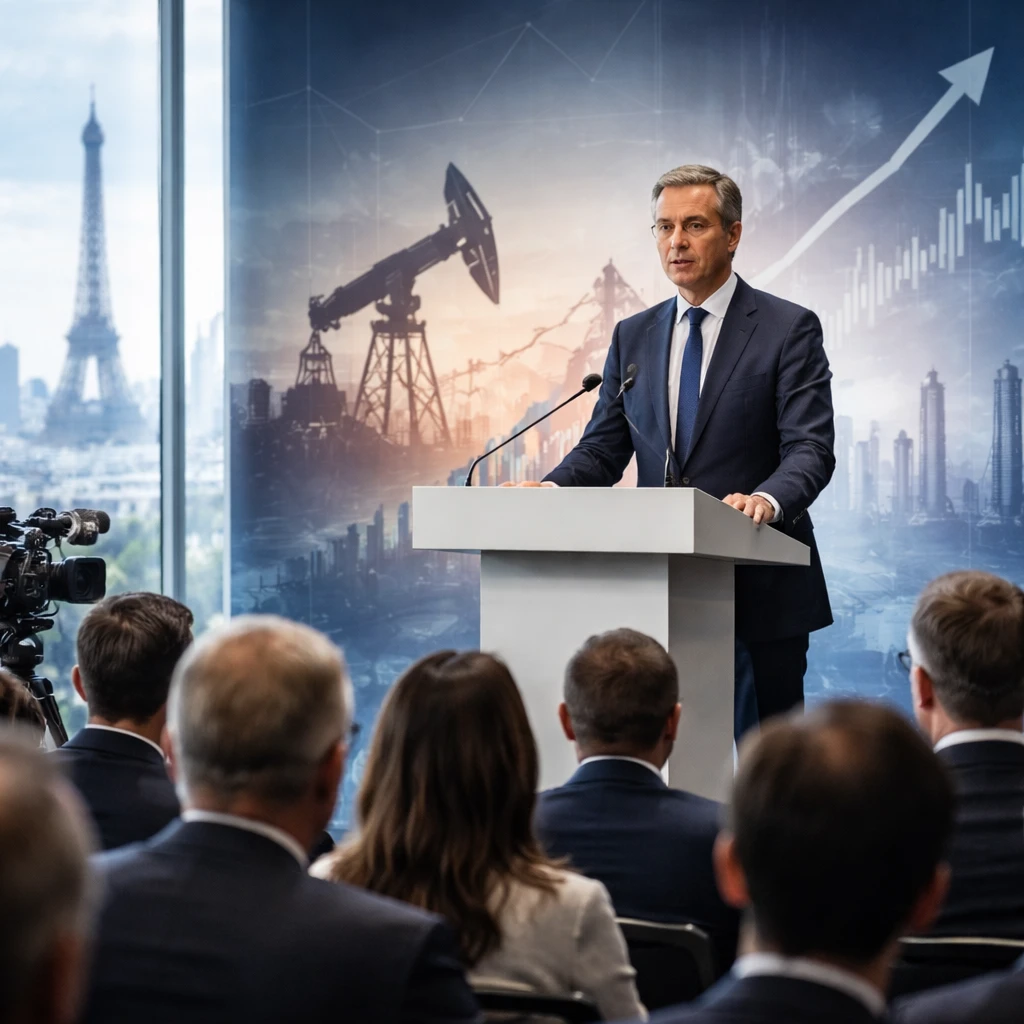
The Bank of France will raise its projection for consumer-price increases in 2026 because of the impact of the Iran war, Governor Emmanuel Moulin said Tuesday, according to reporting from Bloomberg.
Moulin told Bloomberg’s Alan Katz at the Europlace Paris Finance Forum that the bank’s upcoming forecasts will reflect slower growth and higher inflation, with the scale of those changes varying by scenario.
"Our forecasts will show less growth and higher inflation with a degree which will be different depending on the scenario," Moulin said.
The governor said the Bank of France is relying on oil price assumptions provided by the European Central Bank, but that the magnitude and persistence of the shock are greater than anticipated and will feed through to inflation. In March, the Bank of France had put French inflation at 1.7% for 2026 under its baseline scenario, with inflation slowing to 1.4% in 2027.
Analysts and market participants expect the energy-led rise in European prices to prompt the ECB to raise interest rates this week - the first such move since 2023. Markets are fully pricing another quarter-point increase in 2026 and are leaning toward a third hike.
The inflation outlook revision comes amid signs of economic strain in France. The French economy unexpectedly contracted in the first quarter, and recent indicators have signaled a deterioration in business activity and confidence.
This projection adjustment by the Bank of France highlights tensions between inflationary pressures driven by energy costs and weaker domestic growth indicators. The central bank’s reliance on ECB oil-price assumptions underscores how external commodity shocks can alter national inflation paths even when transmitted through regional forecasting inputs.