
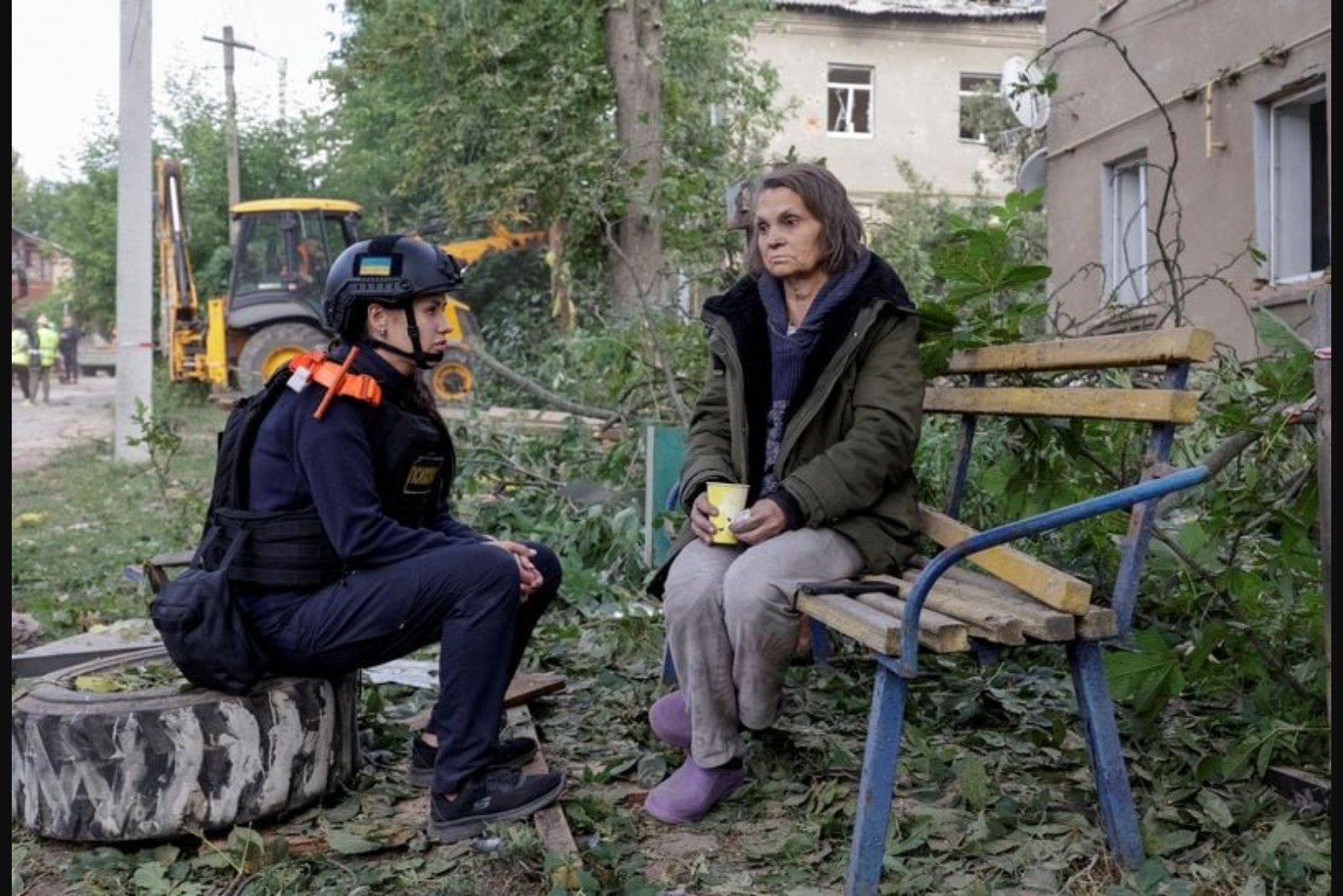
KYIV - Despite recent indications that Ukraine has arrested Russian advances and that G7 leaders last week acknowledged a change in momentum on the battlefield, the humanitarian situation for millions of displaced Ukrainians remains acute, the head of the International Rescue Committee (IRC) said.
David Miliband, the IRC's president and CEO, made the assessment while visiting Ukraine and spoke on Saturday, World Refugee Day, about the ongoing pressure on civilians and the consequences of falling aid budgets. He said it was important to call attention to funding reductions at a time when the geopolitical narrative is shifting.
"It feels particularly important at a time when there is this new sense of a different geopolitical narrative to recognise the brutality and strain that’s being faced by millions of Ukrainians," Miliband said.
Miliband pointed to a sharp decline in funding that has affected the IRC's operations in Ukraine. The organisation's budget in the country has been cut roughly in half - to a current estimate of $20 million in 2027 from $40 million last year - a reduction he attributed in part to broader cuts in foreign aid.
The U.N. estimates roughly 118 million people are displaced around the world, frequently as a result of conflict, violence and persecution. Ukraine represents around 10 million of that total, with nearly four million people displaced within the country itself.
Miliband characterised these figures as evidence of growing global instability. He used the phrase "the new world disorder" to describe the combined effects of conflict, disease and natural disasters, and warned of declining resilience to shocks.
"These historic highs speak to what we call the new world disorder," Miliband said, citing the impact of more than 60 wars, as well as disease and natural disasters. "There are more shocks and fewer shock absorbers. And money is one of the absorbers."
The article notes a policy backdrop in which the Trump administration "has drastically reduced foreign aid and dismantled the U.S. Agency for International Development, prompting other nations to also cut aid spending." Those changes are presented as part of the reason for lower resources available to humanitarian actors operating in Ukraine.
On the ground, the IRC continues to deliver a range of services despite the funding squeeze. The organisation provides mobile medical assistance to communities located near segments of the approximately 1,200-kilometer frontline and offers trauma support aimed at vulnerable children and women who have experienced abuse.
Miliband also highlighted a less visible but pervasive consequence of prolonged conflict: the toll on mental health after more than four years of war. He suggested that even a modest redirection of a portion of the billions of dollars in military assistance given to Ukraine toward humanitarian and psychosocial programmes could help preserve societal resilience.
The IRC's warnings frame a situation in which tactical or strategic gains on the battlefield do not automatically translate into relief for civilian populations. Reduced aid budgets, continuing displacement and mounting mental-health needs are central challenges identified by the organisation.
Key details:
- IRC budget in Ukraine has been cut to an estimated $20 million in 2027 from $40 million last year.
- U.N. displacement estimates place roughly 118 million people displaced globally, with about 10 million in Ukraine and nearly four million internally displaced there.
- IRC provides mobile medical care near the 1,200-kilometer frontline and trauma support for vulnerable children and women.