
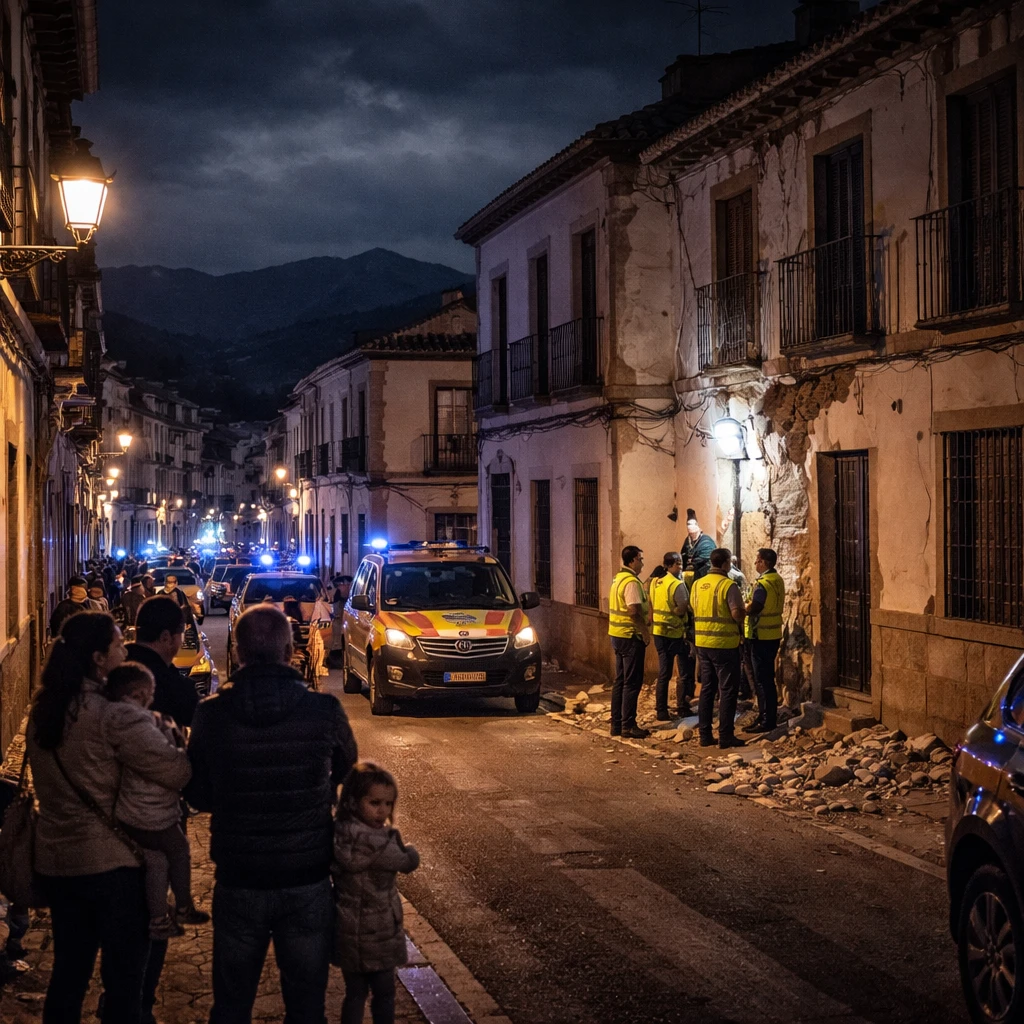
MADRID, Aug 19 - At least 10 earthquakes shook Granada in southern Spain overnight, extending a string of seismic events that began in the region five days ago and has already produced light injuries and damage to buildings.
Local authorities reported widespread, precautionary measures: many shops, churches and museums were closed and the local government shuttered offices. Media accounts said some residents left for the coast, while others chose to remain outdoors because of concerns about the stability of structures.
The National Geographic Institute (IGN) identified the strongest tremor in the sequence as a magnitude 3.4 event at 10:35 p.m. on Tuesday, with its epicentre in Ogijares, about 7 km south of Granada city. That main shock was followed by nine additional tremors registering between magnitude 1.5 and 2.5, and by dozens of smaller aftershocks, the IGN said.
Health services reported treating 14 people, mostly for panic or anxiety attacks, and more than 500 calls were logged to emergency services. Andalusian official Antonio Sanz said about 600 people were evacuated from apartment blocks that required inspection.
"There's clearly no imminent danger and the public hasn't been at risk," Sanz said, while noting that it remained impossible to determine the full extent of the damage. Preliminary assessments suggested damage was mostly limited to cornices and facades rather than serious structural problems.
Residents described the disruption. Paqui Valero, who lives in Albolote on the outskirts of Granada, told local newspaper Ideal that she and her partner left work and drove south with their two children along a congested highway. "I felt a lot of panic," she said.
Authorities continue inspections of buildings and are managing evacuations and emergency responses as aftershocks persist. Officials’ early assessments indicate limited visible damage, but further checks are needed to confirm whether any structures sustained more significant harm.
Context and next steps: Emergency services and municipal inspectors are handling calls, evacuations and initial damage appraisals while residents weigh whether to remain near their homes or move temporarily to less exposed locations.