
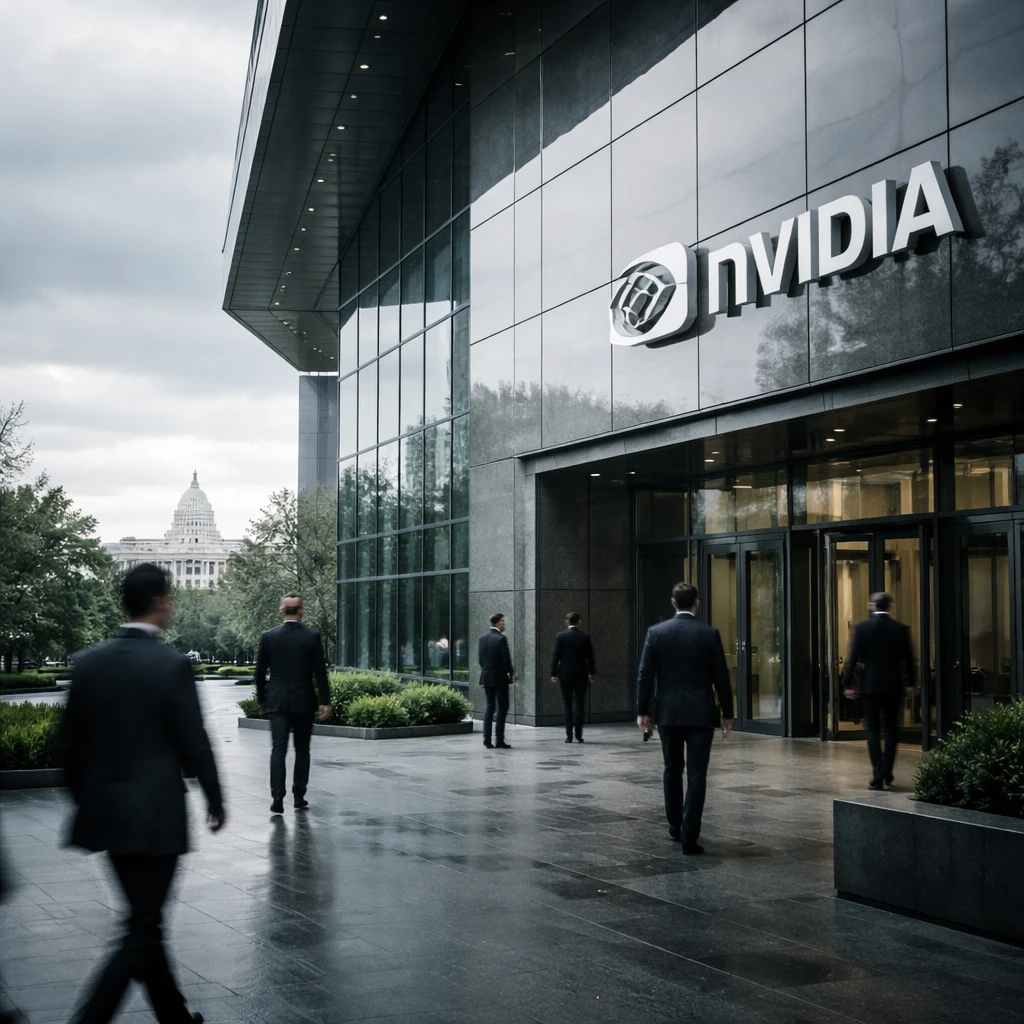
U.S. President Donald Trump said on Monday that the FBI is looking into Nvidia CEO Jensen Huang’s affair with a Chinese businesswoman whom U.S. authorities have reportedly identified as a Chinese intelligence asset.
Speaking at a White House press briefing, Trump told reporters he had asked Huang directly whether he knew the woman was a spy, and quoted Huang as replying that he had no idea. "I know the FBI is looking into (Huang) and I think that he’ll be in good shape," Trump said. "Did you have any idea that she was a spy? He said I had no idea that she was a spy and I really believe him," the president added.
The controversy centers on Huang’s admitted affair with Alice Huang, described in reporting as a former executive of a Singapore-based Nvidia client who U.S. authorities concluded was linked to Chinese intelligence. Jensen Huang confirmed the relationship in a memo earlier this week and said he will cooperate with any official inquiry.
Nvidia’s board announced it had initiated an investigation into the matter. The company said its preliminary review found no reason to believe that U.S. national security or Nvidia’s confidential information had been compromised. Despite that statement, Nvidia shares fell more than 4% on Monday.
Political oversight quickly followed the corporate action. Democratic Senator Chris Coons called for a formal probe of Huang and Nvidia to "determine whether our national security was compromised." In a social media statement, Coons also said: "We need answers about the relationship between AI billionaires and the Trump administration, who’s making these decisions, and who’s really got their hand on the wheel."
Trump and Huang have developed a close working relationship in recent years, with the president publicly praising the Nvidia CEO’s contributions to the U.S. economy and including him on multiple high-profile state visits - most notably Trump’s trip to Beijing earlier this year.
Huang leads one of America’s most valuable companies, founded in 1993, and Nvidia is widely known for producing advanced artificial intelligence chips. The company has faced long-standing tensions related to China after the U.S. effectively blocked most sales of its advanced chips to that country beginning in 2022. Huang has advocated for permitting more chip sales to China, though those efforts have produced mixed results in Washington.
Analysts and observers have noted governance questions arising from the scandal, in part because Huang occupies an influential role at Nvidia and there are few obvious near-term successors. However, analysts quoted in the reporting said it appears unlikely at this stage that Huang will step down as CEO. He has led the company since co-founding it in 1993.
Separate content tied to subscription services was included in the original reporting. One line encouraged readers to receive breaking updates by subscribing to a paid service at a stated discount. Additional promotional copy described an investment product that re-evaluates Nvidia along with other companies using a set of financial metrics and cited past strategy performance. Those promotional items were presented alongside the reporting.
The situation remains fluid: investigators, corporate directors, and lawmakers are active in their inquiries, and Nvidia’s share price reaction reflects market sensitivity to governance and national security concerns tied to senior leadership at a major technology firm.