
Stock Markets July 14, 2026 06:12 AM

Tower Semiconductor Commits $3 Billion to Japan Capacity Buildout, Backed by $1 Billion in Government Grants

Expansion targets silicon photonics and SiGe for AI and data center demand; company raises 2028 guidance following plan

By Leila Farooq
Share
Twitter Reddit Facebook LinkedIn
TSEM

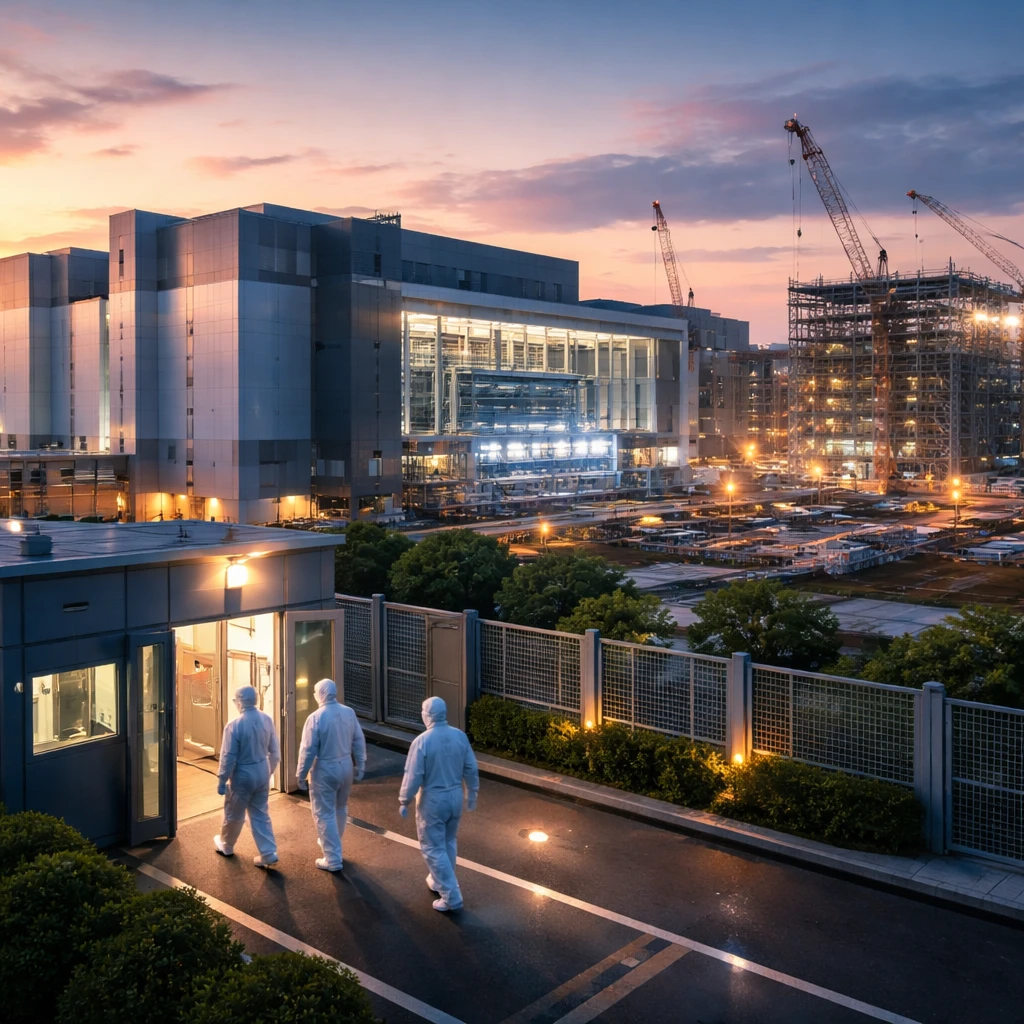
Tower Semiconductor said it will invest $3 billion to expand manufacturing in Japan, with the Japanese government providing $1 billion in grants. The project centers on silicon photonics and silicon-germanium (SiGe) technologies to serve rising AI and data center needs. The plan unfolds in two concurrent phases, with initial 300mm silicon photonics output at the Arai site expected to reach full operation by the fourth quarter of 2027, and updated 2028 financial targets reflecting stronger expected results.

Tower Semiconductor Commits $3 Billion to Japan Capacity Buildout, Backed by $1 Billion in Government Grants
TSEM
Summarize with
ChatGPT Perplexity Claude Grok Gemini

Key Points

  • Tower Semiconductor will invest $3 billion in Japan to expand chip manufacturing, with the Japanese government providing $1 billion in grants.
  • The expansion targets silicon photonics and silicon-germanium (SiGe) production to serve AI and data center demand, converting the Arai site to 300mm silicon photonics and building an additional 300mm facility next to Fab 7.
  • Tower raised its 2028 targets to $3.6 billion in revenue and $1.2 billion in net profit, up from prior projections of $2.8 billion and $750 million; the company expects the first converted line to be fully operational by Q4 2027.

Tower Semiconductor announced a major capital expansion in Japan totaling $3 billion, accompanied by $1 billion in grants from the Japanese government. The Israeli foundry said the investment is aimed at meeting mounting demand from artificial intelligence and data center workloads by boosting production of silicon photonics and silicon-germanium (SiGe) process technologies.

Following the announcement, the company's shares listed in the United States jumped more than 18% in premarket trading. The move signals investor support for Tower's strategy to increase capacity in technologies the company says can move data faster between AI chips and deliver faster, more energy-efficient semiconductor devices.

The capital program will be executed in two parallel phases. The initial phase converts Tower's Arai site - previously known as Fab 6 - into a 300-millimeter silicon photonics manufacturing line. Tower expects that converted capacity to be in full operation by the fourth quarter of 2027.

At the same time, the company will commence a second phase to construct an additional 300mm fabrication facility adjacent to its existing Fab 7. Tower said this second track is intended to create a pathway for continued growth beyond the initial ramp.

Management updated its financial outlook tied to the expansion. Tower now expects 2028 revenue of $3.6 billion and net profit of $1.2 billion, up from prior projections of $2.8 billion in revenue and $750 million in net profit. The company has linked these higher targets to the additional capacity that will come online as the expansion progresses.

Russell Ellwanger, Tower's chief executive officer, commented on the longer-term trajectory for the new facility program, saying, "We anticipate track two to provide the path for continued growth far beyond 2028."

The announced program focuses on two specific technology areas. Silicon photonics uses light to transfer data at higher speeds between AI processors, a capability that supports heavy interconnect and throughput needs in data centers. SiGe technology, Tower noted, enables semiconductor devices that are both faster and more energy efficient - attributes that are often prioritized in networking, communications and compute infrastructure.


Sectors affected: semiconductor manufacturing, artificial intelligence hardware, and data center infrastructure.

Risks

  • Timing risk - the first phase is expected to reach full operations by the fourth quarter of 2027, and any delay could impact the 2028 revenue and profit targets. (Impacted sectors: semiconductor manufacturing, AI hardware)
  • Execution risk - successful scaling of silicon photonics and SiGe production at 300mm scale is necessary to achieve the revised financial projections. (Impacted sectors: semiconductor manufacturing, data center infrastructure)
  • Dependence on government support - the plan includes $1 billion in grants from the Japanese government, which is a material component of the financing for the expansion. (Impacted sectors: semiconductor manufacturing, industrial policy)

More from Stock Markets

B. Riley Says ASML and TSMC Results Could Set the Tone for Chips as AI Capex Surges Early Jul 14, 2026 Goldman Sees June Core CPI Slightly Below Consensus, Flags Policy Relevance Jul 14, 2026 Macquarie Points to Hyatt as U.S. Hotel RevPAR Accelerates to 8.7% in June Jul 14, 2026 Thomson Reuters Sells Majority Stake in Global Print to KKR for About $500 Million Jul 14, 2026 CleanSpark Soars After Landmark 20-Year Sandersville Lease; Texas Portfolio Placed Under Exclusivity Jul 14, 2026