
SK Hynix’s planned American depositary receipt (ADR) placement has attracted demand that reportedly exceeded the available shares by more than sevenfold, according to a person familiar with the matter. That appetite for ADRs sets the stage for what is poised to become the world’s second-largest share sale when the stock begins trading on Nasdaq.
Deal terms and scale
According to reports from Bloomberg and Reuters on Thursday, the company is said to have priced the offering at $149 per ADR, though the company had not formally confirmed that number at the time. The offering consists of 17.79 million new ADRs, which at the reported price would raise about $26.5 billion. That tally would exceed the $25.6 billion raised in Saudi Aramco’s 2019 offering and would be second only to SpaceX’s $85.7 billion offering last month. The ADR structure is such that ten ADRs equate to one common share of the Seoul-listed SK Hynix.
In Seoul trading on Thursday, the underlying common stock closed at 2,186,000 KRW, up 5.3% for the session. The Korean share price has risen roughly 680% over the past 12 months, though it has pulled back by about 25% in the past two weeks amid broader concerns about AI-related valuations.
Who participated and why
The bookbuilding process, which closed on Wednesday U.S. time, was covered multiple times over, and institutional interest reportedly began at order sizes of $200 million, with some orders exceeding $1 billion. Cornerstone investors named as indicating interest were Baillie Gifford Overseas, Coatue Management, and Situational Awareness Partners - the latter described as an AI infrastructure fund founded by former OpenAI researcher Leopold Aschenbrenner. Together those cornerstone parties indicated an interest to buy up to a combined $7 billion of the ADRs.
Investor enthusiasm appears tied to SK Hynix’s dominant position in high-bandwidth memory (HBM), the stacked chip technology that powers AI accelerators. The company is estimated to hold a 50-55% share of the HBM market, with major customers including Nvidia and Alphabet’s Google. Yoo Hoi-jun, an electrical engineering professor at the Korea Advanced Institute of Science and Technology, summarized the firm’s standing succinctly: "As long as there is demand for graphic processors and AI data centers, SK Hynix is indispensable."
Allocation of proceeds
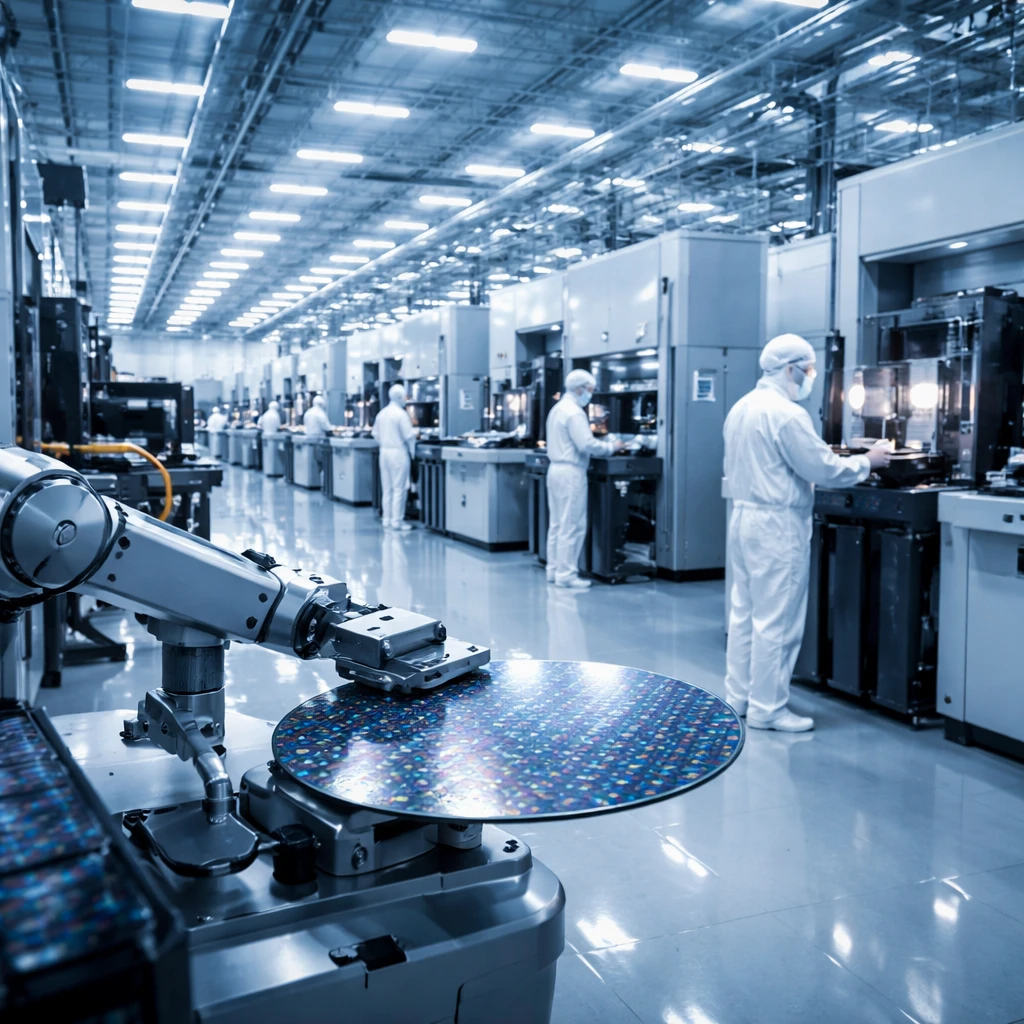
Proceeds from the offering are designated entirely for manufacturing capacity. Reporting cited TechTimes as identifying three disclosed allocations that together total roughly 62 trillion won: about 31 trillion won for the first fabrication plant at the Yongin Semiconductor Cluster; 19 trillion won for the Cheongju P&T7 advanced packaging facility for AI memory; and 12 trillion won set aside for ASML extreme ultraviolet (EUV) lithography scanners.
Those line items appear to reflect elements of a broader, multi-year capital expenditure program rather than a direct one-to-one mapping to the $26.5 billion that the ADR placement would raise. The capital plan is also part of a larger national effort: Seoul has announced a 576 trillion won chip investment program anchored by SK Hynix and Samsung.
Executives from key AI customers have publicly commented on the relationship. Nvidia CEO Jensen Huang has stated that SK Hynix would remain his company’s largest memory partner and warned that the current chip shortage would continue for several years.
Valuation context
A core aim of the U.S. listing is to narrow the valuation gap between SK Hynix and U.S. memory peers. In reported comparisons, Micron carries a 12-month forward price-to-earnings multiple of 6.66x, while SK Hynix is at 5.5x. SK Hynix CEO Kwok Noh-jung has said directly that the ADR listing is an opportunity to diversify the investor base and "achieve a valuation that better reflects our corporate value." Albert Yong, managing partner at Petra Capital Management, added that despite recent volatility in markets, demand for SK Hynix shares was likely to remain "relatively robust."
Near-term events to monitor
The immediate focus for market participants will be the stock’s opening trade on Nasdaq. The reported $149 target price and the bookbuilding outcome set a reference point, but the real gauge of institutional conviction will come when SKHY begins printing on Nasdaq on July 10. Any material premium or discount to the ADR issue price at that time will indicate how U.S. investors are willing to underwrite the company’s AI-memory growth narrative.
Looking beyond the listing, SK Hynix is scheduled to report second-quarter 2026 earnings on July 22. Consensus estimates cited ahead of that release point to earnings per share of 68,649.79 KRW, and revenue of roughly 83 trillion won. The company’s Q2 results will be the first reported after it becomes a dual-listed issuer, and analysts note the numbers will be an early test of whether the newly expanded U.S. shareholder base was correct to back expected continued spending on AI infrastructure.
Conclusion
SK Hynix’s ADR placement combines a record-setting capital raise, concentrated institutional demand and a declared focus on expanding manufacturing capabilities. The market will closely watch how the Nasdaq debut and the upcoming quarterly report validate the assumptions underpinning investor interest in AI-related memory demand and the company’s multi-year capital program.