
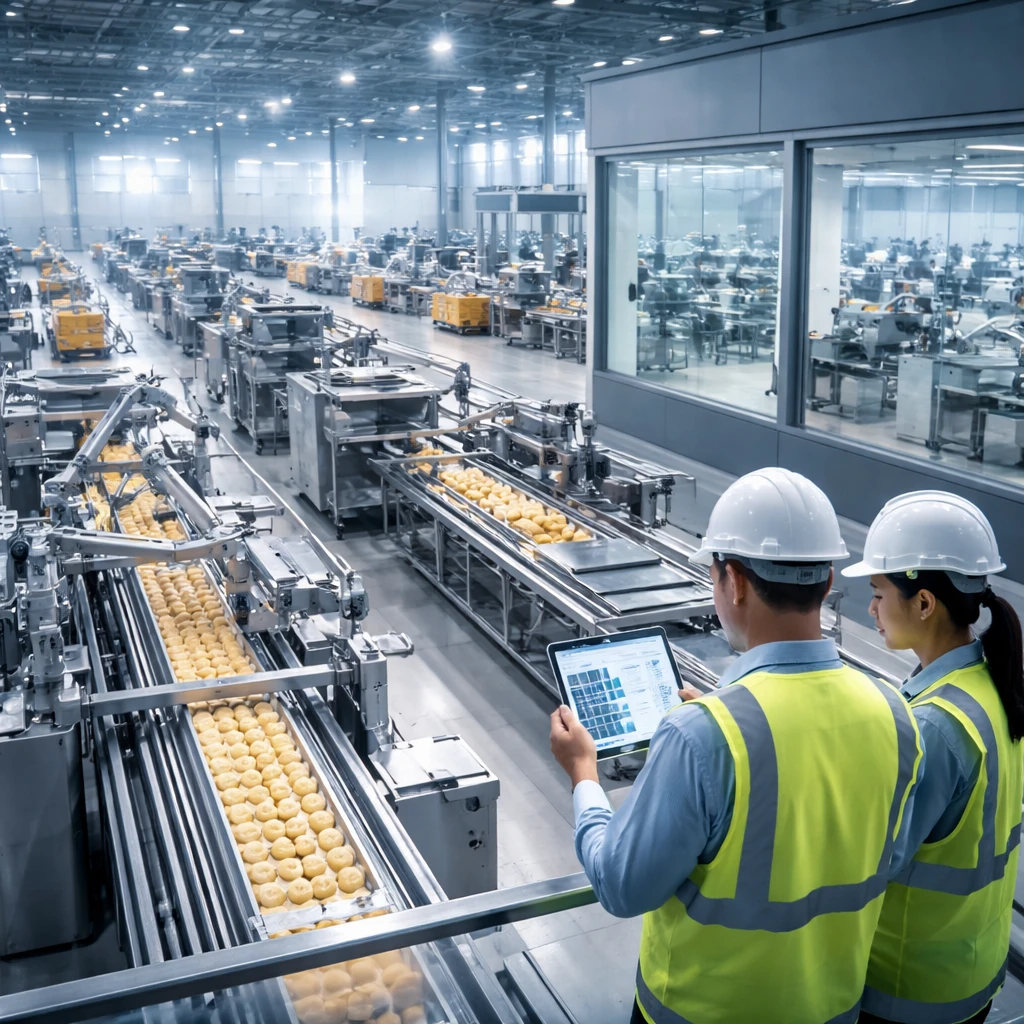
Fresh from its distribution to Middleby Corp stockholders, Midera Food Processing Inc has launched as a standalone public company, trading on Nasdaq under the ticker MFP. The spin-off marks the formal separation of a food processing technology business that CEO Mark Salman describes as having matured into a distinct, pure-play platform serving industrial protein, bakery and snack producers.
Salman said the decision to separate followed years of strategic planning. As part of Middleby, the food processing unit had amassed a portfolio of more than 30 brands, its own set of customers and a unique investment profile. The spin-off, Salman said, allows each company to direct strategy and capital toward its core market without the constraints of a broader enterprise mix.
"As independent companies, each business gains the strategic focus and financial flexibility to pursue the opportunities in its own market," Salman said. For Midera specifically, independence means dedicating all capital, acquisition resources and management bandwidth exclusively to food processing technology and innovation. The newly independent firm will operate according to a capital allocation framework Salman described as prioritizing organic reinvestment first, then disciplined, return-driven acquisitions, all within a conservative leverage policy.
Ownership and corporate structure were set at the time of the distribution. Middleby distributed 100% of Midera's shares pro rata to its stockholders, with each Middleby share receiving one share of Midera common stock based on the June 26 record date. Middleby retains no ownership interest in the spun-off company. Midera starts trading fully independent of its former parent on Nasdaq under the symbol "MFP."
Salman framed Midera as a large-scale, vertically integrated equipment and technology provider that underpins how food is produced in commercial settings. Financially and operationally, he pointed to the company's fiscal 2025 results and global footprint as evidence of scale: $853 million in net sales; roughly 2,800 employees worldwide; 29 manufacturing facilities; four innovation centers spanning six continents; and an installed base of more than 100,000 units. He emphasized that about 40% of revenue derives from aftermarket parts and service, a high-margin, recurring component of the business.
The company begins its independent existence with what Salman called a strong balance sheet, positioning Midera to fund growth initiatives from day one. Governance is led by an eight-member board chaired by Robert Nerbonne, bringing experience in public company leadership, finance and the food industry.
Strategic priorities
Salman laid out four mutually reinforcing strategic pillars he expects to drive growth over the coming years.
- Total Line Solutions - Midera's capability to design, integrate, commission and support complete production lines is a competitive differentiator. Salman argued this capability delivers clear return on investment for customers while generating larger initial orders and stronger aftermarket attachment.
- Market penetration through innovation and geographic expansion - The company will leverage its four innovation centers in the U.S., Italy and India and a product funnel Salman says contains more than 70 innovations in development to increase market share across regions and categories.
- Aftermarket expansion - With over 100,000 installed units and high attachment rates on Total Line Solutions, Midera sees opportunity to grow a stable, high-margin revenue stream tied to parts and services.
- Disciplined M&A - Operating in a highly fragmented market, the company plans to pursue targeted acquisitions to accelerate expansion and build scale.
Salman stressed that margin improvement is a clear objective that does not depend solely on future acquisitions. The company plans to invest selectively in the fastest-growing customer categories it serves, which Salman identified as poultry, premium bakery, pinsa and artisan bread, and portable protein snacks.
Technology and automation
Salman described automation as a major structural driver reshaping the industry, citing labor challenges that are motivating food manufacturers to invest in throughput, yield, food safety and sustainability improvements simultaneously. He referenced an industry projection that manufacturers could face 2.1 million unfilled manufacturing positions globally by 2030 and said those dynamics have acted as tailwinds for Midera rather than headwinds.
According to Salman, Midera's equipment is being adapted to support industry needs for reformulation, automation and higher production demand. The product set increasingly includes robotic handling systems, automated guided vehicles, vision-enabled slicing and packaging systems, and facility-level automation that are integral parts of Total Line Solutions. Technology and artificial intelligence have been embedded into what Salman referred to as the Midera Operating System, and he noted that as equipment grows more sophisticated, so too does the company's high-margin aftermarket opportunity because customers rely on Midera to coordinate hardware, software and ongoing service.
Acquisition strategy and market opportunity
M&A has been a foundational element of the platform's build: Salman noted the company was constructed through more than 30 acquisitions since 2005 and that Midera has refined a repeatable playbook for originating targets, integrating businesses and driving operational improvements post-close.
Salman quantified the opportunity set: he described the global food processing equipment market as roughly $70 billion in size, populated by more than 2,500 manufacturers, of which Midera holds approximately 1% share. With management attention no longer split across a larger enterprise, Salman said Midera is targeting three to five transactions per year, aiming to position itself as a platform of record in a market that remains more than 90% fragmented.
He characterized the company’s M&A approach as disciplined and return-driven, with an M&A engine that was formerly shared across a broader enterprise now fully focused on the pipeline of potential transactions for Midera.
What investors should know
Investors should note the mechanics of the distribution and the fact that Midera starts life without ownership ties to Middleby. The pro rata distribution and zero retained ownership by Middleby mean Midera is an independent public issuer from the outset. Key scale metrics provided by management - $853 million in fiscal 2025 net sales, roughly 2,800 employees, 29 manufacturing sites, four innovation centers across six continents, an installed base above 100,000 units and a revenue mix where approximately 40% comes from aftermarket parts and service - frame the company as a large, integrated supplier with recurring revenue characteristics.
Management has signaled a dual focus on growing organically through innovation and aftermarket penetration while executing disciplined acquisitions to consolidate share of a highly fragmented addressable market. The company’s board and declared conservative leverage posture are intended to support those initiatives.
Bottom line
Midera’s launch as a standalone business emphasizes focused capital allocation, a technology-embedded product strategy and an explicit acquisition cadence to pursue scale in a fragmented global market. The company starts trading with a substantial installed base and a significant recurring revenue component from aftermarket parts and services, while management aims to leverage automation and AI to expand margins and broaden customer penetration.