
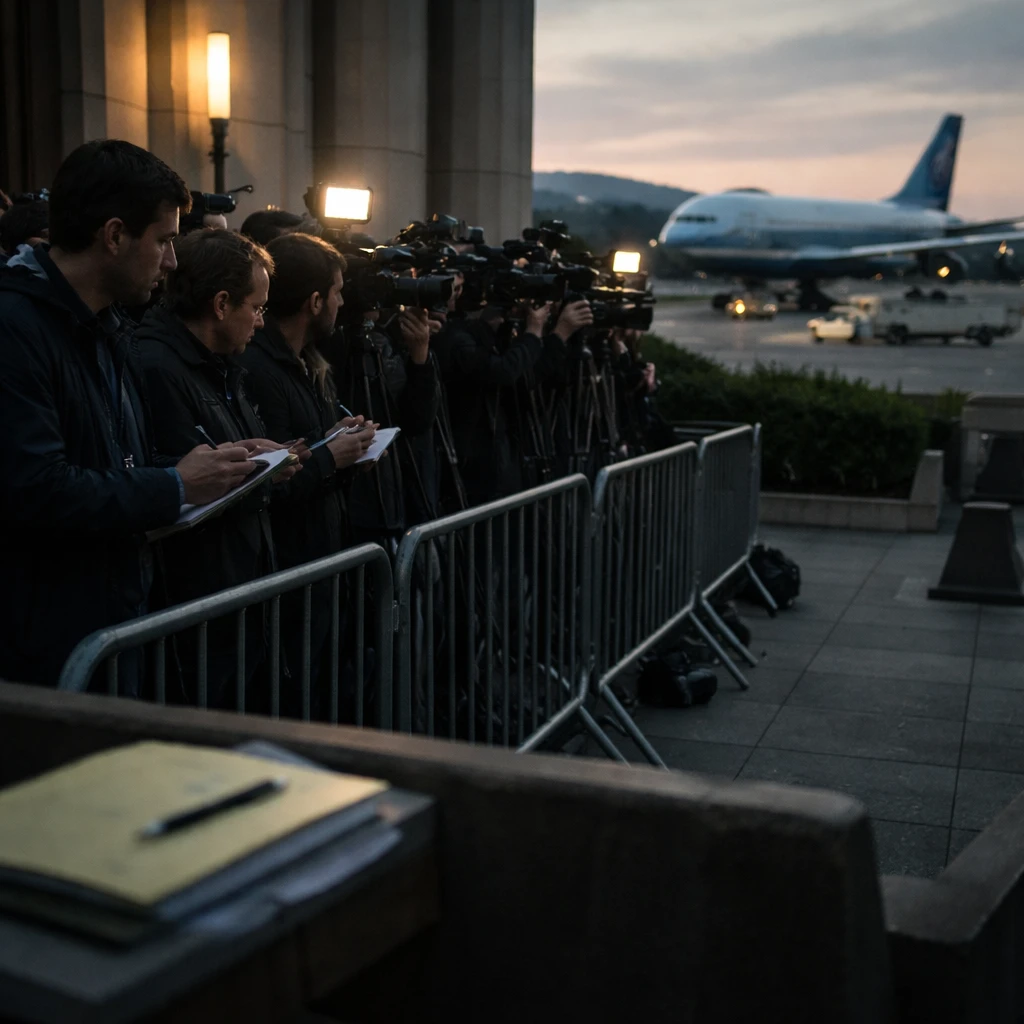
Federal prosecutors have issued subpoenas directing New York Times journalists to appear before a Manhattan federal grand jury this Wednesday after the paper published reporting that highlighted security concerns with the new Qatari-donated presidential aircraft.
According to newsroom communications, Manhattan U.S. Attorney Jay Clayton signed the subpoenas on Friday. The orders call for testimony in connection with an "alleged violation of federal criminal law," and the Times’ executive leadership says five reporters received subpoenas tied to articles about reported security shortcomings of the jet that led the president to use an older government aircraft during recent international travel.
The Times’ top legal official described the subpoenas as a brazen attempt to intimidate journalists and pledged legal resistance. The Justice Department declined to confirm or deny the subpoenas publicly but told media outlets it is targeting individuals who leaked classified material, not reporters themselves.
Details in the reporting identified the plane as a Boeing 747 that had been refitted by defense contractor L3Harris Technologies.
Legal framework and limits
Federal law provides only limited protection for journalists called to testify. The U.S. Supreme Court has made clear the First Amendment does not create a blanket privilege allowing reporters to refuse subpoenas, except in narrow circumstances where subpoenas are issued in bad faith or amount to harassment.
Federal courts have developed a qualified privilege for the press that requires judges to weigh several factors. Courts consider whether the information sought is essential to the prosecution, whether it can be obtained by other means and whether other competing interests outweigh press freedom. That judicially recognized protection tends to be strongest in civil litigation and weakest in the setting of criminal grand jury investigations.
At the state level, many jurisdictions - including New York - have enacted shield laws that protect journalists from compelled disclosure of sources. Those statutes, however, do not extend to federal proceedings, and there is no comparable federal shield law that would automatically bar federal subpoenas to the press.
How unusual is it for reporters to be subpoenaed?
Justice Department policy imposes procedural limits on seeking testimony from journalists, including requirements for high-level approval. Across administrations of both major political parties, prosecutors have sought to compel reporters to provide information in leak investigations. Press advocacy groups have criticized the current administration for what they say is an expansive use of subpoenas and search warrants against news organizations, pointing to prior actions involving other national outlets.
The government maintains it seeks to hold leakers accountable rather than to prosecute reporters. Still, the use of grand jury subpoenas and other investigative tools against journalists has provoked controversy and legal challenges in multiple instances.
Potential legal defenses available to the newspaper
The Times has said it will contest the subpoenas. Possible defenses it could present to a federal judge include motions to quash on the grounds that the subpoenas are overbroad, issued in bad faith, or violate First Amendment protections. The paper could also argue the Department of Justice failed to follow its own internal guidance, which instructs prosecutors to assess whether the information is essential, whether it can be obtained by other means and to negotiate with news organizations before issuing compulsory process.
Those internal policies are not themselves enforceable as statutes, but courts have sometimes given them weight when evaluating the legitimacy of subpoenas and the conduct of prosecutors in leak investigations.
In prior instances, the government withdrew grand jury subpoenas after reporters challenged them through sealed court filings. Reported past disputes involved other outlets and covered different national security-related reporting, with the government ultimately stepping back after legal pushback.
Separately, press freedom organizations have criticized the Federal Bureau of Investigation for extraordinary investigative steps in leak inquiries, including a rare search of a reporter’s home in relation to a probe earlier this year.
Consequences if reporters refuse to testify
If prosecutors offer use or derivative-use immunity, journalists who accept such immunity would lose their Fifth Amendment protection against self-incrimination. Refusal to testify after an enforceable order could expose reporters to contempt proceedings, with potential penalties including incarceration or fines until they comply.
The newspaper could pursue additional legal challenges to a contempt ruling, continuing the dispute through the courts. At present, both sides - the government and the Times - are positioned for a legal confrontation over whether compelled testimony is justified in this investigation and over the broader boundary between leak probes and press freedoms.
As the deadline for appearances approaches, the case is likely to test the interplay of internal Department of Justice procedures, judicial assessments of the essentiality and availability of information, and the limited constitutional protections afforded to journalists in federal criminal inquiries.