
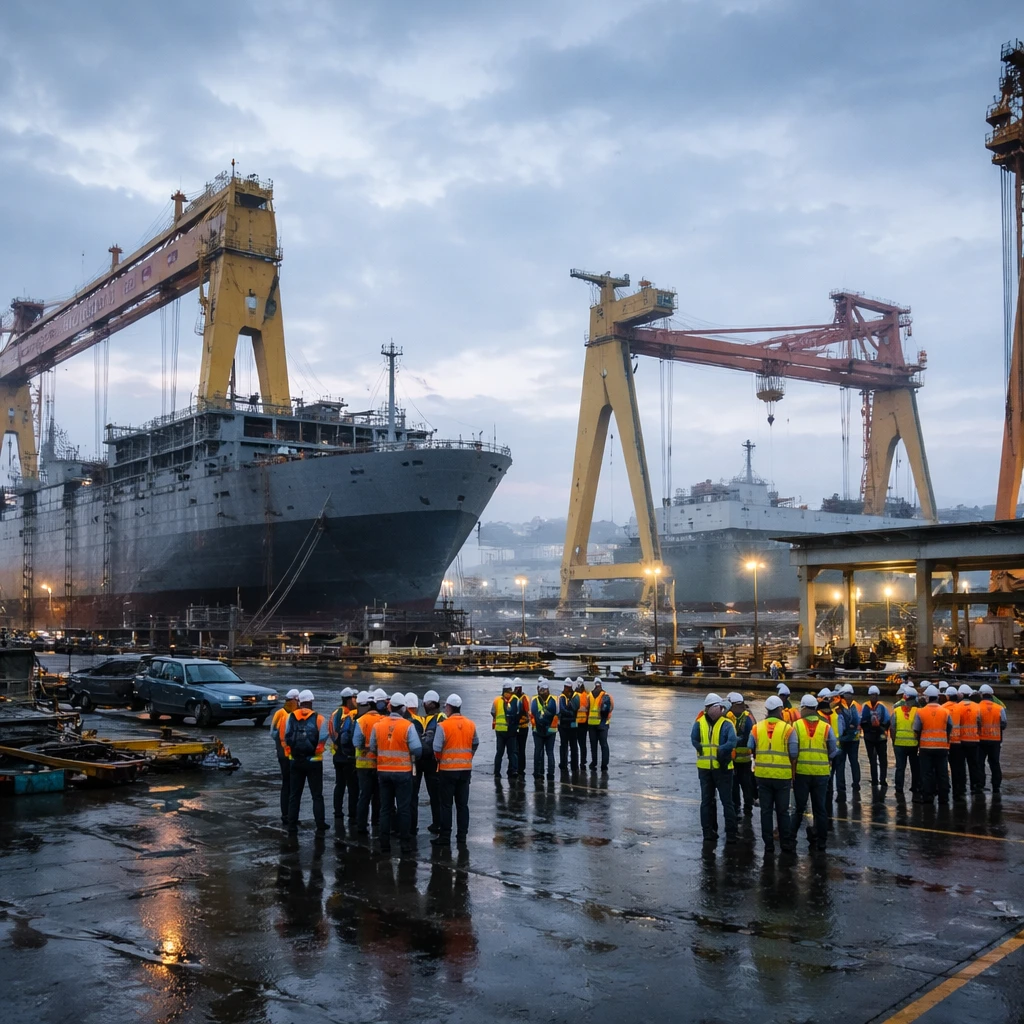
Union members at HD Hyundai Heavy Industries voted to authorize strike action in a ballot that concluded Thursday, according to Yonhap News Agency.
The ballot took place from August 25 to August 27. Of the union’s 8,127 eligible members, 5,379 cast ballots in favor of authorizing a strike - equal to 66.19% of all eligible members - a proportion that exceeds the legal majority required to approve strike action.
The union plans to hold a Central Dispute Countermeasures Committee meeting on August 28. That meeting will determine whether the union moves forward with a strike and, if so, establish a timeline for any action.
Union demands presented in the vote include a monthly base-pay increase of 149,600 won (equivalent to $108.36), a 100% increase in bonus payments, and a requirement that at least 30% of operating profit be distributed through a performance-sharing mechanism. The union is also seeking changes to wage-related benefits and revisions to the company’s hiring practices. The company has not yet put forward a formal negotiating proposal.
HD Hyundai Heavy Industries, which operates in the shipbuilding sector and is based in South Korea, responded that it would engage sincerely in talks aimed at bridging the remaining gaps with the union. The company said labor and management will increase the frequency of negotiation sessions from twice per week to three times per week beginning next week.
Context and next steps
The ballot result legally authorizes the union to call a strike, but does not by itself set dates or specify the form that any industrial action would take. Those operational decisions will be made by the union’s Central Dispute Countermeasures Committee when it convenes on August 28.
Both sides have signaled an intention to continue negotiations, with the company committing to more frequent meetings. No negotiating proposal from management has been reported at this time.
Impact on markets and sector
As a major player in shipbuilding, HD Hyundai Heavy Industries operates in a sector where labor actions can disrupt production schedules and supply chains. The company’s move to intensify talks suggests an effort to limit operational disruption, while the union’s authorized strike status increases the potential for work stoppages if negotiations falter.