
Revenue jump and beat: Hon Hai Precision Industry (TW:2317), better known as Foxconn, said its revenue for the April-June quarter rose 39.8% from a year earlier to T$2.513 trillion ($78.71 billion). That figure surpassed Reuters/LSEG estimates of T$2.372 trillion.
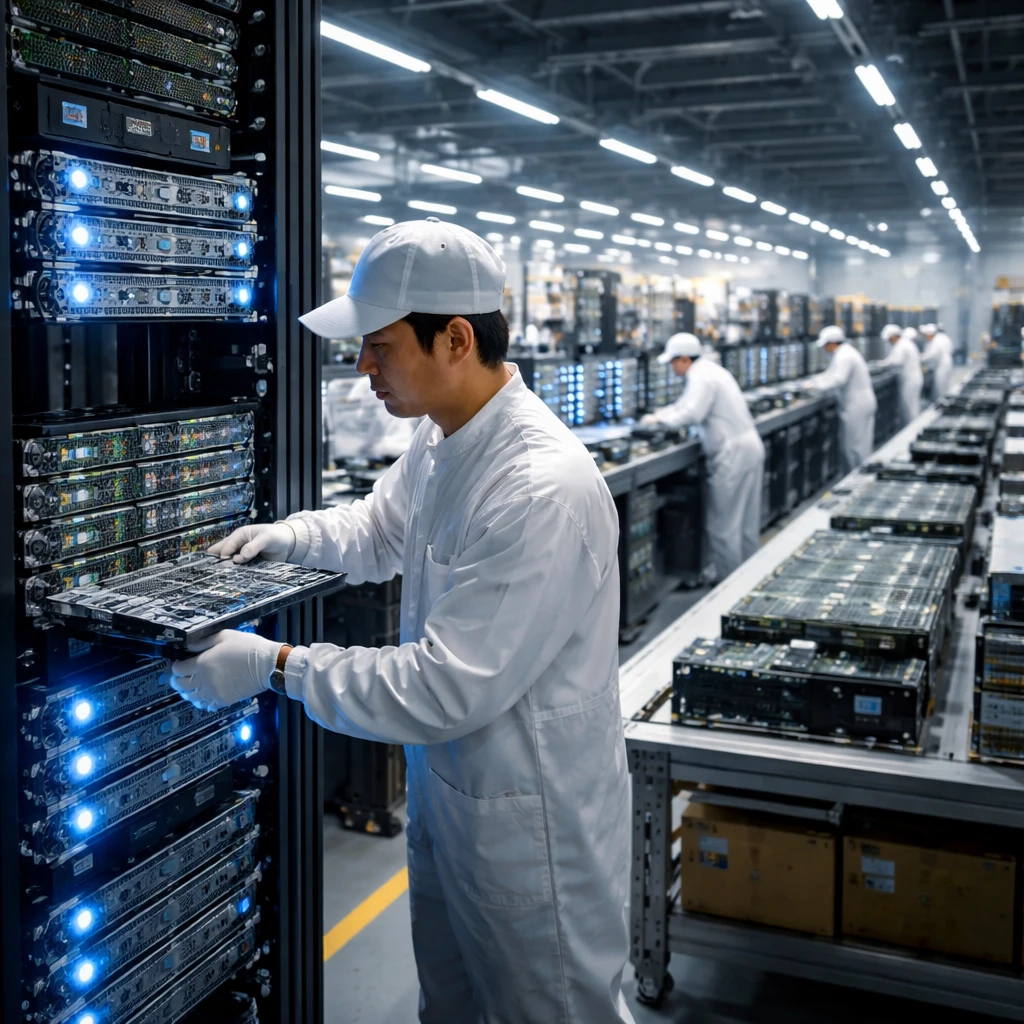
What drove the growth: The company attributed the surge largely to outsized demand for artificial intelligence-related products, noting particularly strong orders for cloud and networking hardware tied to AI development. Foxconn also reported robust performance in its consumer electronics segment, which the company said benefited from seasonality trends and resilient spending.
Position in the supply chain: The statement reiterated Foxconn’s central role in the global technology supply chain: it is the largest server manufacturer for NVIDIA Corporation (NASDAQ:NVDA) and remains Apple Inc’s (NASDAQ:AAPL) leading assembler of iPhones. Those customer relationships align Foxconn closely with growth in AI infrastructure and with ongoing consumer device demand.
Near-term outlook: Foxconn said shipments of AI racks are expected to continue expanding in the current quarter, and that seasonal patterns should support consumer electronics sales. The company framed those trends as positive drivers for the business going forward.
Warning on volatility: Despite the strong top-line performance, Foxconn cautioned about the potential impact of global political and economic volatility. The company did not provide specifics on the nature or timing of those risks.
Analysis: The quarter underscores a split dynamic for Foxconn: accelerating demand from data center and networking buyers tied to AI development, coupled with steady consumer electronics orders. That mix lifted overall revenue and produced an outperformance versus market expectations. At the same time, management explicitly flagged geopolitical and macroeconomic instability as variables that could influence results, though no direct guidance was attached to that warning.
Bottom line: Foxconn’s second-quarter results reflect a clear AI-driven uplift in parts of its business while also highlighting the company’s exposure to large platform customers and to broad geopolitical and economic forces that it says could affect operations.