
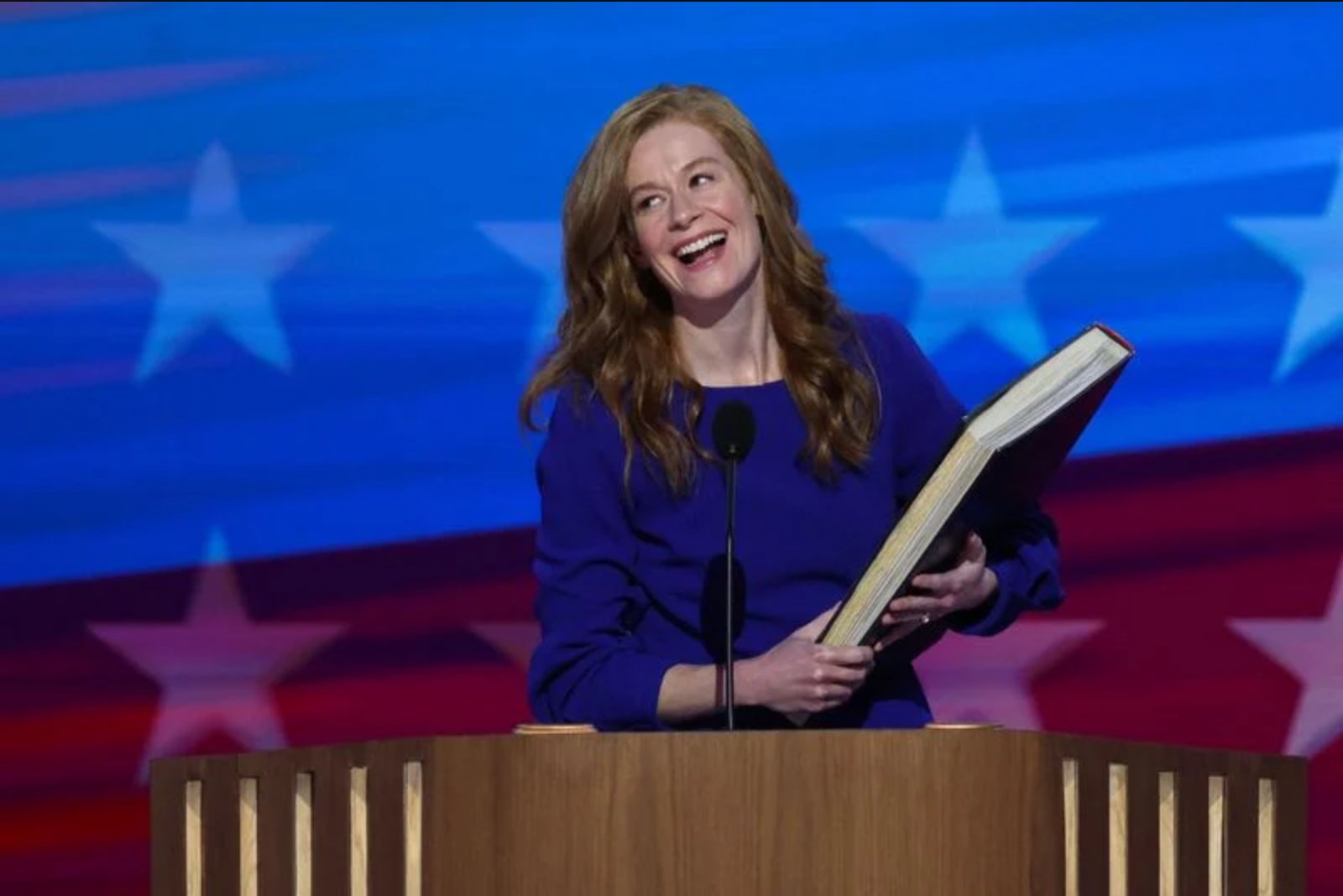
Michigan State Senator Mallory McMorrow announced on Sunday that she is suspending her campaign for the Democratic nomination for the U.S. Senate, leaving a two-way primary between centrist U.S. Representative Haley Stevens and progressive public health advocate Abdul El-Sayed. McMorrow made the announcement in a three-minute video posted to X, in which she pledged her "full support" to whoever wins the August 4 primary.
With McMorrow's withdrawal, the contest in this pivotal Midwestern state moves from a three-way field to a direct matchup between Stevens and El-Sayed. Recent polls cited during the campaign period showed McMorrow running a distant third, while El-Sayed held the lead over Stevens heading into the final stretch.
Both remaining candidates responded quickly to McMorrow's decision. El-Sayed welcomed McMorrow's supporters and framed their inclusion as part of his movement, warning voters that Michiganders "cannot allow the establishment to decide our nominee for us." Stevens acknowledged McMorrow's contribution to the debate, praising her "important voice," and reiterated her case as the strongest Democratic candidate to unseat Republican former U.S. Representative Mike Rogers in November, saying "I’m the strongest Democrat to defeat Mike Rogers this November."
The narrowing of the field has broader stakes beyond the state primary. Losing the Senate race in Michigan would make it significantly harder, though not impossible, for Democrats to flip control of the chamber in the November general election. Republicans currently hold a 53-47 majority in the Senate. The competitiveness of Michigan in recent national-level voting is part of that calculus: Republican President Donald Trump won the state by 1.4 percentage points in 2024.
The remaining campaign period before the August 4 primary will focus on mobilizing voters behind the contrasting profiles of Stevens and El-Sayed - a centrist House member and a progressive public health advocate - each pitching a different path toward defeating the Republican nominee. McMorrow's public endorsement of party unity behind the primary winner signals an attempt to consolidate Democratic voters ahead of the general election.
Context and next steps
The primary now centers on Stevens and El-Sayed competing for Democratic unity and the nomination that will face former U.S. Representative Mike Rogers in November. Voter preferences in the August 4 primary will determine whether a more moderate or more progressive candidate is atop the Democratic ticket for the general election.