
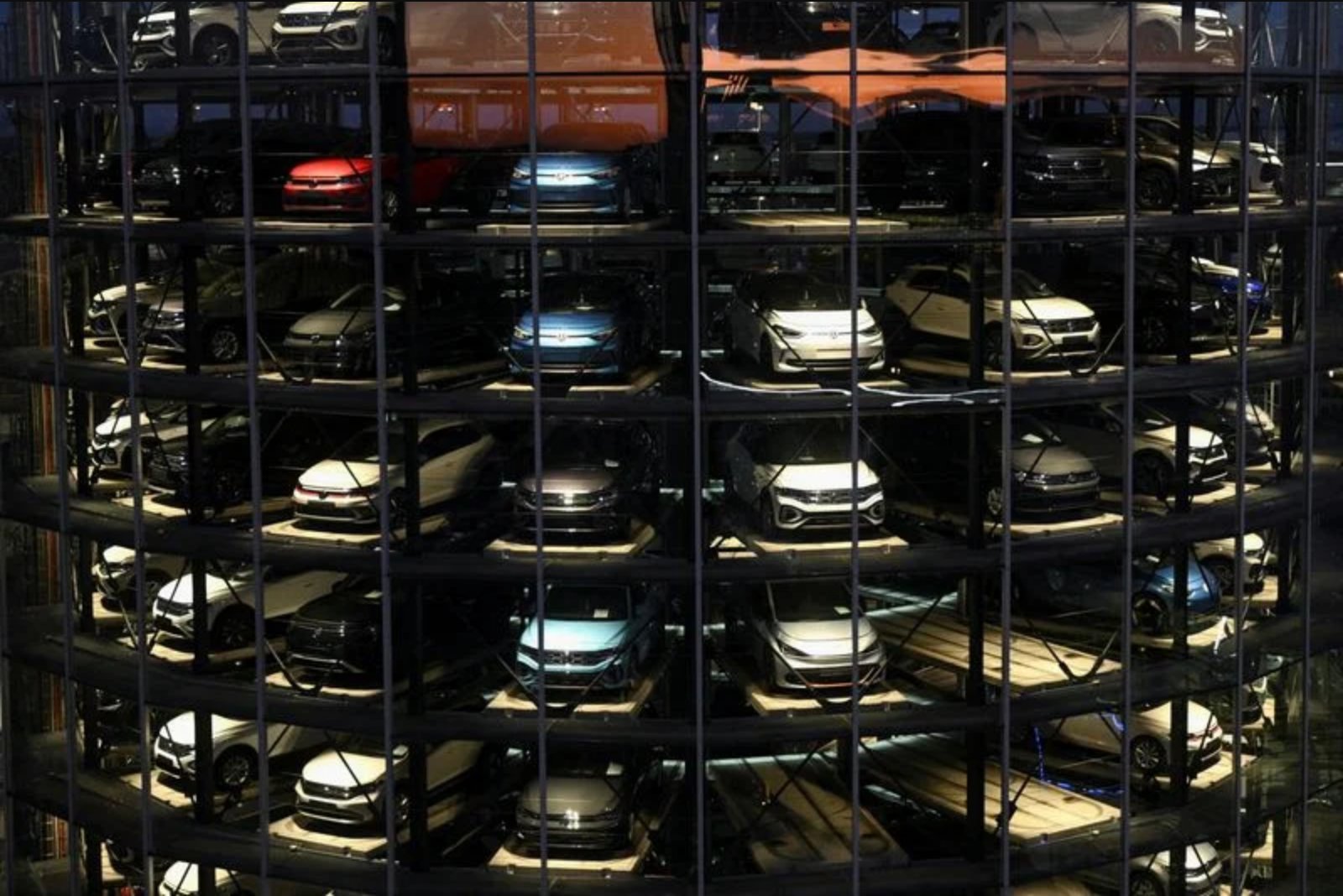
Three of Europe’s largest automakers - Volkswagen, Stellantis and Renault - have formally urged European policymakers to adopt a simple, binding standard for local content and to expand incentives that would strengthen car production inside the European Union.
In a joint letter addressed to members of the European Parliament, the companies set out a specific local-content objective: they want 70% of vehicles sold in the EU to contain 70% of their value sourced from within the European Union’s 27 countries. The proposed threshold is to cover the full value chain, from engineering to final manufacture, reflecting the groups' focus on preserving domestic industrial activity across suppliers and assembly operations.
The appeal comes as Brussels debates a "Made in Europe" framework as part of a wider industrial policy aimed at managing the shift to electric vehicles. While no final regime for cars has been enacted, the discussions under consideration include local content thresholds, state aid and incentives tied to regional production - measures designed to reinforce European supply chains and reduce import dependence.
Competitive pressure and cost headwinds
The three automakers framed their request in stark terms, describing the current environment as one that places their competitiveness under severe strain. They said maintaining a robust manufacturing base in Europe depended on a regulatory framework that better reflects operational realities. In their words, "European automakers face an unprecedented challenge to their competitiveness due to significant technology gaps in strategic areas, intense global competitive pressure and persistently high energy, manufacturing and regulatory costs."
That appeal follows earlier initiatives by some of the same groups seeking incentives and preferential treatment for vehicles produced in Europe, particularly electric models. The automakers also highlighted weak vehicle demand in the region as a factor that increases the need for supportive policy: they pointed to a shortfall of roughly 3 million fewer vehicles sold annually than in 2019.
Targeted support and regulatory flexibility
The letter called for a set of targeted measures to encourage European-based manufacturing. These included specific support for battery production capacity inside Europe and greater regulatory flexibility for small cars to keep electric vehicle offerings affordable and to sustain local supplier networks. The companies framed these steps as consistent with providing technology-leading, clean and affordable vehicles to middle-class consumers across Europe.
As part of their argument, the automakers cited the current level of imports into the EU auto market - approximately 26% - to indicate that the proposal is not about closing markets but rather halting further outsourcing of industrial production to third countries. "Europe is not closing itself off. Europe only stops the trend of further outsourcing industrial production to third countries," they wrote.
Their request to lawmakers seeks to align policy incentives with the goal of converting production and value-added activity back to European soil, spanning engineering, components and final assembly. Whether the proposal is adopted, and in what form, will depend on ongoing policy debates about thresholds, state support and the balance between industrial strategy and market openness.
Context note: The automakers submitted the joint letter to members of the European Parliament as discussions proceed over how industrial policy should respond to electrification and to global competitive dynamics.