
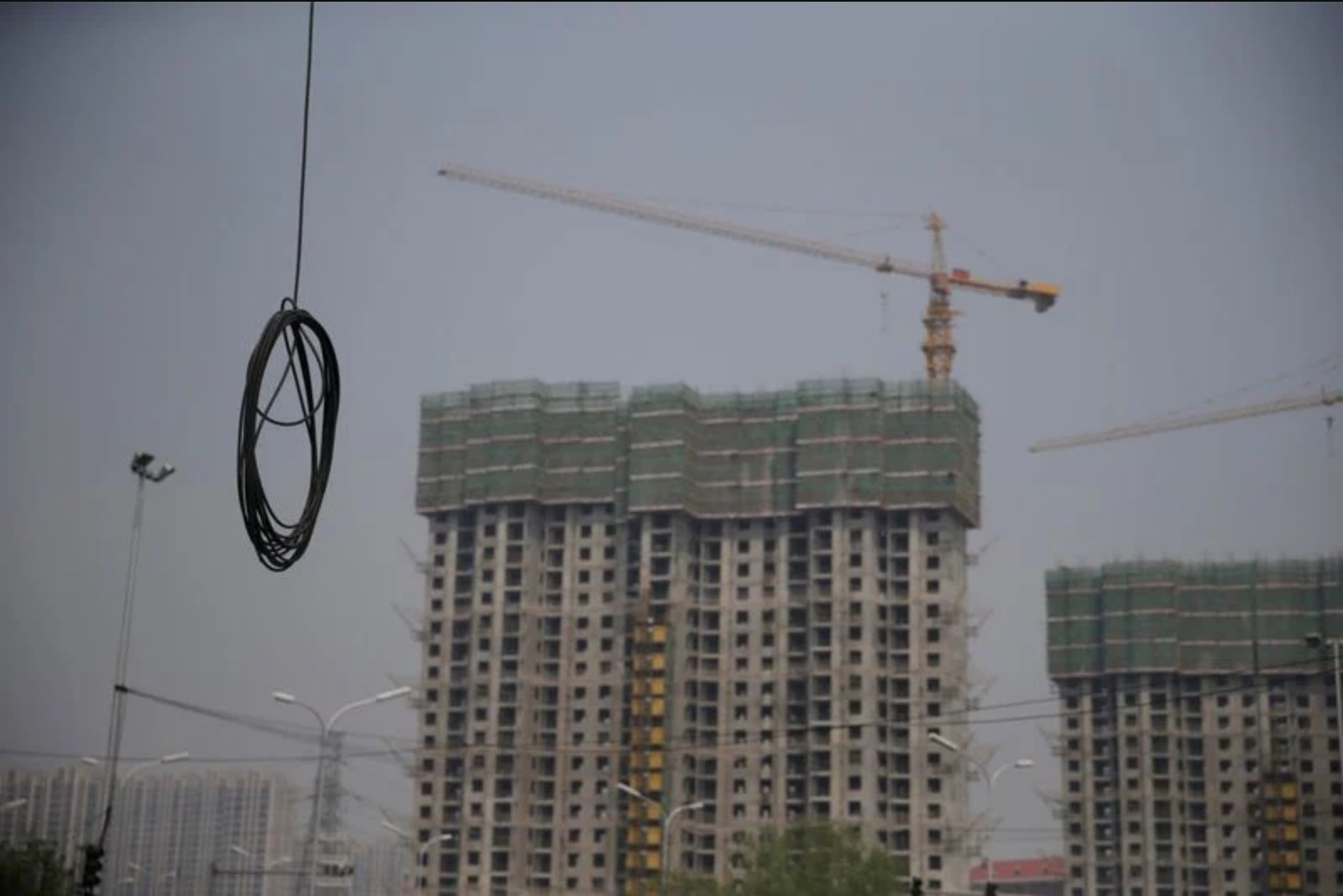
China's expansion of new bank lending in May failed to meet expectations, reflecting a continuing drag from the prolonged downturn in the property sector and weak household demand. New yuan loans rose to 520 billion yuan in May, a rebound from April's 10 billion yuan contraction but short of the 550 billion yuan analysts had expected.
The May figure compares with 620 billion yuan of new yuan lending in the same month a year earlier. The People’s Bank of China does not publish monthly breakdowns of new loans, so the May tally was derived by comparing the central bank's January-May series with the January-April series to isolate the month's net flow.
Across the first five months of the year, banks have extended 9.11 trillion yuan in new loans, down from 10.68 trillion yuan in January-May of the prior year. The year-on-year decline in cumulative lending highlights generally weak borrowing demand amid a soft business environment, muted consumer spending and the ongoing property slump.
Household deleveraging remains a central feature of the credit picture. ANZ Research noted that the "continued deleveraging cycle in the household sector is likely to increase reliance on fiscal policy as the main tool for stabilisation." The research house also pointed to a marked contraction in auto sales, saying that despite the impact of the Labour Day holiday, underlying consumption momentum remains weak, as shown by a sharp 20% fall in automobile sales in May.
Outstanding yuan loans stood at 281.02 trillion yuan in May, up 5.5% from a year earlier. That growth rate was slightly slower than April's 5.6% increase but was in line with analysts' forecasts.
The central bank had issued informal guidance to some major state-owned banks to step up lending in May, following a similar instruction in April. The prior month marked the year's first monthly shrinkage of new loans, with analysts attributing that contraction primarily to weak household loan demand.
Monetary aggregates showed modest change. Broad M2 money supply rose 8.6% year-on-year in May, matching April's growth rate and slightly above the median 8.5% forecast in the analysts' poll. The narrower M1 measure of money supply grew 5.5% in May compared with a 5.0% increase in April.
Outstanding total social financing, a broad gauge of credit and liquidity in the economy, increased 7.7% year-on-year in May, a touch slower than April's 7.8% rise. The report noted that any acceleration in government bond issuance could act to boost this form of financing.
China's broader economic momentum has slipped. Growth indicators for April showed cooling industrial output and retail sales that fell to their weakest levels in more than three years, part of a pattern of persistent soft domestic demand. The economy, described at roughly $20 trillion in size, has also been contending with higher energy costs linked to the Iran war, which has added pressure to activity.
Exchange rate conversion used in the data release put $1 at 6.7609 Chinese yuan renminbi.
What this means
The May lending outcome signals that policy nudges to increase bank lending have had limited offsetting effect against broader cyclical forces. Weak household borrowing and property market stress remain key constraints on credit growth, while monetary aggregates and broader credit measures have shown only incremental movement month to month.