
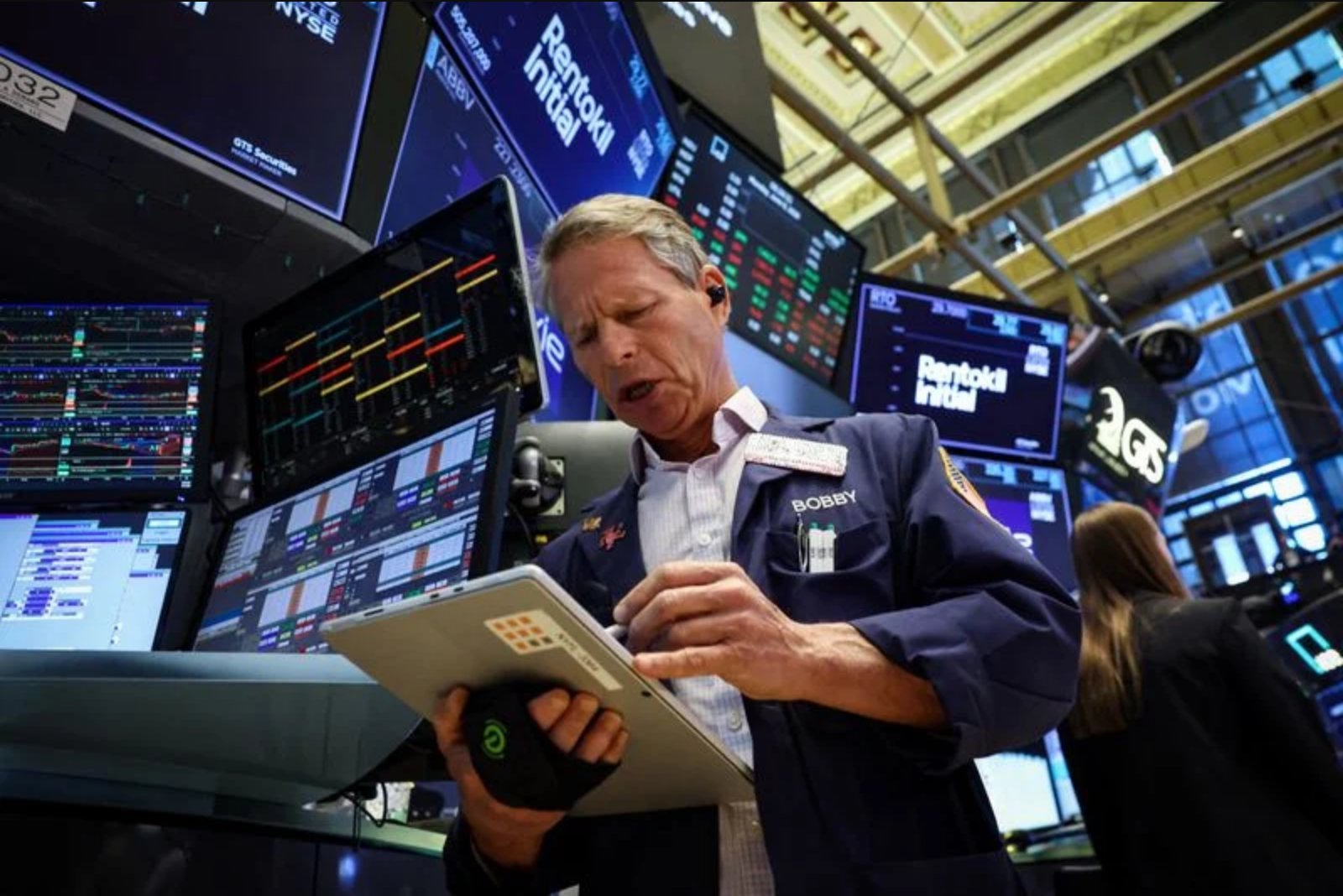
U.S. stock index futures moved higher on Friday as markets responded to a mix of diplomatic optimism over the Middle East and intense focus on the market debut of SpaceX. President Donald Trump's remarks on Thursday that a deal to end the conflict and reopen the Strait of Hormuz could be signed as early as this weekend bolstered sentiment, even though Tehran said a final decision remained pending.
SpaceX, which includes businesses such as Starlink and xAI, was set to begin trading on the Nasdaq later in the day. The listing is expected to be the biggest public offering in Wall Street history by valuation, with a potential market value of $1.75 trillion and an immediate placement among the largest U.S. publicly listed companies - likely ranking seventh.
Index providers have already adjusted rules to accommodate the company's entry. Both Nasdaq and FTSE Russell modified their inclusion requirements to make room for SpaceX. The company fixed its offering price at $135 a share, a move observers attribute to the influence of its founder, Elon Musk. Only a small fraction of SpaceX's shares - roughly 3% to 4% - were slated to be available for trading, and the firm is expected to be listed on only one of the three major U.S. indexes, a configuration that analysts warned could amplify volatility around the stock.
Some market participants expressed caution about SpaceX's underlying financials. "As things stand today, investors are essentially buying a company whose core business is launching satellites, which remains its largest source of revenue," said Ismael Garcia Puente, deputy director of investment strategy at MAPFRE AM. He added that "its technology and AI-related businesses are still operating at a loss. We need to see how these segments evolve before we can assess their long-term profitability." The company reported more than $4 billion in annual losses last year.
In anticipation of SpaceX's debut, shares of other space-related companies rose in premarket trading. Rocket Lab gained about 7%, Intuitive Machines climbed roughly 7% and Planet Labs increased about 3.7%. Funds with exposure to SpaceX also moved higher: Fundrise Innovation Fund rose 6.6% and Destiny Tech100 jumped 11.4%.
At 05:55 a.m. ET, futures indicated broad gains for U.S. equity benchmarks. Dow E-minis were up 439 points, or 0.86%. S&P 500 E-minis were higher by 49.5 points, or 0.67%, and Nasdaq 100 E-minis were up 190.5 points, or 0.64%.
Despite the early gains in futures, the three main U.S. stock indexes appeared set for a subdued finish to the week. The trading period had been dominated by uncertainty tied to the Iran conflict and by concern that the rally in artificial intelligence-related stocks had become overheated. The S&P 500 remained about 3% below its most recent record high, and the technology index confirmed a correction earlier in the week.
Several analysts suggested that some of the recent weakness in U.S. equities and in bitcoin could reflect traders trimming positions ahead of SpaceX's share debut.
Data released earlier in the week indicated that inflationary pressures were building, in part because of elevated energy costs connected to the Middle East hostilities. Since President Trump's comments, crude oil prices had fallen below $90 a barrel, and market participants adjusted timing for expected Federal Reserve policy tightening. Using the CME Group's FedWatch tool, traders shifted their central estimate for the next Fed rate increase from October to December.
Lower energy prices supported share gains in airline stocks. Alaska and Delta each rose by more than 1% on the session. Among individual large-cap movers, Adobe fell 5.2% after the announcement that Chief Financial Officer Dan Durn was departing the company.
Key points
- Diplomatic optimism - President Trump's comments raised hopes of a near-term deal to end the Middle East conflict and reopen the Strait of Hormuz, supporting sentiment and reducing oil prices.
- SpaceX listing - The Nasdaq debut of SpaceX, with a potential $1.75 trillion valuation and a $135 offering price, is poised to be one of the largest U.S. public listings and could increase market volatility given a small 3%-4% tradable float.
- Market moves and sectors - Futures pointed to gains across major indices while space-related equities and funds with SpaceX exposure rose; airlines benefited from falling energy costs, and Adobe moved lower after CFO news.
Risks and uncertainties
- Diplomatic outcome - Comments by the U.S. president suggested a deal could emerge quickly, but Tehran said a final decision was pending, leaving the situation unresolved and energy markets sensitive to further developments - affecting oil, inflation and interest-rate expectations.
- IPO-related volatility - SpaceX's limited share availability and single-index listing could create outsized price swings and liquidity constraints for related space sector stocks and funds.
- Fundamental concerns - Analysts highlighted persistent losses in SpaceX's technology and AI segments and the company's reported annual losses of over $4 billion, raising questions about longer-term profitability for investors focused on fundamentals.