
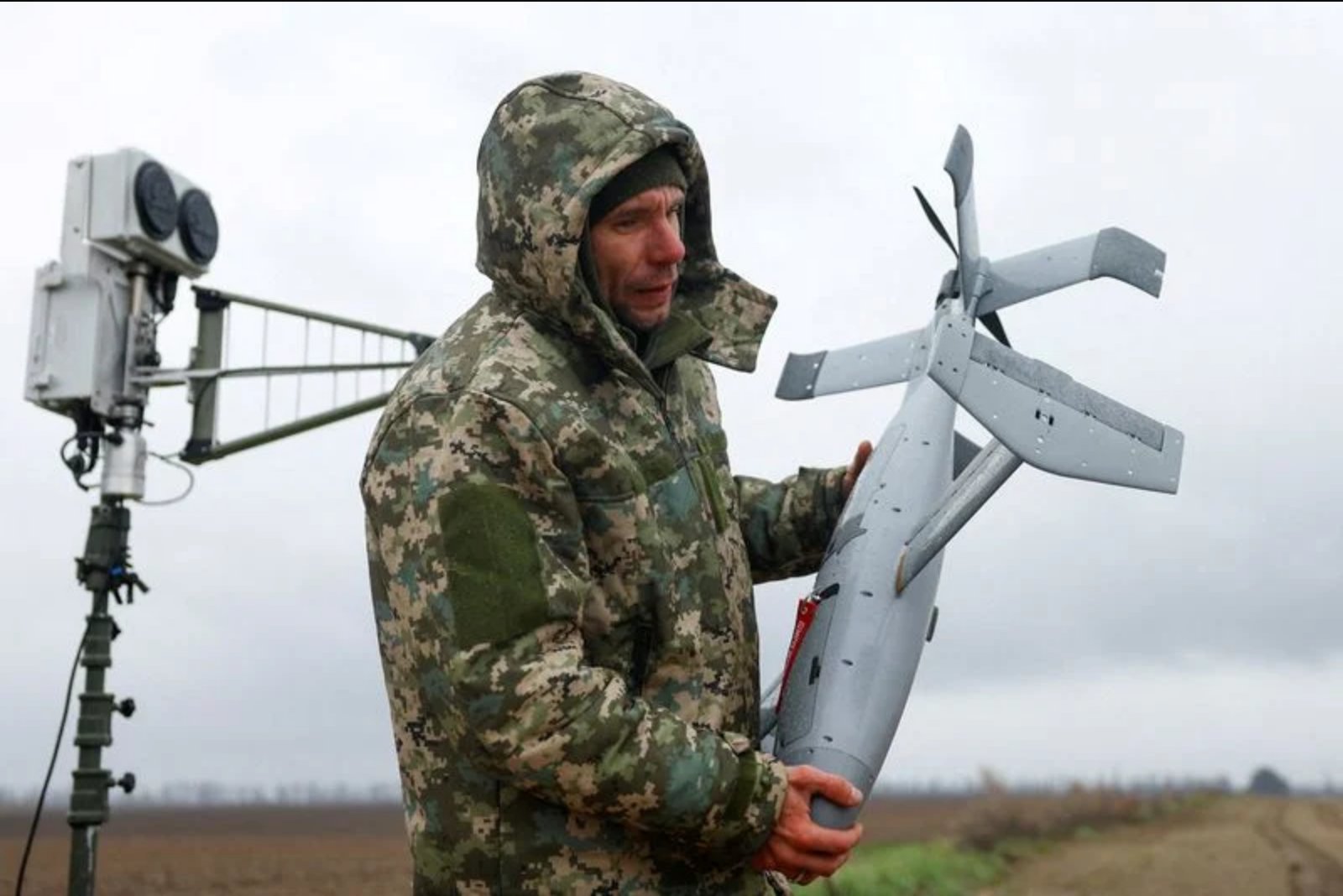
Ukraine is experiencing what a senior defence official describes as the early stages of a fundamental change in how war is conducted, as artificial intelligence is folded into weapons networks and used to accelerate battlefield decision-making.
Danylo Tsvok, head of the defence ministry's AI research centre, said AI is already playing multiple roles in the conflict and will form - in his words - "a new paradigm of warfare." He said the technology is being applied across the battlefield, from piloting drones to aiding in combat planning and processing information from Russian missile strikes.
"AI will form a new paradigm of warfare. It’s already actively doing so," Tsvok said. He added that planners expect AI systems to be combined into a single network to oversee operations on the battlefield, and warned of a potential "war of operating systems" with Russia within three to five years if the conflict persists.
Tsvok argued that the side with superior data and better interpretation of that data - and that can propose effective solutions faster - will gain advantage. That approach underpins the work of the AI research centre, which was established in March as part of Defence Minister Mykhailo Fedorov's effort to centre AI and data-driven decision-making in Ukraine's defences.
Already, unmanned aerial vehicles have altered how fighting is conducted. Troops on both sides launch large numbers of drones each day at one another, and Kyiv is seeking to fill gaps in frontline personnel by developing ground robots. The persistent surveillance and precision strike capabilities of drones have shortened the traditional "kill chain" - the sequence of detecting a target, planning a strike and executing it - and Tsvok said AI-driven decision-making would compress those timelines further.
Ukraine, whose military numbers around a million personnel, is using AI tools across its command systems today. The stated ambition at the AI research centre is to build a single operating system that can offer battlefield recommendations across levels - from lone frontline units to strategic command headquarters. Such a platform would enable far quicker analysis of data coming from the 1,200-kilometre (750-mile) front line and deliver recommendations to human commanders.
"The aim is to unite weapons and data systems into one single living organism that can operate in a coordinated manner," Tsvok said.
The conflict has prompted interest from foreign AI firms seeking combat data to train models and to test systems in operational conditions. Some companies have supplied systems to Ukraine, and Kyiv has launched an initiative called Brave1 Dataroom to share battlefield data with allied countries to support software training. "This is the place where you can understand whether your system works," Tsvok said.
At the same time, Moscow is advancing its own artificial intelligence capabilities. A senior Ukrainian air defence commander said in April he was worried about Russia's growing use of AI to plan drone and missile attacks on cities, which could sharply reduce the time required to prepare each strike.
Tsvok framed the central question bluntly: how quickly Ukraine can develop practical solutions and deploy them so they produce meaningful battlefield effects. He noted that Ukraine operates on a principle of keeping a human in the decision loop for combat choices. However, he cautioned that AI systems could eventually move faster than humans can respond, at which point human presence in the loop might slow down the decision cycle.
"Then the question arises: how do we keep up with making decisions that autonomous systems propose?" he said.
Context and operational focus
The AI research centre's mandate is to consolidate data and improve the speed and quality of decisions across Ukraine's defence apparatus. That reflects a recognition that contemporary conflicts are increasingly driven by real-time sensors, high-tempo strike systems and the capacity to convert situational awareness into timely action.
Ukraine's efforts to integrate AI into command systems, pair it with widespread drone use and create shared data environments for allied testing represent a concentrated push to harness technology across multiple domains - reconnaissance, targeting, command-and-control and logistics. The emphasis in official statements is on practical battlefield outcomes rather than theoretical capabilities.
Implications for industry and procurement
While the centre coordinates research and operational integration, the involvement of foreign AI companies and the Brave1 Dataroom initiative indicate a demand for systems that can be trained on operational datasets. The approach underscores both an operational requirement for effective AI tools and an appetite among some firms to validate systems with real-world data.
How rapidly Ukraine can convert AI developments into fielded capabilities will determine how significantly these technologies alter engagement dynamics along the 1,200-kilometre front and beyond.