
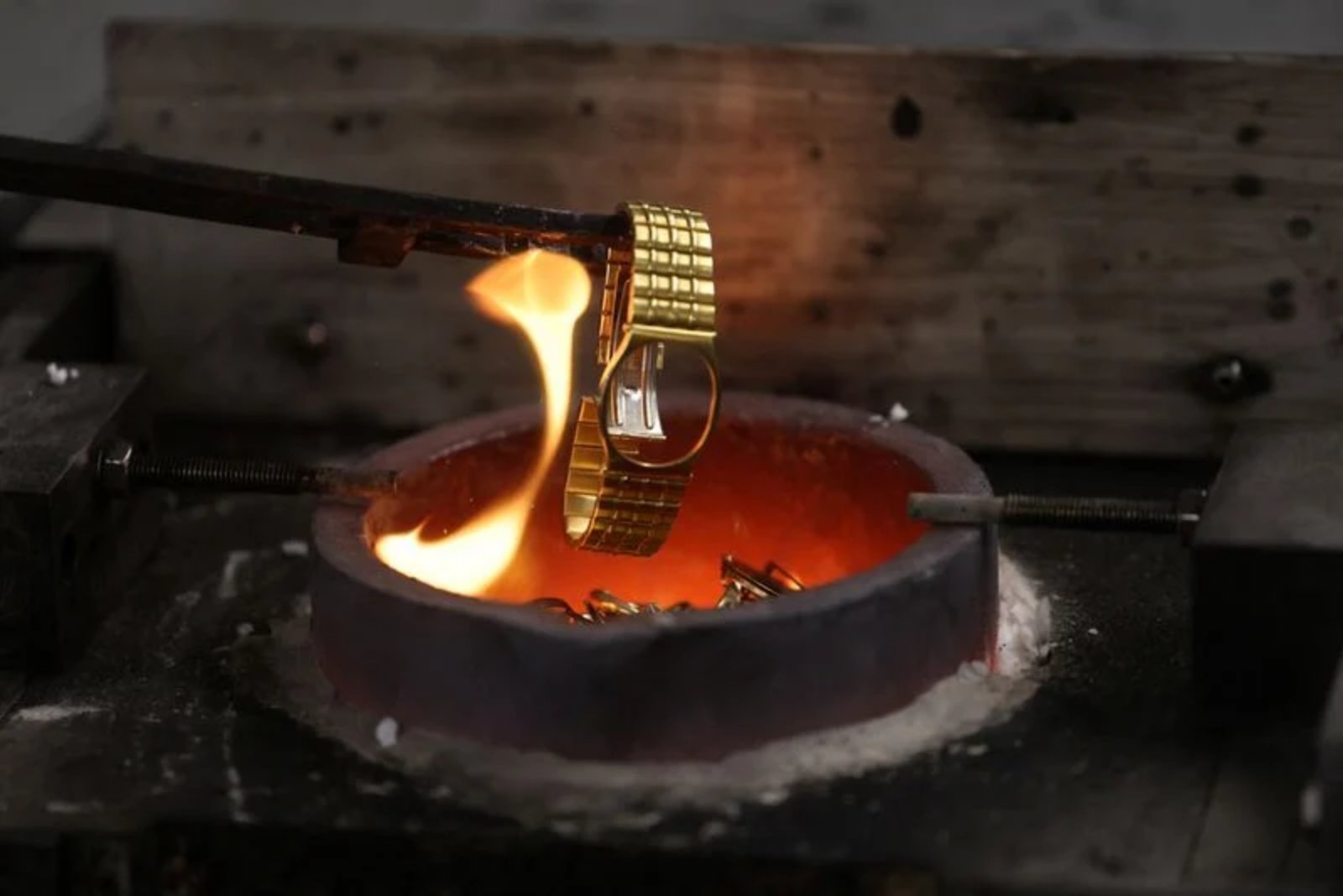
Luxury wristwatches that once represented glamour and celebrity have in some cases been reduced to raw metal as the price of gold climbs. Models such as Omega's Constellation - an item featured in film publicity, advertising campaigns and at red-carpet events by stars including George Clooney and Nicole Kidman - are among the designs that sellers and dealers are increasingly choosing to have melted when the gold content outstrips potential auction returns.
Interviews with more than a dozen traders, industry experts and investment advisers indicate that used models from mainstream brands, including Swatch-owned Omega and LVMH-owned TAG Heuer, have been especially vulnerable to this trend. One British dealer, Jon White of Gold Traders, reported that he melted an 18-carat, late-1970s Omega Constellation in excellent condition in May, and said it was among dozens of mainstream luxury watches he has scrapped this year as demand for investment-grade gold has risen.
White, who also runs an auction house, assessed the watch's gold content at £5,750 ($7,749) - about 35% more than his estimate that the same watch would have fetched at auction, which he put between £4,000 and £4,500. "Beautiful watch. But in reality, had the customer consigned that to auction, what would they have achieved?" he said.
James Lamdin, founder of Watches of Switzerland's pre-owned division Analog Shift, described the phenomenon as focused "primarily" on contemporary pre-owned pieces and on older vintage watches that are not yet collectible. Lamdin said the market is seeing both second-hand watches and brand-new overstock become candidates for dismantling.
When dealers strip down a watch, they typically recover gold from components such as cases and bracelets. In the Constellation, for example, the precious metal is present in both the case and the strap. The amount of gold in a watch can vary dramatically - from a tiny sliver to more than 200 grams - so scrap values can reach into the tens of thousands of dollars for some pieces.
Where bullion and resale diverge
Gold spiked to a record of $5,600 per ounce in January amid geopolitical tensions and trade worries that pushed investors to safe-haven assets. More recently, the metal has been trading around $4,200 per ounce, roughly double its average for 2024. The market for used watches has not mirrored that steep rise, creating situations where the melt value of the metal inside a watch exceeds what a dealer or owner could expect at auction or in the pre-owned market.
Industry specialists emphasise the finality of melting a timepiece. "I find it very sad, because obviously once something has been melted, it’s gone forever," said Adrian Hailwood, a specialist in horological history. For owners who view watches as heirlooms or sentimental objects, the idea that a dealer might destroy a piece can be unacceptable; those owners often choose to retain the watch.
There are no official statistics on how many luxury watches are being melted. World Gold Council data show that overall gold recycling rose 5% in the first quarter to 366 tonnes, while the value of gold jewellery demand increased 31% to $47 billion over the same period. Those figures indicate stronger flows of scrap metal into the market, though they do not isolate watches specifically.
Production controls and resale premiums
Tightly managed high-end houses tend to preserve value above scrap. Privately owned brands that limit production, such as Patek Philippe and Rolex, command the biggest premiums over melt value, according to three industry experts interviewed. For some of those models, wait lists for new purchases can be extensive - "anything from two to eight years," said Simon Lazarus, head of PR and content at online luxury watch platform Chrono Hunter.
Rolex in particular plays a dominant role in the upper end of the new watch market. Citing Vontobel data, one industry source noted that Rolex represented 61% of the sales value last year of new Swiss watches priced above 3,000 Swiss francs ($3,770), up from 57% in 2023, even as volumes declined.
By contrast, brands that are less exclusory, such as TAG Heuer, Breitling and Omega, face more pressure. Buyers can frequently acquire second-hand examples of these brands for far less than new retail, and some models depreciate markedly on resale. Lamdin noted that he has seen many "totally mediocre watches get melted down" and pointed to unsold overstock in the Swiss market: "There’s a lot of unsold overstock in the Swiss market. And those watches are basically brand new, unworn, and they’re just getting stripped down... they made too many of them." He added that when a watch is genuinely vintage, rare or carries a story or patina, melting it becomes "a short-sighted tragedy."
Individual choices and market signals
Higher bullion values have already altered behaviour for some owners. Retired New York engineer Mitchell Talisman said that in December he sold two gold watches and a chain containing a combined 35 grams of gold at 58% purity for $2,660 in cash, after keeping the items in a safety deposit box for more than a decade.
Dealers point out that rising gold expectations - with forecasts cited in the market suggesting a range of $5,400 to $6,300 an ounce this year - will likely sustain pressure to dismantle watches, particularly for traders who must cover costs such as refurbishment, guarantees and other overheads involved in reselling timepieces.
Some manufacturers and groups did not provide comment. Spokespersons for Swatch and Rolex declined to comment for this story, and LVMH, Richemont, Patek Philippe and Audemars Piguet did not respond to requests for comment.
Currency references
For reference in valuations mentioned, the article used the following exchange rates: $1 = 0.7421 pounds and $1 = 0.7873 Swiss francs.