
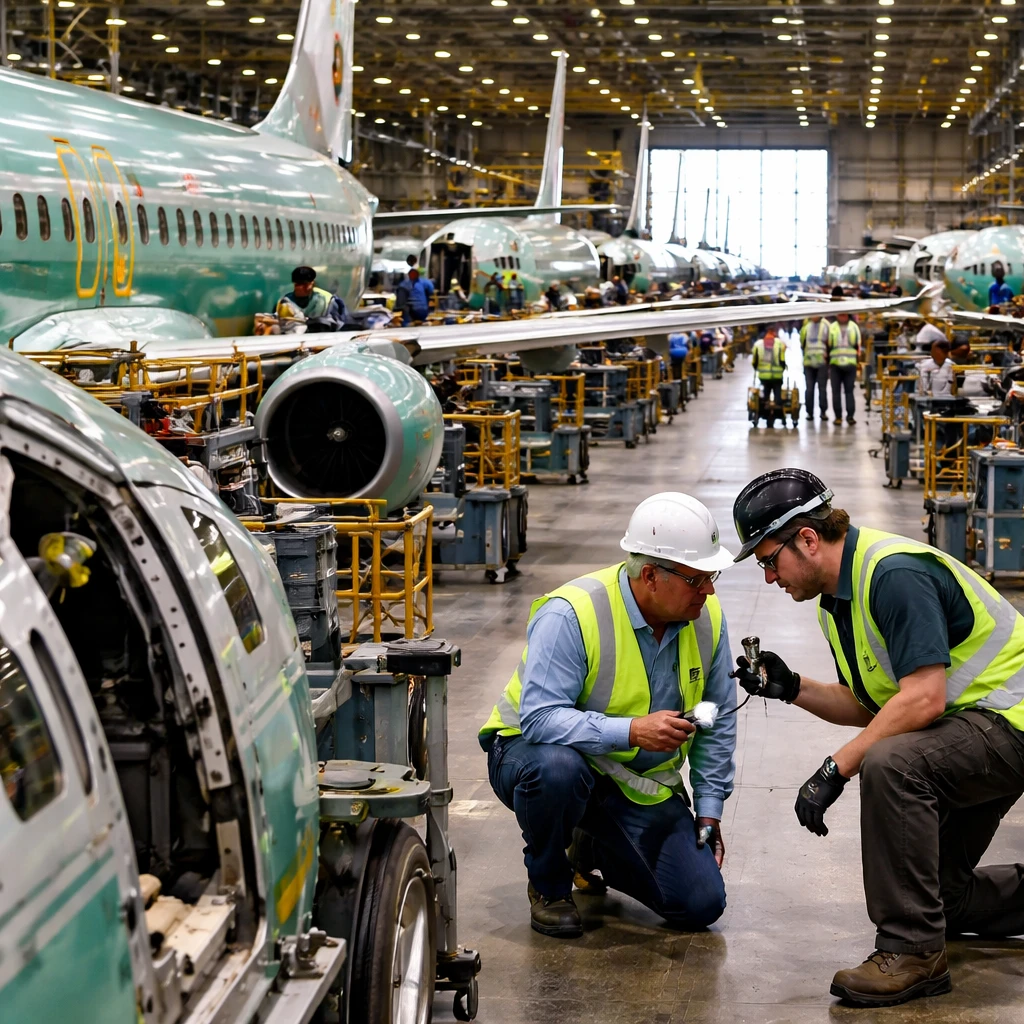
Boeing's top safety official said the planemaker must keep managers and safety personnel physically close to workers on the factory floor to ensure difficult safety information continues to surface, even as the company expands production of major commercial jet models.
"As we’re growing and scaling, staying close to the work, I think that’s really important," Don Ruhmann, Boeing's chief aerospace safety officer, said at a conference in Montreal. Ruhmann addressed the International Aviation Safety Summit, an event focused on whether the aviation sector can scale safely as demand grows.
Ruhmann warned against relying only on remote measures such as dashboards and reports for safety intelligence. He said that approach "is where you might get disconnected, because being at work and present on the floor is usually where the hard information surfaces first, and where people get to talk about it for the first time."
The remarks arrive as planemakers prepare to raise output of new aircraft. The airline trade group IATA expects global air travel to more than double by 2050, a projection cited at the event, even as the industry faces near-term headwinds from elevated jet-fuel prices.
Boeing stated it has taken steps to strengthen its safety culture after incidents earlier this year placed that culture under scrutiny. Those incidents include a door plug that detached from a nearly new 737 MAX and two earlier crashes involving the same jet model.
In parallel with its safety efforts, Boeing is coordinating with the U.S. Federal Aviation Administration to increase 737 MAX production rates. The company has also acknowledged separate issues inside its factories and with suppliers, which have complicated ramp plans.
On Monday, Boeing's commercial division announced plans to reduce its workforce by 5% to align staffing with a more gradual production ramp-up. Ruhmann emphasized the importance of trust in the safety-reporting system, saying employees must feel their concerns are heard, respected and protected so that information will keep flowing.
Context and implications
- Boeing underscores a hands-on approach to safety information gathering as production increases.
- The company continues to work with the FAA to raise 737 MAX output while addressing factory and supply-chain issues.
- Boeing recently announced a 5% cut to its commercial division workforce to match a slower pace of output growth.
Direct quote
"If they feel like their concern was heard, they were respected and also protected, and I emphasize protected, they will do that over and over and over again, so the information keeps flowing."
The company and industry players at the summit debated how to scale production while maintaining safety, with officials noting that close contact between leadership and frontline workers can surface issues that might not be obvious in aggregated reports.