
Stock Markets September 9, 2026 12:13 PM

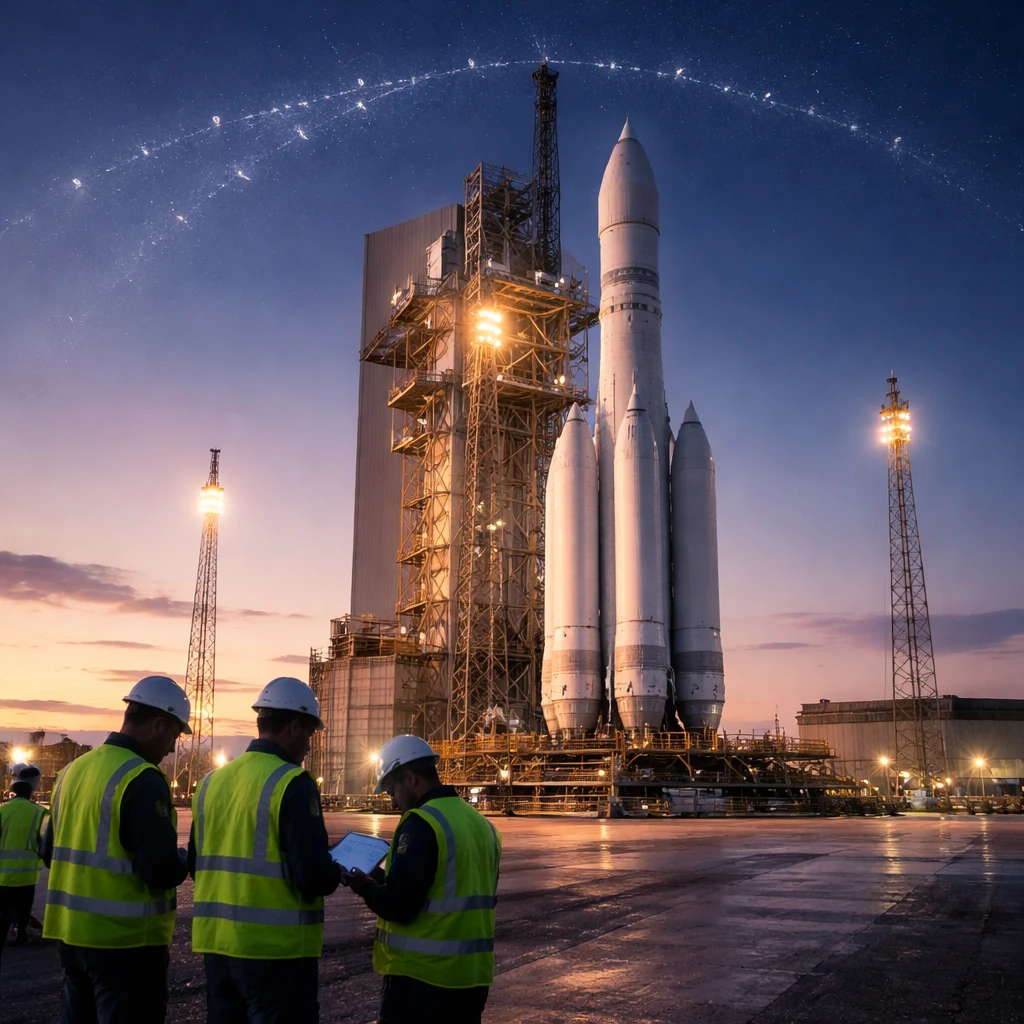
Amazon Expands Use of Europe’s Ariane 6, Ordering Six More Launches

New flights on high-capacity Ariane 64 start in 2029 as Amazon ramps satellite roll-out and Europe’s launcher gains momentum

By Jordan Park
Share
Twitter Reddit Facebook LinkedIn
AMZN

Amazon has added six further launches on the Ariane 6 rocket, bringing its total Ariane-commissioned flights to 24 by 2031. The new missions will fly on the Ariane 64 configuration beginning in 2029, reinforcing a growing reliance on Europe’s primary launcher amid U.S. supply constraints and intense competition in low-Earth orbit broadband services.

Amazon Expands Use of Europe’s Ariane 6, Ordering Six More Launches
AMZN
Summarize with
ChatGPT Perplexity Claude Grok Gemini

Key Points

  • Amazon ordered six more Ariane 6 launches, raising its Ariane-commissioned missions to 24 by 2031; the new flights will use the Ariane 64 beginning in 2029 - impacts aerospace launch services and satellite broadband deployment.
  • Arianespace has launched 100 Amazon satellites on three Ariane 6 missions this year and reports about 30 launches on order with available slots in 2029 and 2030 - relevant to launch capacity planning and commercial launch markets.
  • The Paris summit highlighted political sensitivities, with some major U.S. space firms absent amid reported White House pressure over the event’s Europe-focused agenda - a factor affecting international commercial and diplomatic dynamics in the space sector.

Amazon has contracted six additional launches on Europe’s Ariane 6 launcher, Arianespace announced during a Paris space summit on Wednesday, increasing the number of Ariane missions ordered by the company to 24 through 2031.

The newly agreed flights will be carried out on the Ariane 64 variant, the higher-capacity version of the rocket, and are scheduled to begin in 2029, according to the commercial arm of ArianeGroup.

French President Emmanuel Macron spotlighted the agreement at the opening of a two-day European space gathering. The summit was notable for the absence of several major U.S. space firms, including Blue Origin, the launch provider owned by Amazon founder Jeff Bezos. The absence came after, what sources described last week, was White House pressure related to the summit's Europe-led agenda.

Amazon is developing a large low-Earth orbit satellite constellation intended to deliver global broadband connectivity. The company aims to deploy thousands of satellites to compete with SpaceX's Starlink, which has attracted millions of customers. Until recently, Amazon had primarily used the Atlas V rocket from United Launch Alliance - the Boeing and Lockheed Martin joint venture - to launch its satellites.

Wednesday's agreement illustrates an increasing dependence on Europe’s flagship launcher at a time when U.S. supply is reported to be constrained. Nevertheless, the scale of European launch activity remains much smaller than that of SpaceX.

Arianespace said it had already placed 100 Amazon Kuiper satellites into orbit on three Ariane 6 missions so far this year. Earlier on Wednesday, the company indicated it would announce further business that would bring the total number of extra launches to 10. Arianespace currently has orders for about 30 launches and, according to a spokesperson, has available launch slots in 2029 and 2030.

Amazon had faced a regulatory requirement to launch half of its initial 3,232 satellites by this summer. That requirement was waived in June after Amazon cited supply shortages as the reason for the delay.


Context and implications

The transaction signals both a commercial milestone for Ariane 6 and a logistical pivot for Amazon's satellite program. Using the Ariane 64 for additional missions beginning in 2029 expands Amazon's launch options amid constrained availability of U.S. rockets, while underscoring the competitive dynamics in the LEO broadband market.

Risks

  • U.S. launch supply constraints could continue to disrupt Amazon's original launch plans and shift more demand to non-U.S. providers - this affects aerospace suppliers and satellite operators reliant on U.S. rockets.
  • Competition from SpaceX's larger scale of launches and customer base remains a dominant market uncertainty for Amazon's broadband ambitions - this primarily impacts the satellite broadband and telecom sectors.
  • Regulatory timing and waivers, such as the one that relieved Amazon of a requirement to launch half of its initial satellites by this summer, introduce uncertainties in deployment schedules and business milestones - relevant to investors and the satellite industry.

More from Stock Markets

Scotiabank Picks Uber and DoorDash Over Lyft, Citing Subscription Advantages Sep 9, 2026 Harvey Nets $550 Million at $15.5 Billion Valuation to Expand Legal AI Platform Sep 9, 2026 Meta’s Rally Shows Strong Momentum but Faces Short-Term Overbought Risks Sep 9, 2026 Casey’s Q1: Strong Earnings, Weaker Cash Conversion and What Comes Next Sep 9, 2026 GameStop Q2 Results: Profitability Proven, Durability in Doubt Sep 9, 2026