
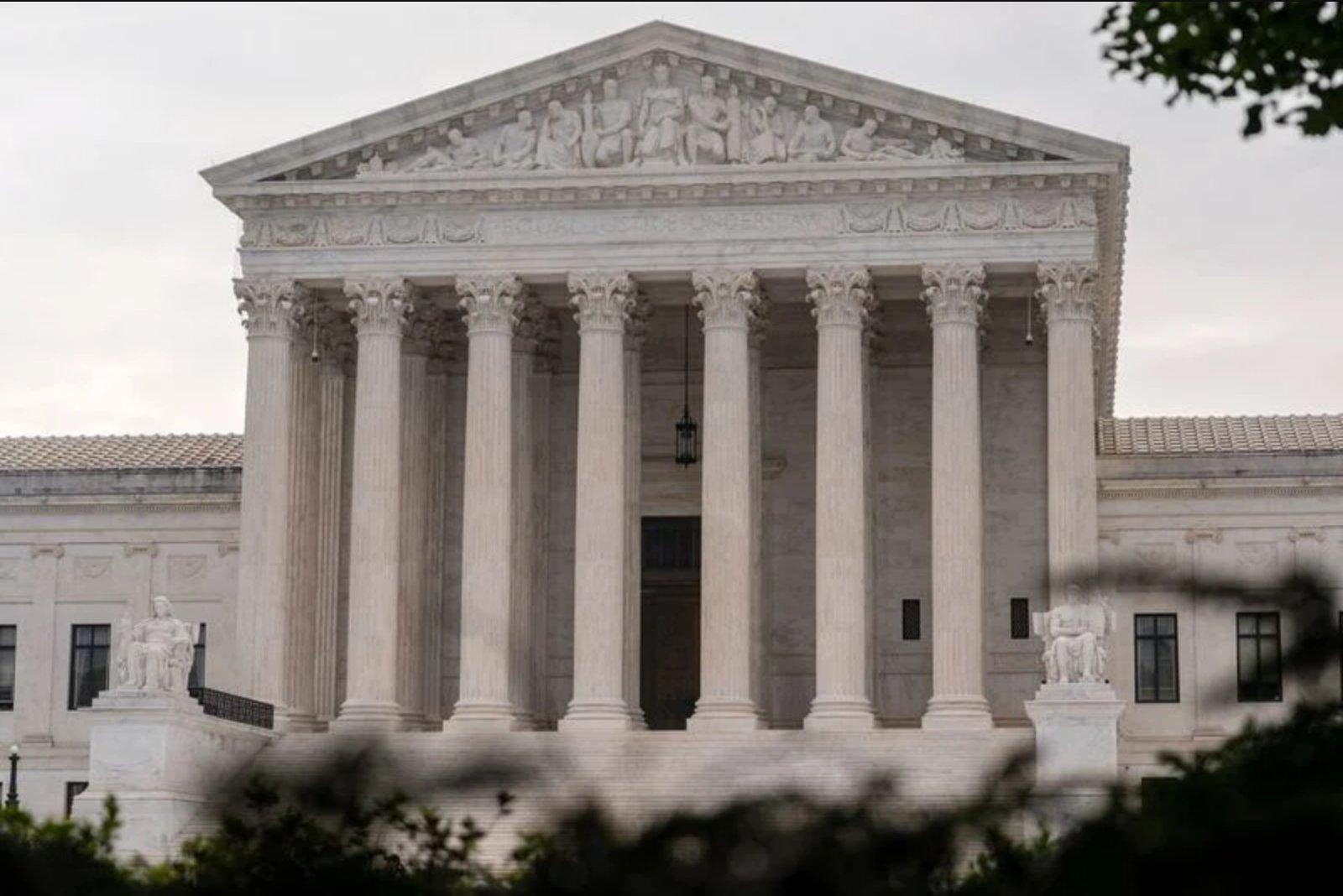
On June 29, the U.S. Supreme Court sided with state laws that permit certain mail-in ballots to be counted even when they arrive after Election Day, rejecting a Republican-led legal challenge to Mississippi’s five-business-day grace period.
The 5-4 ruling overturned a lower court judgment that had concluded Mississippi’s measure conflicted with federal statutes governing the timing of federal elections for the presidency, the Senate and the House of Representatives. Justice Amy Coney Barrett, a conservative appointee, authored the Court’s majority opinion. Chief Justice John Roberts, also a conservative, and the court’s three liberal justices joined Barrett’s opinion. Four other conservative justices - Samuel Alito, Clarence Thomas, Neil Gorsuch and Brett Kavanaugh - dissented.
What Mississippi’s law says
Under the Mississippi statute at issue, mail-in ballots that are postmarked on or before Election Day may be counted if they are received by election officials up to five business days after the federal election. Mississippi restricts absentee voting by mail to a limited set of voters, including people age 65 and older, those with disabilities and individuals living away from home.
The legal challenge targeted that five-business-day reception window. Plaintiffs in the suit included the Republican National Committee, the Mississippi Republican Party and other parties who sued in 2024 seeking to invalidate the state law. The Trump administration supported the challenge.
Context of the dispute
The issue is part of a broader Republican skepticism toward mail-in ballots. Former President Donald Trump last year vowed to end the use of mail-in ballots nationwide ahead of this November’s congressional elections, when Republicans are trying to retain control of Congress. Trump has repeatedly questioned the security of mail-in voting, despite the article noting that evidence of widespread voter fraud is rare. In March, he issued an executive order aimed at restricting mail-in ballots across the country; a federal judge in Boston blocked that order on June 25.
The litigation over Mississippi’s law traces back to a 2020 action by the Republican-controlled state legislature, which enacted the mail-in voting measure on a bipartisan basis during the first year of the COVID-19 pandemic.
Procedural history
In 2024, the U.S. Court of Appeals for the 5th Circuit, based in New Orleans, ruled in favor of the Republican challengers. That court concluded the state measure was preempted by federal statutes that it interpreted as setting Election Day as the date by which ballots must both be cast by voters and received by state officials. The 5th Circuit wrote that federal law "does not permit the state of Mississippi to extend the period for voting by one day, five days or 100 days."
The 5th Circuit did not immediately suspend Mississippi’s procedures. Instead, it remanded the case to a trial judge for further consideration and left the litigation on hold while the Supreme Court considered the matter. The 5th Circuit’s ruling applied only within the three states under its jurisdiction - Mississippi, Louisiana and Texas - but it raised questions about similar policies in other states.
Arguments and concerns at the Supreme Court
During arguments before the high court in March, several conservative justices expressed concern that permissive mail-in ballot practices could create the appearance of fraud. Some liberal justices countered that the challengers’ legal theory could undermine widely used early voting practices that occur prior to Election Day. Mississippi, in its appeal, told the court that the 5th Circuit’s action would "override countless state laws from the past 165 years and largely require citizens to vote in person, on Election Day, in their home districts, without the secret-ballot system."
Wider legal landscape
The Court’s decision comes against a backdrop of other election-related rulings. In April, the Supreme Court’s conservative majority removed a significant provision of the Voting Rights Act in a separate case, blocking an electoral map that had created a second Black-majority U.S. congressional district in Louisiana. That ruling was described as making it harder for minority voters to challenge electoral maps as racially discriminatory under the 1965 civil rights law, and it was characterized in the article as a victory for Louisiana Republicans and the Trump administration. That earlier decision prompted several Republican-led states to pursue redrawn electoral maps ahead of the midterm elections.
Scope of similar practices
The article notes that roughly 30 states and the District of Columbia accept at least some ballots that are postmarked on or before Election Day but are received afterward. The Supreme Court’s ruling thus preserves the legal footing for a range of state practices that allow for late-arriving, properly postmarked ballots to be counted in federal elections under certain conditions.
What remains unresolved
The five-to-four decision resolves the immediate challenge to Mississippi’s five-business-day rule, but similar legal and political disputes over mail-in voting and election administration continue. The differing views expressed by the justices at oral argument, and the split votes on related cases involving the Voting Rights Act, indicate ongoing litigation and legislative debates over ballot access, electoral maps and the mechanics of voting in federal contests.
This ruling settles the specifics of the Mississippi measure for now while leaving intact broader questions about how states may structure voting procedures and how federal law interacts with state election regulations.