
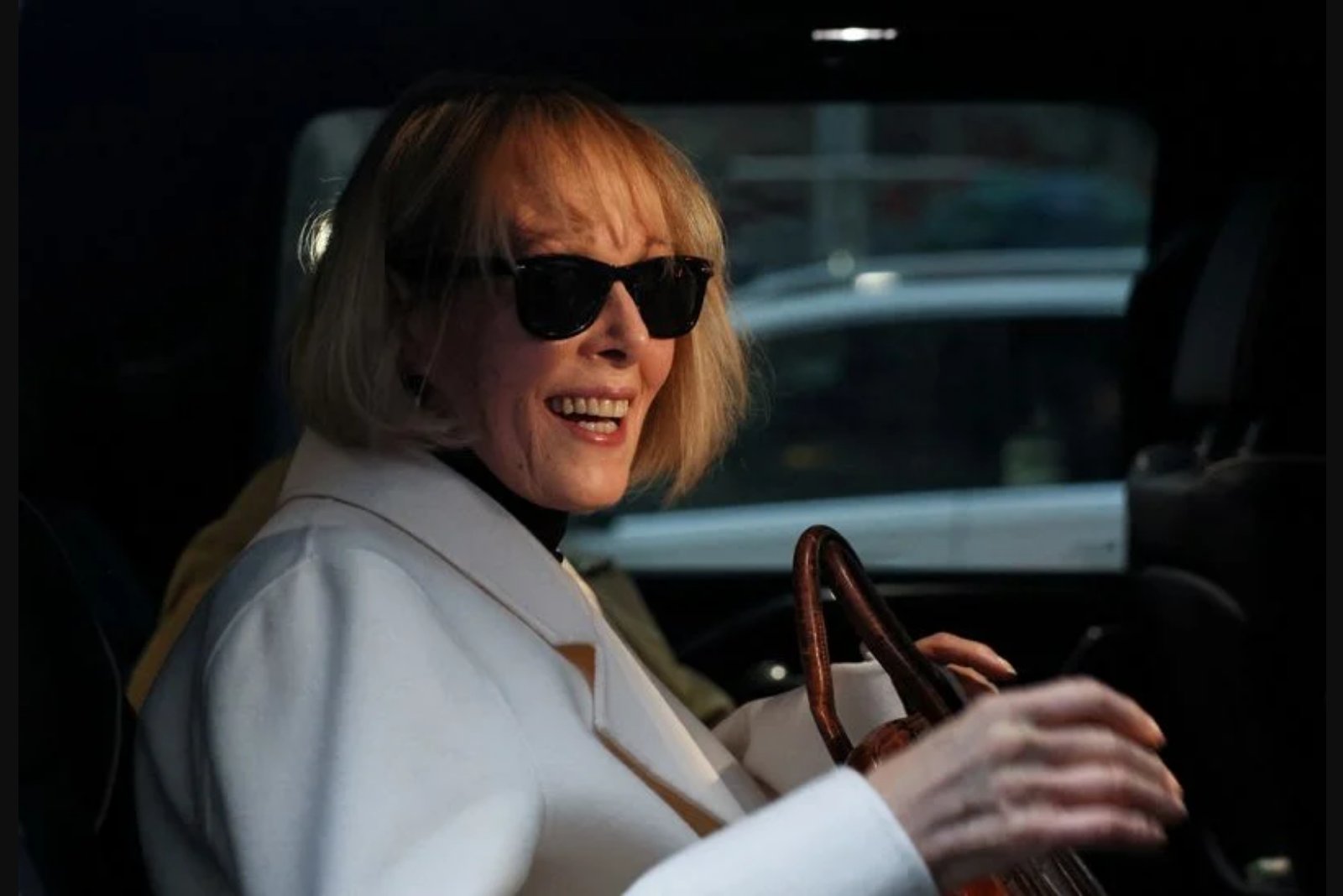
The U.S. Supreme Court declined on June 29 to hear former President Donald Trump’s request to overturn a $5 million jury verdict awarded to E. Jean Carroll, leaving in place rulings by lower courts that found Trump liable for sexual abuse and defamation.
The appeal to the high court followed a 2023 jury verdict in Manhattan federal court that concluded Trump sexually abused Carroll and defamed her. Jurors awarded Carroll $5 million in damages. The jury did not, however, find that Trump had committed the rape she alleged decades earlier.
Trump had argued that the trial was unfair because the trial judge allowed jurors to hear evidence of other allegations of past sexual misconduct. His lawyers told the Supreme Court that the judge "erroneously allowed testimony about multiple decades-old, unverified and unrelated allegations to be presented to the jury," arguing that federal rules governing evidence had been flouted.
The appellate path to the high court included a 2024 decision by the U.S. Court of Appeals for the 2nd Circuit in Manhattan, which affirmed the jury’s 2023 findings. The 2nd Circuit concluded that evidence presented at trial - including Trump's remarks on an "Access Hollywood" video from the 2016 presidential campaign in which he bragged about sexual prowess - supported a "repeated, idiosyncratic pattern of conduct" consistent with Carroll’s account.
Carroll’s legal fight with Trump began after she published an excerpt from her memoir in 2019 alleging that Trump raped her around 1996 in a dressing room at the Bergdorf Goodman department store in Manhattan. Trump denied the allegation in 2019 while serving his first term as president and again in 2022 when he was out of office. In 2022, the specific case that produced the $5 million award centered on statements Trump posted on social media in which he called Carroll’s claim a "hoax" and a "con job," adding in the post, "This woman is not my type!" Carroll sued in federal court in Manhattan over those statements.
In addition to the civil litigation, the Justice Department has opened a criminal investigation related to Carroll, mirroring inquiries it has initiated into several other critics and adversaries of the Republican president. That criminal probe, disclosed in May, is focused on whether Carroll committed perjury in testimony connected to the two civil suits she prevailed in against Trump.
Trump sought further review from the Supreme Court after the 2nd Circuit upheld the $5 million verdict. In his petition the former president’s attorneys reiterated their contention that the lower court erred by permitting decades-old and unverified allegations to reach the jury, and they urged the justices to intervene. The Supreme Court declined that request.
Separately, in the other civil case Carroll won, a jury in 2024 awarded her $83.3 million for defamation based on Trump's initial denials of her 2019 allegations and his assertion that she fabricated the story to sell a book. The Manhattan-based 2nd U.S. Circuit Court of Appeals in 2025 declined to throw out that $83.3 million verdict.
Context and legal posture
With the Supreme Court's refusal to take Trump's appeal over the $5 million award, the civil judgment stands as affirmed through the federal appellate process. At the same time, the existence of a Justice Department criminal inquiry into Carroll's testimony adds a separate legal dimension that remains unresolved.
The factual record relied on by jurors and the appeals court included testimony and exhibits that tied Trump’s earlier public comments and the 2016 "Access Hollywood" tape to the credibility of Carroll’s account, as reflected in the 2nd Circuit’s description of a pattern of conduct.
Quotes from filings and rulings
From Trump’s filing to the Supreme Court: "Carroll waited more than 20 years to falsely accuse Donald Trump, who she politically opposes, until after he became the 45th President, when she could maximize political injury to him and profit for herself."
The Supreme Court’s decision not to take the appeal leaves intact the outcomes of the two civil trials Carroll won and sustains the appellate court’s reasoning. The separate criminal investigation disclosed in May remains active, focused on possible perjury tied to the testimony Carroll provided in those civil proceedings.