
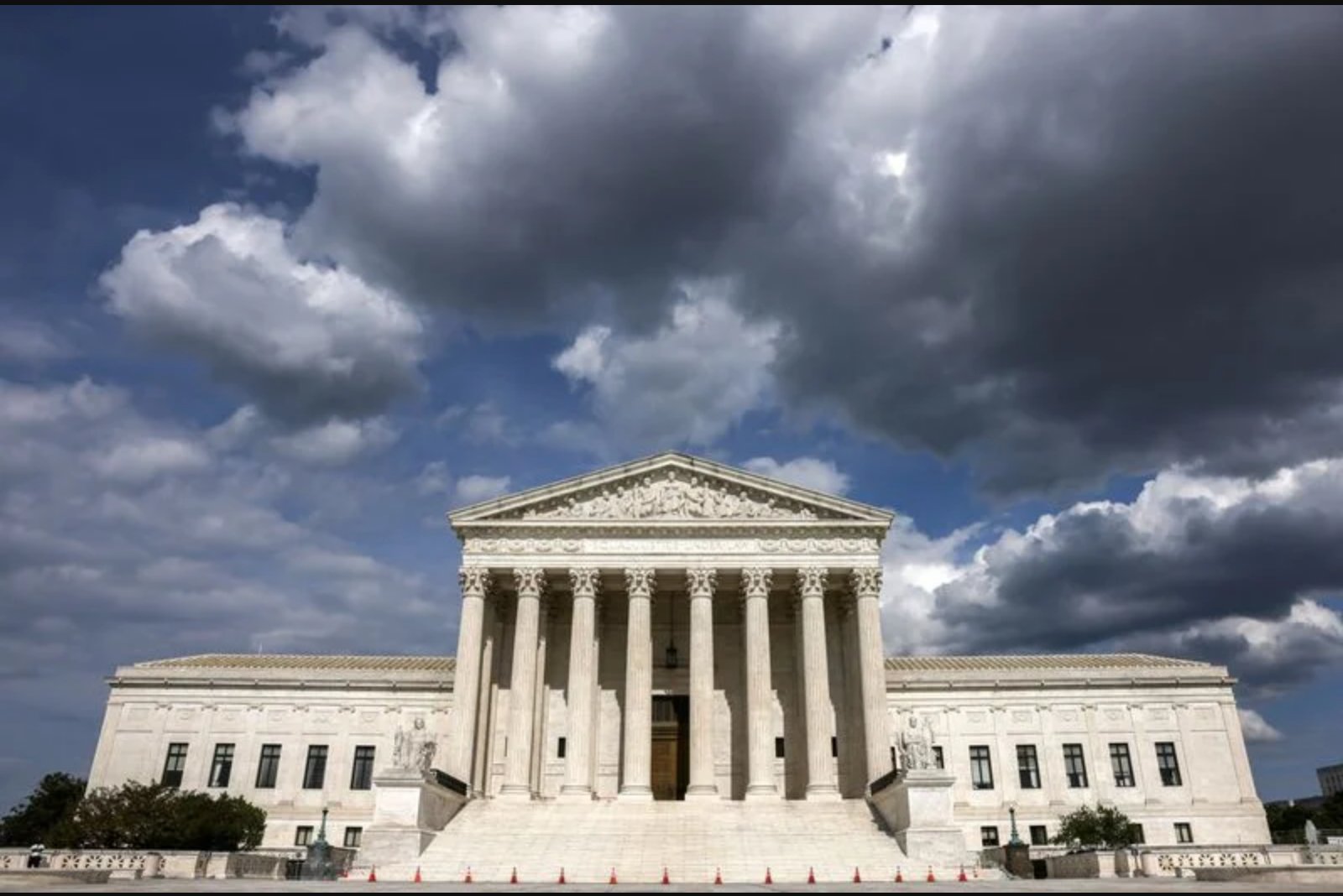
The U.S. Supreme Court is approaching the close of its current term with a roster of unsettled cases that carry significant constitutional and political implications. With a 6-3 conservative majority, the court has seven disputes yet to be resolved and has designated Monday as the next day to issue rulings.
Supreme Court terms begin in October and typically conclude around the end of June, although on occasion the calendar extends into early July. This term includes several high-profile matters that directly test executive authority, election administration and state-level regulations affecting transgender athletes.
Three cases testing presidential authority
Three pending cases focus on actions taken by President Donald Trump last year that raise questions about the scope of presidential power. Those challenges concern his effort to remove a member of the Board of Governors of the U.S. Federal Reserve, his firing of a member of the Federal Trade Commission, and an executive order aimed at restricting birthright citizenship.
During arguments in January, the justices expressed skepticism about the administration’s attempt to dismiss Lisa Cook from the Federal Reserve Board of Governors. The move, if upheld, would mark the first removal of a Fed official since the central bank was established in 1913 and touches on statutory protections Congress created to shield the Fed from political interference. The statute governing removal says governors may be removed by a president only "for cause," but the text does not define that term or prescribe a removal process. The president justified the action by citing mortgage fraud allegations that Ms. Cook denied.
Also under review is the firing of Rebecca Slaughter, a Democratic member of the Federal Trade Commission. Arguments in December suggested conservative justices might uphold the president’s decision to remove Slaughter over disagreements on policy - a departure from rulings by lower courts that found the administration had exceeded its authority. Last year, the Supreme Court allowed Mr. Trump to remove Slaughter while litigation continued.
Central to both removal disputes is a 1935 precedent, Humphrey’s Executor v. United States, which has for decades limited a president’s ability to remove officials who head certain independent agencies. At oral argument, U.S. Solicitor General D. John Sauer urged the justices to overturn that precedent. While the high court has narrowed the precedent’s reach in recent years, it has not previously eliminated it entirely. Conservative justices appeared receptive to the argument that statutory tenure protections for leaders of independent agencies encroach on constitutional presidential powers.
Election-related cases with potential nationwide effects
Two decisions involving voting and campaign finance are also pending as the November midterm elections approach, with control of Congress at stake.
One dispute centers on a Mississippi statute that allows mail-in ballots that were postmarked on or before Election Day to be counted if received up to five business days after the election. Republicans challenged the law and the administration supported the challenge. During March arguments, conservative justices indicated skepticism toward the Mississippi rule. A lower court had ruled against the law, and the case could lead to stricter rules on when mail-in ballots can be counted in other jurisdictions.
Separately, the court heard arguments in December in a Republican-led challenge to federal limits on coordinated spending by political parties and candidates in a case tied to Vice President JD Vance. Some conservative justices showed sympathy for the challenge, while the court’s liberal bloc appeared inclined to preserve existing restrictions. The underlying question is whether the current limits violate the First Amendment’s protection against government abridgment of speech. A lower court previously upheld the campaign finance restrictions.
In related developments, the president issued an executive order in March seeking to restrict mail-in ballots nationwide. A federal judge in Boston on Thursday blocked implementation of that order.
State bans on transgender athletes and a geofence warrant case
The court also heard arguments in January over laws in Idaho and West Virginia that prohibit transgender athletes from competing on female sports teams at public schools and universities. During oral argument, conservative justices appeared likely to uphold the measures. Proponents from those states say the laws are designed to preserve fair competition for women and girls; critics view the legislation as part of broader efforts to restrict the rights of transgender Americans.
Another pending case, argued in April, examines law enforcement’s use of so-called "geofence" warrants in Virginia. These warrants seek cellphone location data for devices near crime scenes to identify potential suspects. The legal question is whether that technique violates the Fourth Amendment’s protection against unreasonable searches.
Recent rulings and the court’s trajectory
This term the court has at times favored the president. On a recent Thursday the justices issued two victories for the Republican president in immigration-related cases, and since his return to office last year the court has repeatedly granted emergency relief allowing certain policies blocked by lower courts to take effect while litigation proceeds. However, the court also handed the president a significant setback in February when it rejected his broad tariffs imposed under a law intended for national emergencies.
As the high court prepares to release additional opinions, the outcomes of these remaining cases will shape the boundaries of presidential authority over independent agencies, potential changes to election administration and rules, and the legal status of state measures affecting transgender athletes. The rulings will be closely watched for their legal and political ramifications, and the justices are expected to issue opinions in the coming days beginning on Monday.
What remains uncertain
At present, seven cases still await decisions. How the court resolves the removal disputes, the election-law challenges and the other pending matters will determine whether existing legal constraints on executive power are upheld, narrowed or overturned. The precise contours of any changes will only become clear once the court circulates and releases its written opinions.